

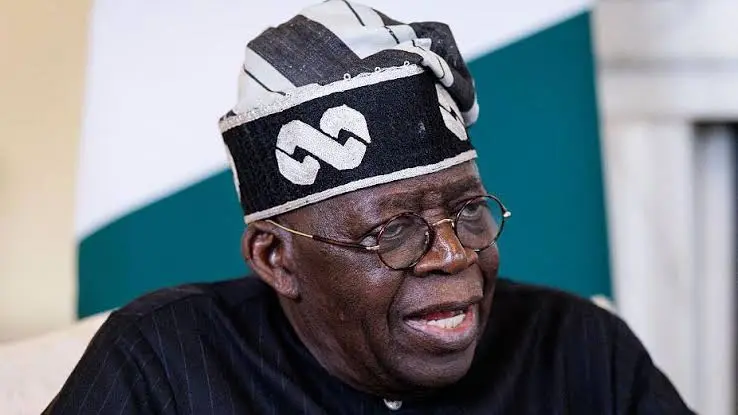
When President Bola Ahmed Tinubu assumed office in May 2023, he inherited an economy burdened by costly fuel subsidies, multiple foreign exchange rates, mounting public debt, and persistent fiscal inefficiencies. Within days of taking office, his administration implemented two of the most consequential economic reforms in Nigeria’s recent history: the removal of petrol subsidies and the liberalization of the foreign exchange market.
These measures had long been recommended by international financial institutions such as the International Monetary Fund (IMF) and the World Bank, as well as many Nigerian economists, who argued they were essential to restoring macroeconomic stability. Yet more than three years later, while some headline economic indicators suggest improvement, many Nigerians say the promised benefits have yet to translate into meaningful improvements in their daily lives.
Debt, Currency Depreciation and the Burden of Adjustment
According to the Debt Management Office (DMO), Nigeria’s total public debt reached approximately ₦159.28 trillion by December 31, 2025, representing one of the highest debt levels in the nation’s history. Domestic debt accounted for about ₦84.85 trillion, while external obligations stood at approximately ₦74.43 trillion.
The increase reflected both new borrowing and the dramatic depreciation of the naira, which significantly increased the naira value of Nigeria’s foreign debt.
The exchange-rate reforms saw the naira move from around ₦460 to the U.S. dollar before liberalization to trading largely between ₦1,300 and ₦1,500 over extended periods thereafter.
The consequences were immediate. Import costs surged, inflation accelerated, transport fares increased sharply following subsidy removal, and food prices reached record levels. Although inflation later showed signs of moderating, it remained high enough to erode the purchasing power of millions of households.
For salaried workers, small business owners, pensioners, and those in Nigeria’s vast informal economy, real incomes declined significantly, leaving many worse off despite the government’s insistence that the reforms would eventually yield long-term benefits.
Questions Over Fiscal Transparency
Beyond macroeconomic reforms, concerns have also been raised regarding transparency in public finance.
World Bank data covering the period between 2023 and 2025 indicated that federation revenues totaled approximately ₦84 trillion. However, roughly ₦34 to ₦34.5 trillion was deducted as first-line charges before revenue distribution through the Federation Account Allocation Committee (FAAC).
Civil society organisations, including ActionAid Nigeria, alongside opposition figures such as Peter Obi, questioned the size and transparency of these deductions.
The World Bank did not describe the funds as “missing.” Rather, it classified them as pre-distribution deductions. Nonetheless, analysts argue that deductions amounting to more than 40 percent of federation revenues warrant greater public scrutiny, detailed disclosure, and stronger accountability mechanisms.
Similarly, the IMF’s 2026 Article IV Consultation highlighted weaknesses in Nigeria’s public financial management system, including statistical discrepancies and expenditures executed outside the formal budget framework before later regularisation. While Nigerian authorities disputed suggestions of unauthorized spending, the IMF recommended stronger fiscal reporting, improved transparency, and tighter expenditure controls.
Social Conditions Remain Difficult
Despite the government’s emphasis on economic reforms, key social indicators remain troubling.
UNICEF estimates that Nigeria has approximately 18.3 million out-of-school children—the highest number globally.
Budget analysts also questioned aspects of the 2026 allocation to the National Commission for Almajiri and Out-of-School Children Education after several projects, including road construction, street lighting, ambulances, and other infrastructure, were included within the commission’s budget despite having no direct educational function.
The commission attributed the projects to constituency insertions by the National Assembly. Nevertheless, critics argued that scarce educational resources should be focused primarily on addressing Nigeria’s learning crisis.
Meanwhile, assessments by both the World Bank and the IMF continue to point to persistent poverty, widespread food insecurity, and slow transmission of economic reforms into improved household welfare.
For millions of Nigerians, economic hardship remains the defining feature of the reform era.
Government Spending Under Scrutiny
Another recurring criticism concerns government expenditure during a period of national austerity.
Budget documents and expenditure tracking reports show significant allocations between 2023 and 2026 for the presidential air fleet, foreign travel, official vehicles, renovations, and other government operating expenses.
Although government officials have defended many of these expenditures as necessary for governance and national security, critics argue that such spending sends conflicting signals at a time when citizens are being asked to endure unprecedented economic hardship.
The debate over fiscal discipline has therefore become not only a question of numbers but also one of political leadership and public perception.
Separating Facts from Allegations
Public discourse surrounding the Tinubu administration has also featured several allegations relating to government finances and regulatory agencies.
However, claims concerning specific monthly withdrawals from Federation Accounts or allegations involving certain regulatory directives remain matters of political controversy rather than judicially established facts.
Responsible journalism requires distinguishing between documented fiscal trends supported by official data and allegations that remain contested or unproven.
Reform Without Immediate Relief
Perhaps the greatest paradox of the Tinubu administration is that many economists agree the structural reforms themselves were necessary.
Successive administrations delayed difficult decisions regarding fuel subsidies and exchange-rate distortions, allowing fiscal pressures to accumulate over many years.
The challenge has been implementation.
While government revenues have increased in nominal terms, critics argue that improvements in public expenditure efficiency, transparency, and social protection have not kept pace.
Debt has continued to rise, household purchasing power remains under pressure, and key human development indicators have shown only limited progress.
Many Nigerians therefore acknowledge the necessity of reform while questioning whether sufficient safeguards were put in place to protect vulnerable citizens during the adjustment period.
Conclusion
Nigeria’s current economic challenges did not begin in 2023. They are the product of decades of structural weaknesses, institutional inefficiencies, and governance failures.
The Tinubu administration deserves recognition for confronting long-avoided economic distortions. Yet reform alone cannot be the measure of success.
For many citizens, the ultimate test lies in whether reforms produce tangible improvements in living standards, create jobs, strengthen public services, reduce poverty, and restore confidence in government.
As of mid-2026, official data point to partial macroeconomic stabilization. However, the broader evidence suggests that many Nigerians have yet to experience corresponding improvements in their daily lives.
A government that asks its citizens to make profound sacrifices bears the responsibility of demonstrating—through transparent governance, prudent public spending, and measurable improvements in welfare—that those sacrifices are purposeful and temporary.
Whether history ultimately judges the Tinubu administration as one that laid the foundation for long-term recovery or merely shifted the burden of adjustment onto ordinary Nigerians will depend not on economic theory alone, but on the lived experiences of the people.


