

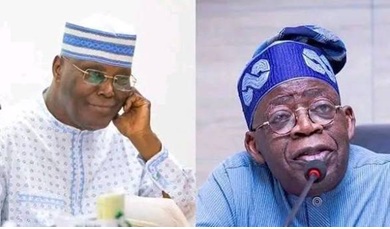
Presidential candidate of the African Democratic Congress (ADC), Atiku Abubakar, has described the Presidency’s attempt to invoke China in its criticism of him as a “monumental own goal,” arguing that the comparison has instead intensified public scrutiny of President Bola Ahmed Tinubu’s administration.
Reacting to recent exchanges with the Presidency, Atiku said efforts to use China’s development model as a basis for attacking his comments had ultimately shifted greater public attention to the performance and policies of the current government.
According to the former Vice President, comparisons with China should encourage Nigerians to examine governance, infrastructure development, industrialization, education, economic planning and public sector accountability rather than serve as political talking points.
He argued that if China’s rapid economic transformation is being cited in political discourse, it should prompt a broader conversation about how Nigeria can strengthen its institutions, improve productivity and accelerate sustainable development.
Atiku maintained that opposition parties have a constitutional responsibility to question government policies and offer alternative ideas, describing constructive criticism as an essential element of democratic governance.
The Presidency had defended the Tinubu administration’s policies while criticizing Atiku’s remarks, leading to an exchange of statements between both sides over governance, economic reforms and Nigeria’s development trajectory.
Political analysts note that references to China’s economic rise frequently feature in Nigerian political debates, with leaders across the political spectrum citing the Asian nation as an example of long-term planning, infrastructure investment, manufacturing growth and poverty reduction.
They also caution that direct comparisons between Nigeria and China should take into account the two countries’ differing political systems, population sizes, historical experiences and economic structures.
Observers say the latest exchange reflects the increasingly competitive political environment ahead of the 2027 general elections, with both the ruling party and opposition seeking to shape public opinion on issues of governance and economic performance.
Analysts further note that debates over policy alternatives, institutional reforms and economic management are expected to remain central themes as political parties prepare their campaigns for the next election cycle.
Atiku reiterated that democratic competition should focus on policies and measurable outcomes rather than personal attacks, urging leaders to engage in discussions that advance national development and improve the lives of Nigerians.
He concluded by expressing confidence that informed public debate and accountability would strengthen Nigeria’s democracy and encourage greater attention to the country’s long-term development priorities.


