

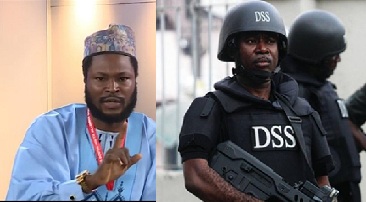
The Department of State Services (DSS) has arrested Kaigama, President of the Borno South Youth Alliance, following public allegations that Nigerian government officials diverted part of an alleged ransom payment made to secure the release of abductees held by Boko Haram.
Kaigama made the claims during an interview on Channels Television on July 23, alleging that the Federal Government paid ₦5 billion to secure the release of more than 360 women and children abducted from Ngoshe, Borno State, in March 2026.
He further alleged that only ₦1.9 billion reached the kidnappers, while the remaining funds were diverted by unnamed government officials, including Senator Ali Ndume.
Senator Ndume has strongly denied the allegations, describing them as false, defamatory and without evidence. He stated that he had reported the matter to security agencies and intends to pursue legal action against Kaigama to protect his reputation.
Following the interview, the DSS arrested Kaigama. As of the time of reporting, the security agency had not publicly disclosed the specific charges against him or issued an official statement explaining the basis for his detention.
The arrest has attracted reactions from human rights organizations, with Amnesty International describing the detention as arbitrary and calling on the authorities to either charge Kaigama in accordance with the law or release him.
Amnesty also urged the government to conduct an independent investigation into the allegations raised during the television interview, emphasizing that both the claims and the subsequent arrest should be handled transparently and through due legal process.
The Federal Government has not publicly confirmed that any ransom payment was made to secure the release of the abducted victims, and there has been no official evidence presented to substantiate Kaigama’s allegations.
Legal experts note that allegations involving public officials and the misuse of government funds require credible evidence and should be investigated by the appropriate authorities before any conclusions are drawn.
They also emphasize that under Nigeria’s Constitution, every individual is presumed innocent until proven guilty by a court of competent jurisdiction, while those accused of criminal conduct are entitled to fair hearing and due process.
Security analysts say the case highlights the delicate balance between protecting freedom of expression, safeguarding individual reputations and ensuring accountability in matters relating to national security.
The incident comes amid continued efforts by Nigerian authorities to combat insurgency and improve security in the North-East, where attacks by Boko Haram and Islamic State West Africa Province (ISWAP) have displaced millions of people over the past decade.
As the matter develops, attention is expected to focus on whether formal charges will be filed, whether an independent investigation into the allegations will be conducted and how the courts ultimately address any legal proceedings arising from the dispute.


