

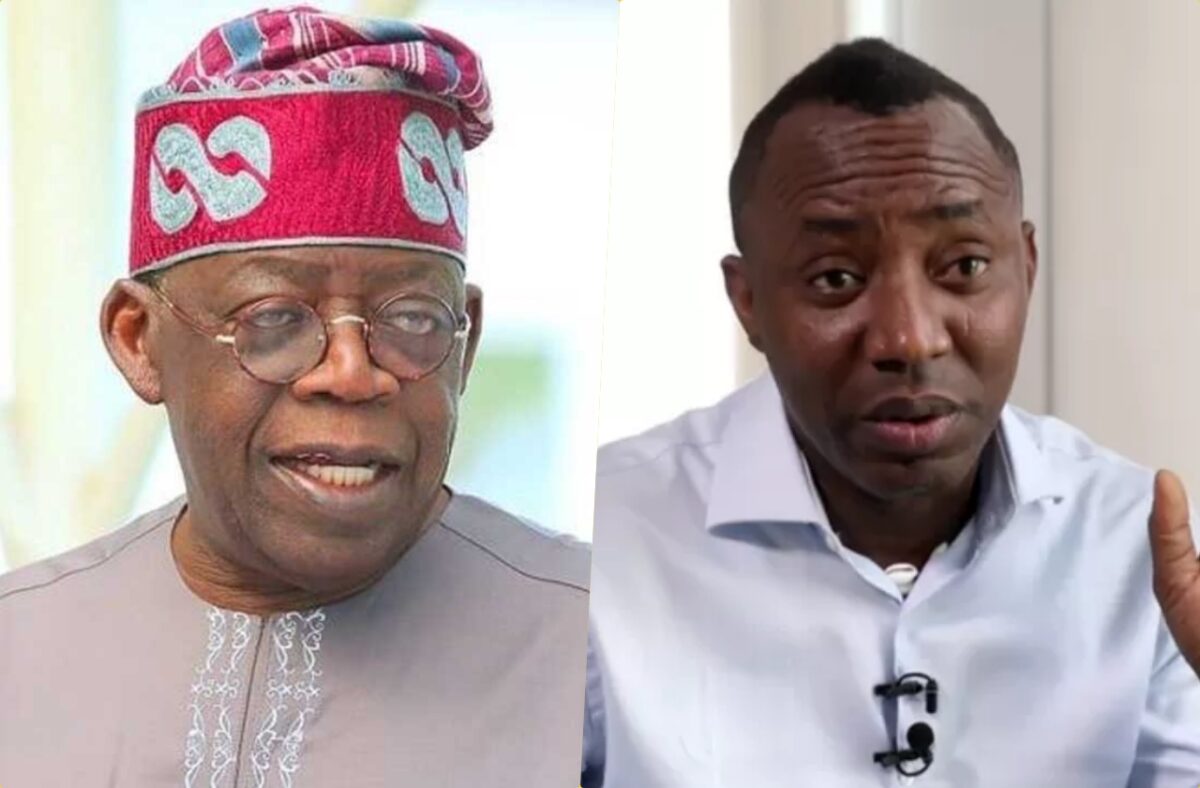
Human rights activist and politician Omoyele Sowore has declared that he possesses stronger ideas for Nigeria’s future than President Bola Ahmed Tinubu, Labour Party’s Peter Obi, and former Vice President Atiku Abubakar, as political discussions around the 2027 general elections begin to intensify.
Sowore, who is the founder of the African Action Congress (AAC), made the statement while speaking on Nigeria’s political direction, governance challenges, and the need for a radical shift in leadership philosophy.
His comments have sparked fresh debate in political circles, especially among supporters of Nigeria’s major political figures, as attention gradually shifts toward the next presidential contest.
Sowore Positions Himself as Alternative Voice
Sowore argued that Nigeria’s political system has repeatedly failed to deliver meaningful change under successive administrations, insisting that a new ideological direction is required.
He maintained that both ruling and opposition parties have struggled to address key issues such as corruption, unemployment, insecurity, and economic instability.
According to him, his political ideas offer a more comprehensive and people-focused approach compared to those of President Tinubu, Peter Obi, and Atiku Abubakar.
Sowore said Nigeria needs a complete restructuring of governance systems rather than recycled political promises from established political actors.
Criticism of Nigeria’s Major Political Figures
Without directly engaging in personal attacks, Sowore contrasted his vision with what he described as the limitations of Nigeria’s dominant political class.
President Bola Tinubu, who currently leads the country, remains a central figure in Nigeria’s political landscape, with supporters crediting his administration for ongoing economic reforms and infrastructure projects.
Peter Obi, who ran a highly competitive presidential campaign in 2023 under the Labour Party, continues to enjoy strong support among young voters and urban populations.
Former Vice President Atiku Abubakar remains a major opposition figure within the Peoples Democratic Party (PDP), having contested multiple presidential elections.
Sowore, however, insists that despite their experience and popularity, none of them represent the kind of fundamental change Nigeria requires.
Call for Systemic Change
The AAC leader reiterated his long-standing position that Nigeria’s political structure must be fundamentally reformed to achieve meaningful progress.
He argued that incremental changes or reforms within the existing system are insufficient to address the country’s deep-rooted challenges.
Sowore has consistently advocated for what he describes as a “people-driven revolution” focused on transparency, accountability, and equitable governance.
He believes that Nigeria’s current political elite has failed to deliver sustained improvements in living standards for the majority of citizens.
2027 Election Begins to Take Shape
Although the 2027 general elections are still years away, political activity and positioning have already begun across Nigeria’s major parties and movements.
Statements like Sowore’s are increasingly shaping early discussions about potential candidates, alliances, and political narratives.
Analysts say early declarations of intent are common in Nigerian politics, where election cycles often begin long before official campaigns are launched.
Political observers also note that such statements help smaller parties and candidates maintain visibility in a political landscape dominated by larger parties.
Reactions from Political Circles
Sowore’s remarks have generated mixed reactions among political commentators and supporters of various parties.
Supporters of President Tinubu argue that his administration is already implementing reforms aimed at stabilizing the economy and improving governance.
Peter Obi’s supporters, on the other hand, continue to emphasize his performance-driven approach and popularity among young Nigerians.
Atiku Abubakar’s allies maintain that his experience in governance and business makes him a strong contender for future elections.
Meanwhile, Sowore’s supporters view his comments as a bold challenge to Nigeria’s established political order.
Debate Over Nigeria’s Political Future
The statement has also reignited broader discussions about the direction of Nigeria’s democracy and the quality of leadership choices available to voters.
Political analysts say Nigeria’s electoral system continues to revolve around a few dominant figures, making it difficult for alternative voices to gain national traction.
However, the growing visibility of younger voters and activist-driven movements is gradually changing political engagement patterns.
Experts believe that future elections may see increased competition from non-traditional candidates and smaller political platforms.


