

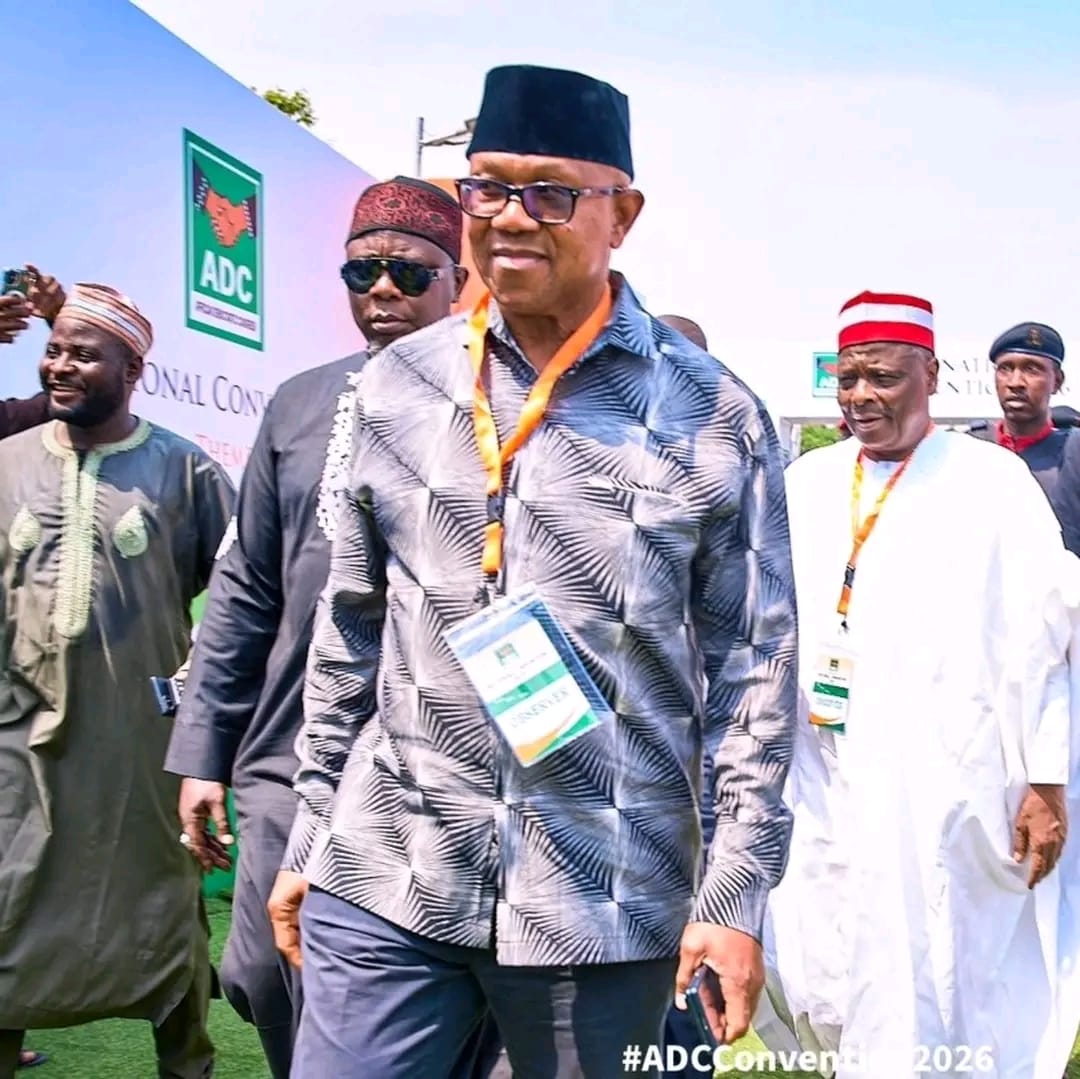
A political storm is brewing ahead of Nigeria’s 2027 general elections as a viral video released on April 19 has ignited intense debate over the strategic calculations of Peter Obi following his defection to the African Democratic Congress (ADC).
Obi, who contested the 2023 presidential election under the Labour Party, formally switched allegiance to the ADC on December 31, 2025, citing internal crises within his former party. His move is widely seen as part of a broader opposition realignment aimed at challenging the dominance of the ruling establishment in the January 16, 2027 elections.
The controversy stems from a widely circulated video questioning the prudence of Obi’s decision to join the ADC without first securing a guaranteed presidential ticket. Critics argue that in Nigeria’s highly competitive and alliance-driven political environment, such a move could weaken his chances, especially given the presence of heavyweight figures within the opposition coalition.
Among those aligned in the emerging coalition are prominent political actors such as Atiku Abubakar and Rabiu Kwankwaso, both of whom command significant political structures and grassroots influence. Analysts suggest that the convergence of these figures within the ADC could lead to a fierce internal contest for the party’s presidential ticket, raising questions about Obi’s pathway to emergence.
The video contrasts Obi’s approach with that of Bola Tinubu, whose political career has often been associated with strategic deal-making and coalition-building. According to the critics featured in the footage, Tinubu’s model of securing firm political agreements before making major moves offers a stark contrast to what they describe as Obi’s “risk-heavy” gamble.
However, Obi’s supporters have swiftly pushed back against the narrative, arguing that the former Anambra State governor’s political capital lies not in backroom deals but in popular support and credibility. They point to recent opinion polls—widely shared across social media platforms—which suggest that Obi maintains a strong lead in key regions, particularly among young voters and urban populations.
Defenders also highlight Obi’s tenure as governor of Anambra State, which they describe as marked by fiscal discipline, infrastructural development, and improved governance standards. To them, his track record provides a compelling case for his presidential ambition, regardless of internal party dynamics.
Political observers note that the unfolding debate underscores a broader reality of Nigerian politics—where alliances, negotiations, and timing often prove as decisive as popularity and policy. With less than two years to the next general elections, the ADC is fast becoming a focal point of opposition politics, and Obi’s role within it remains under intense scrutiny.
As discussions continue to dominate both traditional and digital media, one thing is clear: the road to 2027 is already taking shape, and every strategic decision—whether praised or criticized—could have far-reaching implications.
For Peter Obi, the ADC gamble may yet prove either a masterstroke or a miscalculation. But in Nigeria’s unpredictable political landscape, the final verdict will rest not in viral videos, but at the ballot box.