

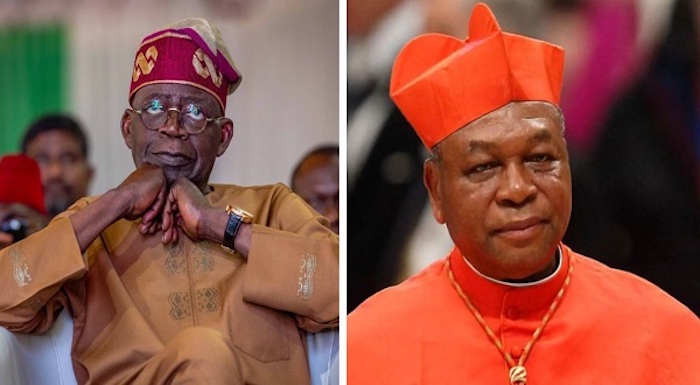
Cardinal John Onaiyekan, the Catholic Archbishop Emeritus of Abuja, recently granted interviews in which he expressed deep concern about Nigeria’s governance, democratic institutions, public trust, elections, and the judiciary. His remarks followed the communiqué issued by the Catholic Bishops’ Conference of Nigeria (CBCN), which warned of worsening insecurity, economic hardship, and democratic decline.
Trust Deficit Between Government and Citizens
Onaiyekan said Nigeria is facing a severe trust deficit, arguing that many Nigerians have lost confidence in government because they no longer believe public institutions act in their interest. He said while government officials continue to assure citizens that economic reforms will eventually yield benefits, many Nigerians are experiencing worsening poverty, insecurity, and hardship, making such assurances increasingly difficult to accept. According to him, rebuilding trust requires visible improvements in governance, transparency, and accountability rather than promises alone.
Elections and Allegations of Rigging
The Cardinal expressed concern over declining voter participation, describing it as evidence that many Nigerians have lost faith in the electoral process. He noted that low voter turnout means elected leaders are often chosen by only a small proportion of registered voters, raising questions about democratic legitimacy.
Onaiyekan stressed that Nigeria must establish a truly independent and impartial electoral umpire before the 2027 general elections. He argued that citizens must be confident that their votes will count and that election administrators are free from political influence.
While discussing election malpractice, he reiterated a position he has held for years: election rigging harms not only political contestants but every Nigerian because it denies citizens the leaders they freely choose. He has previously argued that when votes are manipulated, democracy itself is weakened.
The Judiciary
Onaiyekan also addressed the judiciary, saying public confidence in the courts is essential for democracy. He argued that Nigerians must believe that judges decide election disputes strictly according to the Constitution and the law, without fear or favour. If the judiciary is perceived as lacking independence or credibility, he warned, citizens’ confidence in democracy itself will continue to decline.
He emphasized that electoral disputes should be resolved fairly and transparently and has previously advocated greater openness in election petition proceedings to strengthen public confidence in judicial outcomes.
The Way Forward
According to Onaiyekan, restoring confidence in Nigeria’s democracy requires:
An independent and impartial electoral commission.
Credible, transparent, and violence-free elections.
A judiciary that is independent and trusted by the public.
Leaders who govern with integrity, accountability, and concern for citizens’ welfare.
Active civic participation by Nigerians to strengthen democratic institutions.
Overall, Onaiyekan’s message was that Nigeria’s democratic challenges are not insurmountable, but rebuilding public trust will require credible institutions, transparent elections, an independent judiciary, and leadership that demonstrates accountability through action rather than rhetoric.
Cardinal John Onaiyekan further lamented what he described as the deepening trust deficit in Nigeria, arguing that no nation can function effectively where citizens have lost confidence in public institutions. According to him, “even an angel cannot govern a country successfully where there is no trust,” emphasizing that restoring public confidence is essential for good governance.
During the interview, Onaiyekan also expressed disappointment over the conduct of elections and public commentary surrounding them. Referring to a former INEC chairman, Mahmoud Yakubu; he said he was surprised to see the former electoral chief appear on television and describe the elections as free and fair despite widespread public concerns. He argued that such statements further deepen the crisis of confidence in Nigeria’s electoral process.


