
A United States federal judge has given the US Department of Justice, FBI and Drug Enforcement Administration until August 21, 2026, to respond to an order concerning the release of law-enforcement records relating to Nigeria’s President Bola Tinubu and a decades-old investigation in the United States.
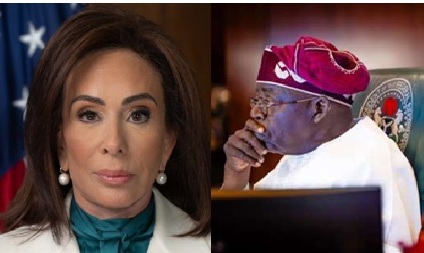
US District Judge Beryl Howell granted only a four-day extension after the US Attorney for the District of Columbia, Jeanine Pirro, sought an additional 10 days to comply with the court’s directive. The judge reportedly noted that the case had already remained before the court for more than three years.
The records are being sought in a Freedom of Information Act case involving documents held by the Department of Justice, Federal Bureau of Investigation and Drug Enforcement Administration. The litigation was initiated by American transparency activist Aaron Greenspan, who sought records concerning past US investigations involving Tinubu. Court records show that Judge Howell issued a significant ruling in April 2025 directing the agencies to search for and process non-exempt records responsive to the requests.
The controversy centres on a 1990s Chicago civil forfeiture case in which approximately $460,000 associated with Tinubu was forfeited. The case has repeatedly been cited in Nigerian political debates because of allegations that the money was connected to narcotics-related activities.
However, the existence of the forfeiture case, the requested government records or allegations contained in investigative materials does not establish that Tinubu committed a drug-trafficking offence. Tinubu has consistently denied wrongdoing and has not been criminally convicted of drug trafficking in the United States.
The latest push for disclosure has also acquired a distinctly political dimension. A US-based policy advisory and lobbying firm, Von Batten-Montague-York, which has been retained by former Nigerian Vice President Atiku Abubakar, has campaigned for the release of the records. The firm welcomed Judge Howell’s decision to limit the requested extension and urged the US authorities to make the documents available without further delay.
The firm has argued that the records should be released in the interest of transparency, particularly as Nigeria approaches another politically consequential election cycle. Atiku, a leading political opponent of Tinubu, has repeatedly raised questions about the President’s past dealings in the United States.
The case, however, predates the current political campaign. Greenspan’s FOIA requests were filed in 2022 and 2023, while the court proceedings have continued for several years. In April 2025, Judge Howell rejected attempts by federal agencies to withhold or avoid confirming the existence of certain records and ordered further processing of non-exempt materials.
The latest deadline means the US government and parties involved in the litigation face renewed pressure to move the disclosure process forward. Whether all requested documents will ultimately be released, however, may depend on applicable exemptions, redactions and further judicial directions.
The development is likely to intensify political debate in Nigeria, where Tinubu’s record and suitability for a second term in 2027 are already major campaign issues.
Supporters of disclosure argue that Nigerians have a right to know what official US records contain, while the President’s supporters have previously rejected attempts to use decades-old allegations to define his political career.
The August 21 deadline therefore places the long-running records dispute at another critical stage, with any newly released documents likely to attract intense scrutiny in Nigeria and abroad.
For now, the court’s order concerns the processing and disclosure of government records—not a finding that Tinubu committed a drug-trafficking offence.