

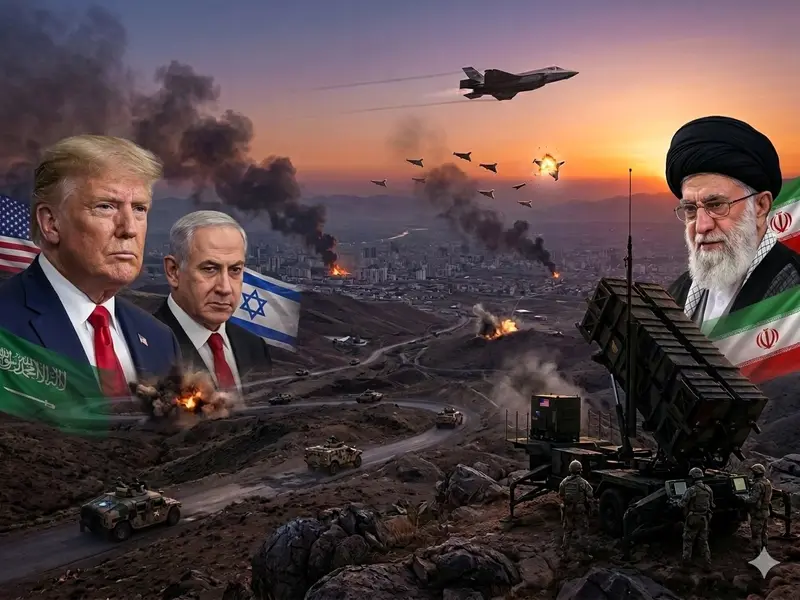
Global geopolitical tensions are rising as Russia and China appear to be strengthening strategic ties with Iran amid increasing military pressure from the United States and Israel, raising concerns that a regional confrontation could evolve into a broader global power struggle.
In a recent phone call with Iranian President , Russian President strongly criticised what the Kremlin described as joint Israeli-American aggression against Iran and called for an immediate ceasefire. Moscow’s reaction signals the seriousness with which Russia views the escalating tensions and reflects its growing political alignment with Tehran.
Analysts note that Russia has increasingly positioned itself as a diplomatic and strategic supporter of Iran, particularly since the escalation of the Iran – US Israel war which has deepened cooperation between Moscow and Tehran. In recent years, both countries have expanded military collaboration, including joint naval drills conducted in the Gulf of Oman and the northern Indian Ocean—moves widely interpreted as signals of an evolving strategic partnership.
China’s involvement could prove equally significant. Reports indicate that Iran is in discussions to acquire the CM-302 supersonic anti-ship missile, an export variant of China’s YJ-12 system. Defence analysts say the missile—capable of travelling at roughly Mach 4—could pose a serious threat to large naval vessels, potentially complicating the operational freedom of the U.S. Navy in the Persian Gulf and surrounding waters.
The development comes as the United States increases its military presence in the region. The aircraft carrier has already been deployed to the Arabian Sea, while the advanced carrier is moving toward the Eastern Mediterranean as part of a broader show of force aimed at deterring further escalation.
Security experts warn that the deployment of powerful anti-ship missile systems by Iran would significantly raise the risks for U.S. naval forces operating near Iranian waters. The loss or serious damage of a major U.S. aircraft carrier—considered among the most valuable assets in Washington’s military arsenal—would represent a historic strategic shock.
Meanwhile, Iran has been signalling its readiness for confrontation. The country’s elite military force, the (IRGC), has recently conducted a series of exercises involving drones, missiles and rockets across southern Iran and strategic islands in the Persian Gulf.
Live-fire drills in the strategically vital temporarily disrupted shipping traffic through the narrow passage that carries roughly 20 percent of the world’s oil supply—an action widely viewed as a warning about the global economic consequences of any potential conflict.
China’s diplomatic posture further reinforces the emerging geopolitical alignment. During a meeting in Beijing, Chinese President reiterated that China supports Iran in safeguarding its sovereignty and territorial integrity. While Beijing is unlikely to engage directly in military confrontation, its diplomatic backing and potential arms cooperation provide Tehran with significant strategic support.
As tensions continue to build, observers say the situation increasingly reflects a familiar pattern of global politics: rival blocs forming around competing visions of international order. On one side stand Russia, China and Iran advocating state sovereignty and resistance to Western intervention. On the other are the United States and its allies, including Israel, which view Iran’s missile and nuclear ambitions as a threat to regional stability.
For now, the confrontation remains indirect. However, with naval forces mobilising, military capabilities expanding and major powers openly staking their positions, analysts warn that the Middle East may once again become the centre of a far larger geopolitical contest.


