

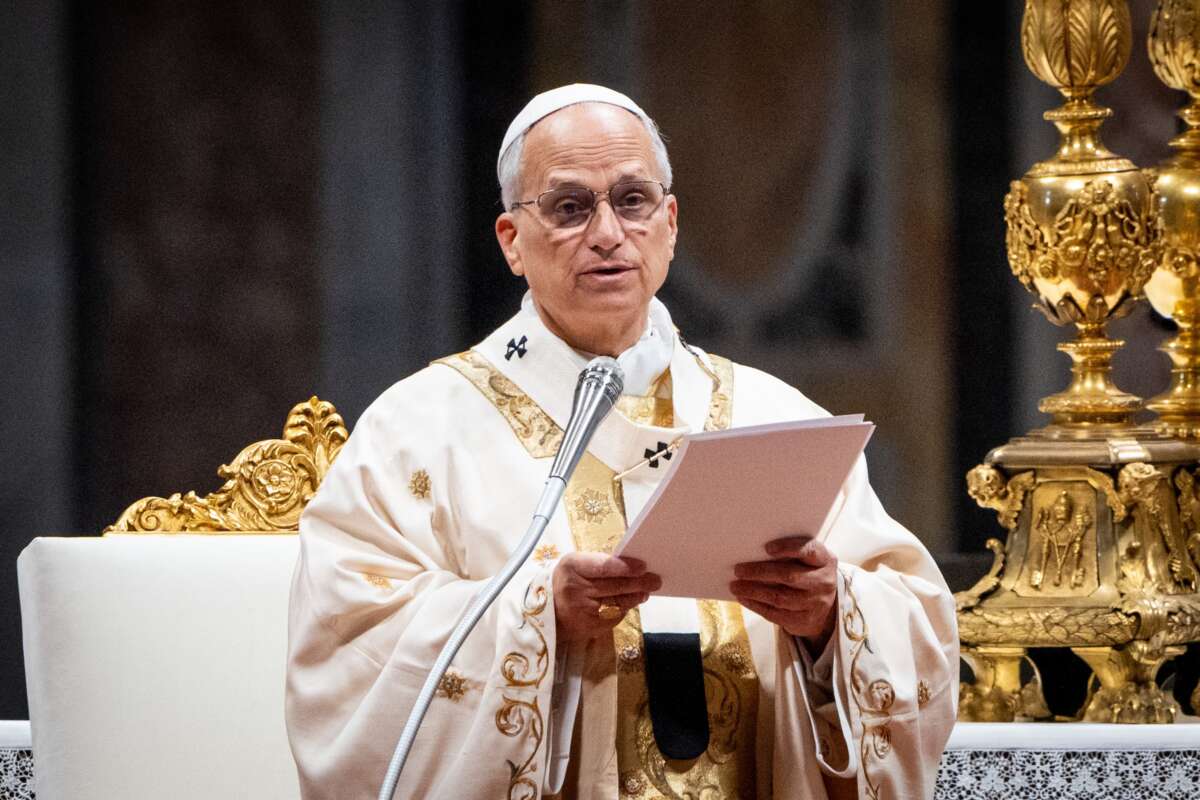
Pope Leo XIV has issued a strong rebuke against the misuse of religion and the invocation of God’s name for “military, economic and political gain,” warning that such practices distort faith and fuel global division.
Speaking during a recent address at the Vatican, the pontiff criticised leaders and groups who, he said, cloak their ambitions in religious language to justify actions that undermine human dignity and peace. His remarks come at a time of heightened geopolitical tensions and increasing concerns over the role of religion in conflicts across various parts of the world.
“Religion must never be used as a weapon,” the Pope declared, stressing that faith should serve as a force for unity, compassion, and justice rather than division and domination. He warned that invoking God to legitimise violence or political agendas represents a dangerous departure from the true teachings of religion.
The statement has drawn widespread attention from global observers, with many interpreting it as a direct response to ongoing conflicts where religious rhetoric has been employed to mobilise support or justify aggression. Analysts note that the Pope’s comments reflect a broader concern within the international community about the intersection of faith and power.
Religious scholars have long argued that while faith can inspire positive social change, it can also be manipulated when intertwined with political or economic interests. The Pope’s remarks echo these concerns, highlighting the need for greater responsibility among leaders and influencers who shape public narratives.
Observers say the message is particularly relevant in regions where sectarian tensions remain high. In such contexts, the use of religious identity as a political tool has often exacerbated conflicts, deepened mistrust, and hindered efforts toward reconciliation.
Beyond condemning misuse, the Pope also called on religious leaders worldwide to uphold integrity in their teachings and actions. He urged them to resist pressures that may lead to the distortion of spiritual values for material or strategic gains.
“Faith must remain a beacon of truth and hope,” he said, adding that religious institutions have a moral obligation to promote peace, dialogue, and mutual understanding among diverse communities.
The Vatican has historically played a role in advocating for peace and mediating conflicts, and the Pope’s latest statement reinforces that tradition. Analysts believe such pronouncements can influence both public opinion and diplomatic efforts, particularly in areas where religion holds significant social and cultural influence.
Reactions to the Pope’s comments have been largely positive among interfaith groups and civil society organisations, many of which have long campaigned against the politicisation of religion. However, some critics argue that the challenge lies not only in rhetoric but in practical steps to address the root causes of conflict and inequality.
As global tensions continue to evolve, the Pope’s message serves as a reminder of the enduring importance of ethical leadership and the responsible use of influence. His warning against the exploitation of religion underscores a broader call for accountability—one that transcends borders, beliefs, and political systems.
In a world increasingly shaped by complex power dynamics, the pontiff’s words resonate as both a moral directive and a plea for a return to the core values of faith: peace, justice, and the shared humanity that binds all people together.


