

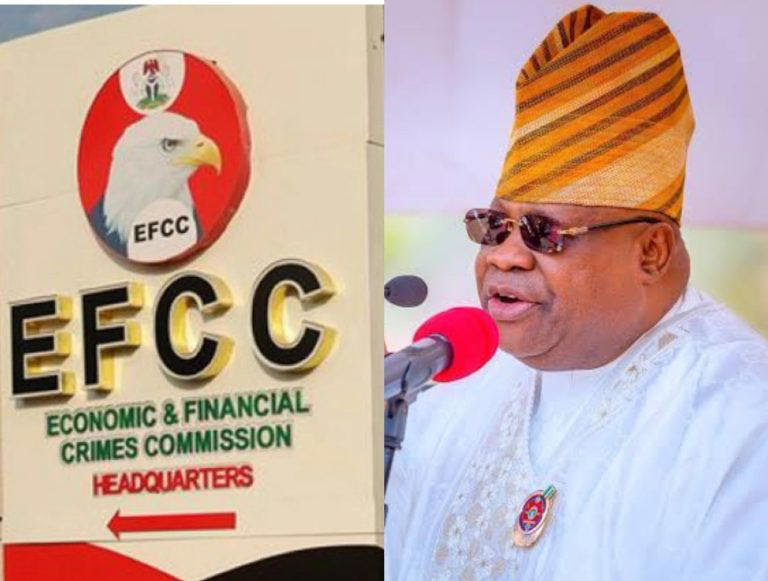
Osun State Governor Ademola Adeleke has taken legal action against the Economic and Financial Crimes Commission (EFCC) over the freezing of an account containing the state’s statutory allocation, demanding ₦2 billion in damages.
The lawsuit, filed before the Federal High Court in Abuja, challenges the EFCC’s decision to restrict access to the account. The Osun Government is seeking a declaration that the action was unlawful, alongside damages for what it considers an improper interference with the state’s finances.
The dispute has brought the powers of the EFCC into sharper focus, particularly regarding its authority to restrict accounts belonging to government institutions during financial crime investigations.
For the Osun administration, the matter is not simply a legal disagreement but also a question of access to public funds needed to meet government obligations. State allocations are used to finance various responsibilities, including salaries, infrastructure, healthcare, education and other public services.
The EFCC, however, is mandated to investigate suspected economic and financial crimes and has previously maintained that measures taken during investigations are intended to protect funds that may be connected to alleged wrongdoing.
The lawsuit therefore presents the court with an opportunity to examine the competing positions and determine whether the account restriction complied with relevant laws and procedures.
The controversy has attracted considerable attention amid wider national discussions about the powers of anti-corruption agencies and the need to protect public resources from abuse. At the same time, state governments have consistently stressed that investigations should not unnecessarily disrupt legitimate government operations.
The legal dispute follows an earlier disagreement between the Osun Government and the EFCC concerning financial transactions involving the state. Both sides have maintained different positions regarding the legality and circumstances surrounding the account restriction.
The court’s eventual decision could provide useful clarification on how government accounts should be handled when they become subject to financial crime investigations.
For now, the ₦2 billion claim remains before the court, while the EFCC is expected to respond to the allegations contained in the suit.
The case underscores the importance of balancing anti-corruption enforcement with due process and the uninterrupted management of public finances as the judicial process continues.


