

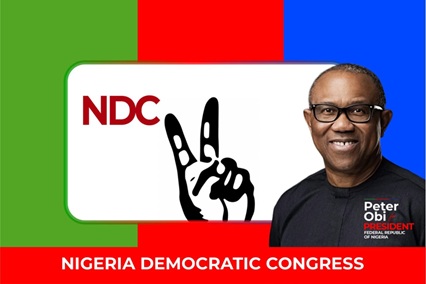
The presidential campaign of Peter Obi and his running mate, Rabiu Musa Kwankwaso, has formally begun ahead of Nigeria’s 2027 general election, with the Nigeria Democratic Congress candidate promising to build a government anchored on discipline, competence and accountability.
The campaign launch on August 19, 2026, followed the opening of the statutory campaign period under Nigeria’s electoral framework. The Electoral Act provides a defined window for presidential campaigns ahead of the election, with the current period running towards the January 2027 polls.
Obi, who emerged as the NDC’s presidential candidate, is seeking to position his campaign as an alternative to the governing All Progressives Congress and other opposition contenders ahead of what is expected to be a highly competitive presidential election.
At the centre of his campaign message is a pledge to deliver four years of disciplined and competent leadership aimed at laying a stronger foundation for Nigeria’s long-term development.
The former Anambra State governor has repeatedly argued that Nigeria’s problems can be addressed through better management of public resources, stronger institutions and a greater emphasis on productivity.
Supporters of the NDC candidate have also promoted a five-point policy framework centred on merit, equal opportunity, improved public services, accountability and a reduction in government extravagance.
The campaign argues that Nigerians should be rewarded based on competence and achievement rather than political connections, ethnicity or other considerations.
Equal opportunity is also expected to feature prominently in the campaign, with supporters presenting it as essential to creating a society where citizens can pursue education, employment and entrepreneurship without discrimination.
Improving public services represents another major component of the proposed agenda. Supporters say government must deliver better infrastructure, education, healthcare and other essential services if Nigeria is to improve the quality of life of its citizens.
The campaign has also criticised what it describes as excessive government spending and political extravagance, arguing that public resources should be directed towards development rather than unnecessary expenditure.
The message is being promoted under slogans including “Nigeria Will Be OK,” reflecting the campaign’s attempt to combine policy proposals with a message of optimism at a time when many Nigerians continue to face economic hardship and insecurity.
Obi’s supporters have expressed enthusiasm across different parts of the country, highlighting what they consider his record in Anambra State and his emphasis on financial discipline and public accountability.
The campaign’s regional appeal will nevertheless be closely watched as the election approaches. Nigeria’s presidential contests are often influenced by complex combinations of regional, religious, ethnic and political considerations.
The Obi-Kwankwaso alliance seeks to present itself as a broad national political project capable of attracting voters across Nigeria’s geopolitical zones.
The NDC ticket will face significant competition in the presidential race, including President Bola Tinubu of the APC, who is expected to seek another term, as well as other opposition contenders such as former Vice President Atiku Abubakar.
The emergence of multiple strong political figures is likely to produce an intense campaign environment, with debates expected to centre on the economy, insecurity, unemployment, education, corruption and the cost of governance.
For Obi and his supporters, however, the central argument is that Nigeria requires a fundamental change in the way government is managed.
The campaign’s emphasis on discipline and competence reflects Obi’s long-standing political message that public office should be treated as a responsibility rather than an avenue for personal enrichment.
Kwankwaso’s presence on the ticket also gives the campaign a prominent northern political figure with an established political base, particularly in Kano and parts of northern Nigeria.
The alliance therefore represents an attempt to combine Obi’s support base in southern and other parts of the country with Kwankwaso’s political influence in the North.
As the official campaign period gets underway, the NDC is expected to expand its mobilisation efforts through rallies, grassroots organising, social media and direct engagement with voters.
The coming months will test whether the campaign’s message of competence, accountability, merit and national unity can translate into a sufficiently broad electoral coalition.
With the 2027 presidential contest now moving into its formal campaign phase, Nigerian voters are set to hear increasingly competing visions for the country’s future.
For the Obi-Kwankwaso ticket, the message is clear: Nigeria can overcome its current challenges through disciplined leadership, competent management of public resources and a government focused on equal opportunity and improved public services.