

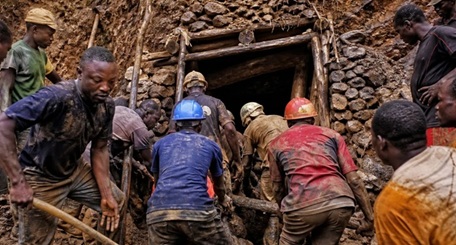
At least 100 people have been killed after a landslide struck an illegal gold mine in the Central African Republic near the border with Cameroon, in the latest deadly accident linked to unregulated mining in the mineral-rich country.
The disaster occurred at an informal gold-mining site where miners were reportedly working when a section of the mine collapsed, trapping workers and other people beneath the debris.
Local sources said the death toll could rise as rescue and recovery efforts continue, with the full scale of the disaster still being assessed.
The incident has once again highlighted the dangers associated with informal and poorly regulated mining operations across the Central African Republic, where thousands of people depend on artisanal mining for their livelihoods.
The Central African Republic is rich in natural resources, including gold and diamonds, but much of its mineral wealth is extracted through informal or illegal operations. Many miners work in dangerous conditions without adequate geological assessments, protective equipment or professionally engineered mining structures.
Such conditions can make underground and open-pit mining particularly vulnerable to collapses and landslides, especially during periods of heavy rainfall.
The latest tragedy occurred close to the country’s border with Cameroon, an area where cross-border economic activity and informal mining have become significant sources of income for local communities.
The loss of life has generated renewed concerns over the government’s ability to regulate mining activities and protect workers operating in the country’s informal mineral sector.
Artisanal miners frequently enter unstable areas in search of gold, sometimes digging deep tunnels without the structural reinforcement used in industrial mining operations.
In addition to the immediate risk of mine collapses, informal mining exposes workers to other dangers, including flooding, toxic chemicals, cave-ins and accidents involving mining equipment.
The latest disaster is reportedly one of several fatal mining accidents recorded in the Central African Republic in recent years.
The frequency of such incidents has raised questions about whether stronger enforcement and safer mining practices could prevent future tragedies.
Authorities face a difficult challenge because artisanal mining provides an important source of income for impoverished communities. A sudden crackdown on illegal mining without alternative livelihoods could leave thousands of families without a means of survival.
However, the scale of the latest loss of life could intensify pressure on the government to establish stronger controls over mining sites while creating safer conditions for legitimate artisanal miners.
Experts have repeatedly stressed the importance of geological surveys, controlled excavation, proper drainage and protective equipment at mining sites.
Formalising artisanal mining could also allow authorities to monitor operations more effectively, collect revenue and introduce minimum safety standards.
For families in the affected community, however, the immediate priority remains recovering the bodies of those trapped in the collapse and determining whether additional victims remain beneath the debris.
Emergency responders and local residents have reportedly been involved in recovery efforts, although difficult terrain and unstable ground could complicate the operation.
The disaster also highlights the broader contradiction facing resource-rich but economically vulnerable countries across Africa: valuable mineral deposits can provide livelihoods and national revenue, yet the people extracting those resources often work under the most dangerous conditions.
Gold remains an important source of income for communities across the Central African Republic, but illegal and unregulated mining has also contributed to environmental degradation and weakened state oversight of mineral resources.
The latest tragedy is therefore likely to renew calls for a comprehensive review of mining regulations and stronger enforcement against unsafe operations.
As authorities continue assessing the disaster, the death toll could rise if rescuers discover more victims beneath the collapsed mine.
For now, the deaths of at least 100 people represent one of the country’s worst recent mining tragedies and a grim reminder of the human cost of unregulated mineral extraction.