

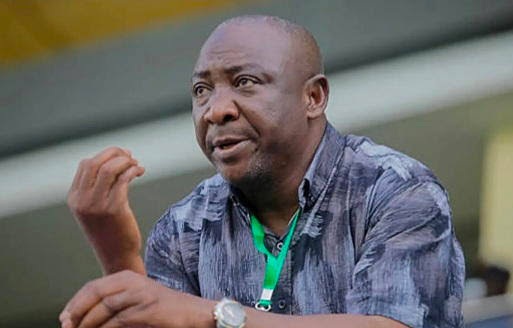
The crisis engulfing Nigerian football reached a dramatic turning point yesterday as the President of the Nigeria Football Federation, Ibrahim Musa Gusau, resigned from office alongside members of his board, abruptly ending an administration that had faced growing pressure over the state of football in the country.
Gusau’s resignation came amid mounting concerns over the direction of Nigerian football, with questions surrounding the federation’s leadership, administration, national-team performances and the wider management of the sport.
The development is expected to trigger a fresh leadership transition within the NFF at a particularly sensitive period for Nigerian football.
The federation occupies a central position in the administration of football in Nigeria, overseeing the country’s national teams and coordinating domestic and international football activities. Its leadership therefore carries significant implications for the Super Eagles, the Super Falcons and the numerous other national teams competing under the federation.
The resignation of the president and members of the board means that the NFF will now have to activate the appropriate constitutional mechanisms for managing the transition and determining the next steps for the federation.
The sudden departure also raises questions about the immediate future of several programmes and decisions initiated under the outgoing administration.
For Nigerian football supporters, the development comes after years of frustration over what many regard as persistent administrative problems within the sport.
The country’s footballing reputation has remained strong internationally, but its football administration has frequently been criticised over issues ranging from poor planning and funding to leadership disputes and disagreements involving players, coaches and officials.
The NFF has also faced pressure over the performance of the national teams and the management of crucial international competitions.
For the Super Eagles in particular, expectations remain exceptionally high given Nigeria’s status as one of Africa’s traditional football powers. Supporters have repeatedly demanded better organisation and a more professional approach to national-team management.
The resignation of Gusau and his board is therefore likely to intensify calls for fundamental reforms rather than simply a change of personalities.
Stakeholders in Nigerian football are expected to demand greater transparency in the federation’s finances, improved administrative structures, stronger grassroots development and more effective management of the national teams.
Another major issue is the development of young footballers.
Nigeria possesses enormous football talent, but stakeholders have consistently argued that the country needs stronger systems for identifying, developing and retaining young players.
A more effective football administration could help create clearer pathways from grassroots football to professional clubs and national teams.
The domestic league is another area likely to attract attention during the transition.
The Nigeria Premier Football League and other domestic competitions have struggled with challenges relating to infrastructure, financing, organisation and fan engagement. A stable and credible football federation will be expected to work closely with clubs and other stakeholders to address these issues.
The leadership vacuum also comes at a time when Nigerian football requires strategic planning for major international competitions.
Any prolonged uncertainty at the federation could complicate preparations for national-team assignments, player welfare and relationships with international football bodies.
Consequently, stakeholders are likely to push for a swift and orderly transition.
The immediate challenge will be ensuring that the resignation does not create further instability within the federation.
The NFF’s next leadership will inherit a sport with enormous public expectations but also deep-rooted structural challenges.
It will have to rebuild confidence among players, coaches, clubs, supporters, sponsors and government authorities while demonstrating that Nigerian football can be administered professionally and transparently.
The resignation also presents an opportunity for the federation to undertake a broader institutional reset.
Rather than merely replacing outgoing officials, football stakeholders could use the moment to examine the systems that have repeatedly produced leadership crises and administrative controversies.
For supporters, the central question is no longer simply who will lead the NFF.
It is whether the next administration can finally provide stability, accountability and a clear long-term vision for Nigerian football.
Gusau’s exit therefore marks the end of one chapter, but it may also signal the beginning of a much bigger battle over the future direction of the sport.
As the federation prepares for its next phase, Nigerians will be watching closely to see whether the latest leadership crisis produces another temporary change at the top—or becomes the catalyst for the fundamental reforms the country’s football system has long demanded.