

Editorial:
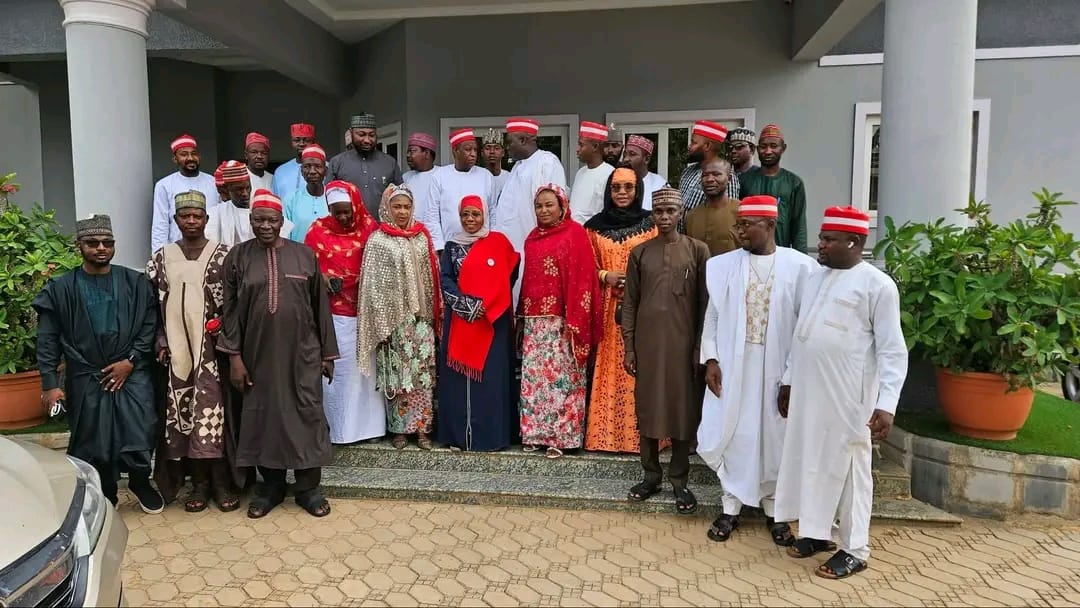
The political temperature in northern Nigeria is rising sharply as the Kwankwasiyya Movement, loyal to Rabiu Musa Kwankwaso, reportedly launches a sweeping grassroots registration drive into the Nigeria Democratic Congress. This is no ordinary partisan shift—it is a calculated, almost military-style mobilisation designed to pre-load a new political platform with ready-made structure before a formal declaration expected on Monday.
What is unfolding bears the hallmarks of strategic political engineering. By initiating mass registration ahead of time, the movement is not merely preparing for defection; it is transplanting an entire political ecosystem. Ward leaders, youth coordinators, and local influencers are said to be aligning in synchrony, suggesting that when the formal announcement comes, the NDC will not just gain members—it will inherit a functioning political machine.
This development signals a deeper fracture within the opposition landscape. The instability within the African Democratic Congress has created a vacuum—one that Kwankwaso and his allies appear determined to fill decisively. Rather than wait for internal reforms or prolonged negotiations, the Kwankwasiyya bloc is choosing speed, coordination, and numerical strength as its weapons of choice.
The implications are far-reaching. Should this transition materialise as planned, the NDC could overnight transform from a relatively obscure platform into a formidable political force with deep northern roots. More significantly, it raises questions about whether this is merely a migration—or the beginning of a broader opposition coalition recalibrating ahead of 2027.
In Nigerian politics, timing is everything. And this move, unfolding with precision and urgency, suggests that Kwankwaso is not just changing parties—he is attempting to redefine the battlefield before others even arrive.
The scale and timing of this mobilisation point to something far more consequential than a routine party switch. What the Kwankwasiyya bloc, under Rabiu Musa Kwankwaso, appears to be executing is a pre-emptive political occupation—a strategy where structure, loyalty, and numbers are moved ahead of the principal actor to secure dominance before formal entry.
At the heart of this move is a clear understanding of how power is built and exercised within Nigerian party systems. Parties are rarely transformed by high-profile defections alone; they are reshaped by control of grassroots machinery—ward executives, polling unit agents, youth mobilisers, and local financiers. By reportedly directing mass registration into the Nigeria Democratic Congress before his official declaration, Kwankwaso is ensuring that his influence within the party is not negotiated after arrival but established in advance as a fait accompli.
This approach also neutralises one of the biggest risks defectors face: marginalisation within a new political home. In many past cases, prominent politicians who switched parties found themselves constrained by pre-existing structures loyal to other power blocs. What is happening now flips that script. If the Kwankwasiyya network successfully embeds itself nationwide—starting from Kano and radiating outward—the NDC may quickly evolve into a party where Kwankwaso’s loyalists are not just participants but primary stakeholders and agenda-setters.
Equally significant is the psychological dimension. Politics thrives on perception, and momentum often becomes reality. A visible, coordinated influx of supporters sends a strong signal to undecided actors—politicians, donors, and even rival factions—that the NDC is no longer a fringe platform but an emerging center of gravity. This could trigger a domino effect, drawing in other dissatisfied blocs seeking relevance ahead of the 2027 electoral cycle.
The backdrop to this development is the lingering instability within the African Democratic Congress. Internal disputes, leadership tussles, and legal uncertainties have weakened confidence in the party as a viable long-term vehicle for opposition politics. Rather than remain trapped in that uncertainty, Kwankwaso’s camp appears to be opting for a controlled exit with maximum leverage, taking along not just supporters but an organised political identity.
There is also a broader strategic alignment potentially at play. With figures like Peter Obi reportedly exploring the same platform, the NDC could become the nucleus of a wider opposition realignment. However, such alliances are rarely seamless. The convergence of multiple strong personalities and established political bases raises inevitable questions about leadership hierarchy, ticket arrangements, and ideological coherence. The current mass registration drive may therefore also be a subtle way of staking early claims in what could become a crowded political arena.
Ultimately, what distinguishes this moment is its deliberate sequencing. Instead of announcement first and organisation later, the process has been reversed: build the base, secure the structure, then unveil the move. It is a method that reduces uncertainty, consolidates bargaining power, and maximises immediate impact.
If executed successfully, this will not just be remembered as Kwankwaso leaving one party for another. It will be seen as a case study in how to migrate political capital at scale—turning a personal defection into a systemic shift capable of reshaping the opposition landscape in Nigeria.


