

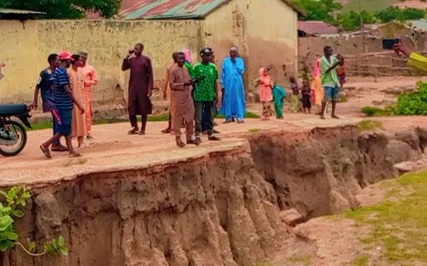
Residents of Kumo, headquarters of Akko Local Government Area of Gombe State, have raised the alarm over worsening gully erosion that is threatening homes, farmlands and major roads in several parts of the community.
The residents said the erosion has continued to expand, particularly during periods of heavy rainfall, creating deep channels that are gradually consuming portions of residential areas and agricultural land.
According to members of the community, the situation has become increasingly dangerous as runoff water continues to widen existing gullies and create new erosion sites across the town.
Several residents expressed concern that homes located close to the affected areas could eventually collapse if urgent intervention is not provided.
Farmers have also raised concerns about the impact of the erosion on agricultural land, warning that the continued loss of fertile soil could affect food production and the livelihoods of households that depend heavily on farming.
Roads in some parts of Kumo have also been affected, with residents saying erosion has damaged sections of roads and made movement increasingly difficult, particularly during the rainy season.
The residents appealed to the Gombe State Government, Akko Local Government Council and relevant federal agencies to urgently intervene before the situation becomes more difficult and expensive to address.
They called for the construction of proper drainage systems and erosion-control infrastructure capable of directing stormwater away from residential areas and farmlands.
A community member said the problem was no longer an issue that could be ignored, stressing that residents had watched the gullies grow over time without a permanent solution.
The worsening erosion has also raised concerns about the safety of children and other vulnerable residents, particularly in areas where deep gullies are located close to homes and roads.
Residents said they were worried that continued rainfall could accelerate the destruction and put more properties at risk.
Experts have frequently linked severe gully erosion in northern Nigeria to a combination of intense rainfall, poor drainage, uncontrolled water runoff, vegetation loss and inadequate urban planning.
When stormwater is not properly channelled, it can rapidly remove topsoil and gradually form deep channels. Once a gully becomes established, it can expand quickly and cause significant damage to roads, buildings and agricultural land.
The situation in Kumo therefore requires more than temporary measures, residents said, urging authorities to develop a comprehensive erosion-control plan for the affected areas.
Such intervention could include properly engineered drainage networks, culverts, vegetation restoration and the stabilisation of existing gullies to prevent further expansion.
The residents also called for regular monitoring of vulnerable areas, particularly during the rainy season, to identify emerging erosion sites before they become major threats.
Beyond the immediate destruction of property, the erosion could have wider economic consequences if farmland continues to be lost and roads become impassable.
For a community whose residents depend heavily on agriculture and local commerce, damage to roads and farmland could disrupt both livelihoods and movement of goods.
Residents are therefore appealing for swift government action rather than waiting until the erosion causes major structural damage or claims lives.
They stressed that early intervention would not only protect homes and farmlands but could also save government the much higher cost of repairing infrastructure after extensive destruction.
As the rainy season continues, the people of Kumo are hoping that the authorities will respond urgently to their concerns and implement lasting measures to protect the community from further erosion.