

The Federal Government has ruled out any immediate increase in electricity tariffs, saying its current priority is to stabilise the power sector, improve electricity supply and address the industry’s financial challenges.
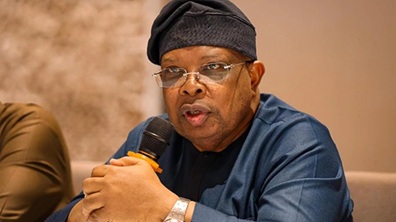
The Minister of Power, Joseph Tegbe, disclosed this on Monday in Abuja while presenting an account of his first 100 days in office. He said tariff increases were not currently on the government’s agenda.
Tegbe’s declaration came amid concerns over the cost of electricity and reports suggesting that consumers could face another tariff adjustment. He said the government was instead concentrating on fixing structural problems across the electricity value chain.
“We have no plan to increase electricity tariffs. There is no immediate plan by this government to increase tariff. It is not on our table; it is not on our agenda,” the minister said.
According to Tegbe, electricity generation and transmission had remained above 5,000 megawatts in recent weeks, compared with between 3,700MW and 4,700MW before June 2026.
He said the national generation peak reached 5,330MW during August and September, attributing the improvement to interventions aimed at restoring power infrastructure and improving the performance of existing generating assets.
However, the minister acknowledged that higher generation figures had not necessarily translated into reliable electricity supply for every Nigerian household and business.
He said the government’s immediate challenge was to sustain the improvements and ensure that increased generation translated into dependable supply at the customer level.
Among the interventions highlighted by the minister was the restoration of the 375MW Alaoji open-cycle power plant, which had reportedly remained offline for about three years.
He also said newly commissioned transformers at Apapa, Ijora, Alausa and Lekki in Lagos had unlocked 672MW of transmission capacity. Another 300MVA transformer energised at Katampe, Abuja, was said to have unlocked an additional 240MW.
Tegbe disclosed that more than 300 containers containing critical electricity equipment had also been released from the ports for deployment following inspection.
On the financial problems confronting the sector, the minister said the government had raised an estimated N1.23tn towards settling outstanding power-sector debts. The intervention forms part of a wider programme targeting liabilities estimated at N3.3tn.
The minister said improving liquidity across the electricity value chain would strengthen the ability of operators to maintain infrastructure, pay suppliers and improve service delivery.
Metering also featured prominently in the government’s efforts to reform the sector. Tegbe said approximately 350,000 meters were installed during his first 100 days in office, taking cumulative installations to more than one million as of August 2026.
He added that the resolution of litigation involving AMMON had cleared the way for the procurement of about 1.4 million smart meters under affected programmes.
Beyond grid electricity, Tegbe said 62 solar and mini-grid projects had been completed across 30 states, providing about 43.6MW of installed solar capacity and more than 41,000 new connections.
The projects, according to the minister, have an estimated reach of more than 208,000 people.
He also disclosed that the government had blocked revenue leakages associated with energy theft and other losses along the Ikorodu-Sagamu industrial corridor, which he estimated at about N120bn annually.
Looking ahead, Tegbe said the government would focus on strengthening major transmission corridors, including Lagos, Enugu-Port Harcourt and Abuja-Kaduna-Kano, while advancing plans for a proposed Transmission Super Grid.
He said technical audits had commenced along some transmission corridors to identify weak points and direct investment towards areas with measurable impact.
The minister also said the government was pursuing additional investments and partnerships in the power sector, including efforts to accelerate the 1.9-gigawatt Presidential Power Initiative.
Tegbe acknowledged that Nigerians remained dissatisfied with the quality and reliability of electricity supply despite recent improvements. He stressed that the government’s performance would ultimately be measured by whether consumers experienced more dependable power, accurate billing and faster resolution of faults.
For now, the minister’s position is that Nigerians should not expect an immediate electricity tariff increase as the Federal Government concentrates on addressing infrastructure, debt, metering, revenue collection and other structural problems within the sector.


