

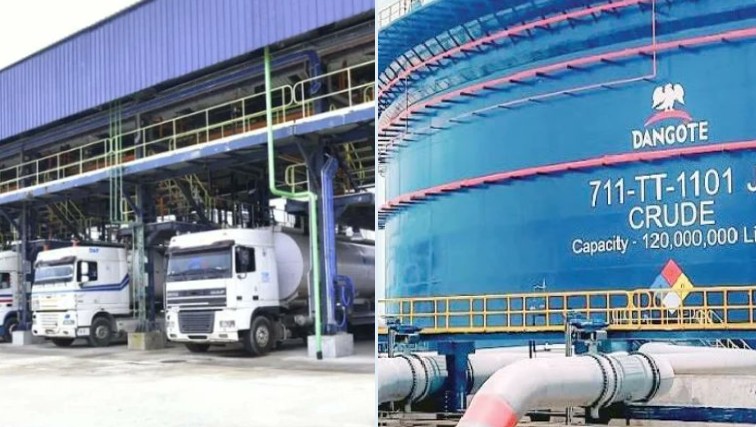
The Dangote Petroleum Refinery has commenced the sale of petroleum products in United States dollars to major bulk buyers, marking a significant shift in its pricing policy amid mounting foreign exchange pressures and concerns over crude oil supply.
The new policy, which took effect on July 13, 2026, invalidates all outstanding invoices previously issued in naira and introduces fresh dollar-denominated prices for refined petroleum products. Under the revised pricing structure, premium motor spirit (petrol) will sell for $0.779 per litre, while automotive gas oil (diesel) has been fixed at $1.087 per litre for qualified bulk purchasers.
The development is expected to have far-reaching implications for Nigeria’s downstream petroleum sector, particularly at a time when businesses and consumers are already grappling with high inflation and exchange rate volatility.
Industry analysts say the refinery’s decision reflects the financial realities of its operations. While the facility purchases a significant portion of its crude oil in United States dollars, it had continued to sell refined products in naira, exposing the company to substantial exchange rate losses as the local currency weakened.
Sources familiar with the refinery’s operations said the shift to dollar-based transactions became necessary to ensure commercial sustainability and reduce the financial imbalance created by fluctuating exchange rates.
The latest move also underscores the challenges facing the Federal Government’s naira-for-crude policy, introduced in 2024 to strengthen the local currency and reduce dependence on foreign exchange in domestic petroleum transactions.
Under the arrangement, local refiners were expected to purchase crude oil using naira. However, industry observers note that Dangote Refinery has consistently received far fewer crude cargoes under the scheme than required to sustain optimal production.
According to reports, the refinery requires between 13 and 15 crude oil cargoes each month to operate efficiently but has been allocated considerably fewer shipments under the policy. As a result, the company has continued to source additional crude supplies from international markets where transactions are denominated in dollars.
Economists warn that the adoption of dollar pricing could introduce greater volatility into Nigeria’s domestic fuel market. Since petroleum marketers purchasing products in dollars will depend on prevailing foreign exchange rates, fluctuations in the value of the naira could directly influence the retail prices eventually paid by consumers.
Higher fuel costs would likely increase transportation expenses, manufacturing costs and the prices of essential goods and services, potentially worsening inflationary pressures across the economy.
Experts also caution that increased demand for dollars by fuel marketers could place additional strain on Nigeria’s foreign exchange reserves and intensify pressure on the naira if adequate forex liquidity is not maintained.
Some stakeholders have called on the Federal Government to strengthen the implementation of the naira-for-crude initiative by ensuring more consistent crude supply to domestic refineries. They argue that a stable supply arrangement would reduce reliance on imported crude purchased in foreign currency and help preserve the original objective of insulating the local market from exchange rate shocks.
Others, however, maintain that the refinery’s decision is commercially justified given prevailing market conditions and the need to align operating costs with revenue streams.
The development marks another significant milestone in the evolution of Nigeria’s petroleum industry following the commencement of large-scale refining by the Dangote Refinery. As marketers adjust to the new pricing regime, attention will focus on its impact on fuel pump prices, inflation, foreign exchange demand and the broader economy in the months ahead.


