

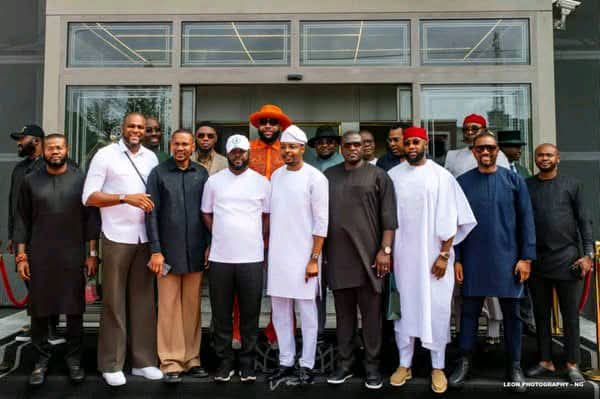
A social media post by Bello Isiaka has sparked renewed debate about the intersection of business interests and political power in Nigeria. In the widely shared Facebook commentary, Isiaka referenced several prominent Nigerian entrepreneurs and business figures, arguing that large-scale business operators are often guided primarily by survival considerations rather than ethnic or sentimental political alignments.
Among those mentioned is Zenco, reportedly developing an estate project near . He also cited , CEO of , as well as nightlife entrepreneur , associated with Pablo Night Club and Cubana Ikeja.
Isiaka further referenced , described as a major clearing and forwarding operator; , CEO of The Delborough Lagos; and nightlife personality , linked to Donald’s Fast Food.
Also mentioned were of , of , alongside other entrepreneurs such as Nonso Ozoemena, Chima Anyaso, Vintage, and Enviable.
Business Survival Over Tribal Sentiment
According to Isiaka’s argument, major business leaders operating in regulated sectors such as oil and gas, real estate, hospitality, logistics, and nightlife are often compelled to maintain functional relationships with the government of the day.
“Believe me, if you were in their shoes, you would do the same,” he wrote, emphasizing that no major investor would deliberately antagonize political authority when regulatory approvals, taxation, infrastructure access, and security protections are central to operational stability.
The post suggests that economic pragmatism—not tribal loyalty—often shapes public alignments or perceived political neutrality among business elites.
Elections Beyond Ethnic Arithmetic
Isiaka further argued that Nigerian elections cannot be reduced solely to ethnic considerations. Citing the 2023 presidential election outcome in Lagos, he noted that if voting patterns were strictly tribal, opposition candidate would not have secured a victory over eventual president in Lagos State.
The commentary concludes that political behavior in Nigeria reflects a complex mix of economic, strategic, regulatory, and demographic factors rather than a single narrative of ethnic bloc voting.
Broader Implications
The discussion underscores a longstanding debate within Nigeria’s political economy:
- Do business elites align with power out of conviction or necessity?
- Can large-scale investors afford political independence in a highly regulated environment?
- Is economic pragmatism often mistaken for political endorsement?
While reactions to Isiaka’s post remain divided, the broader conversation highlights the delicate balance between commerce and governance in Africa’s largest economy.
As Nigeria approaches future electoral cycles, the relationship between political authority and economic power is likely to remain a defining factor in public discourse.


