

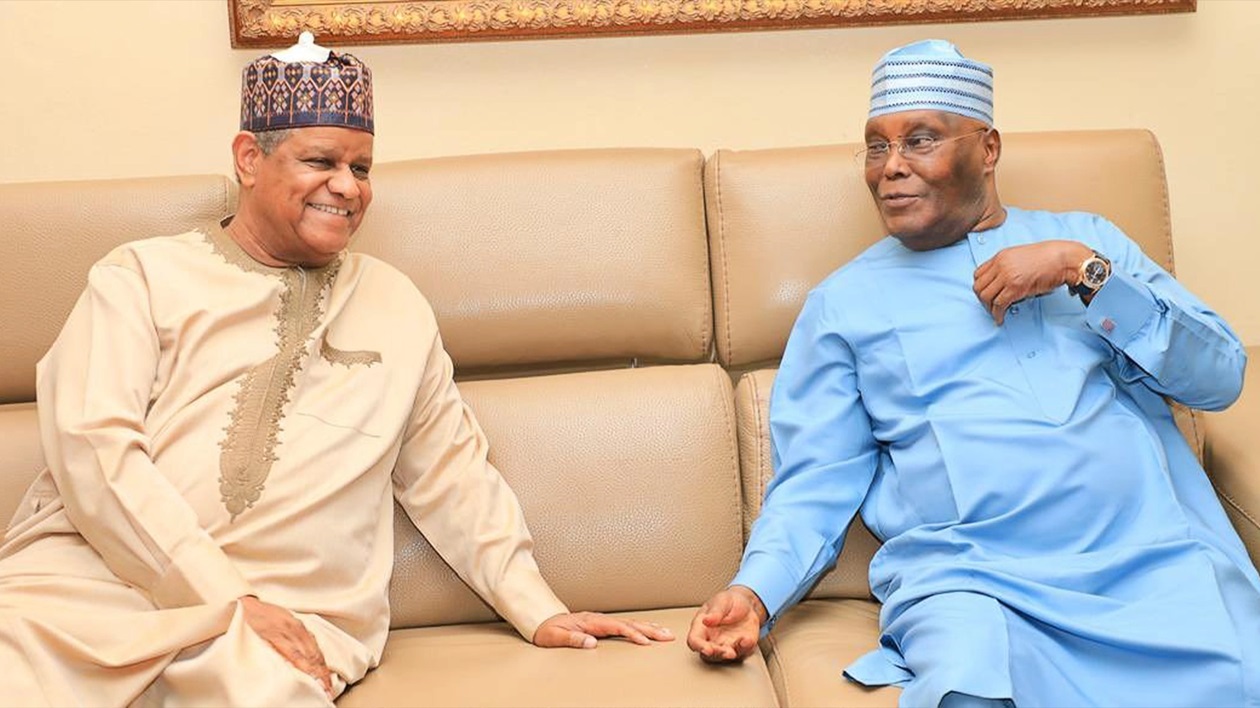
Former Vice President and presidential candidate of the African Democratic Congress (ADC), Atiku Abubakar, has held a closed-door meeting with fellow party stalwart Mohammed Hayatu-Deen in what observers see as a significant reconciliation effort following the party’s controversial presidential primary.
The meeting took place at Atiku’s Lagos residence on Sunday, days after he emerged as the ADC’s presidential candidate. The development comes amid lingering tensions within the party after Hayatu-Deen and former Rivers State governor Rotimi Amaechi rejected the outcome of the primary, alleging irregularities and voter disenfranchisement.
According to reports, discussions centered on party unity, the future of the ADC, and broader national issues. Following the meeting, Atiku disclosed that both leaders agreed on the need to work together in what he described as the task of “reclaiming and rebuilding” Nigeria.
The talks form part of a wider effort by Atiku to heal divisions within the party after the primary. Earlier in the week, he also visited Amaechi in Abuja in a similar move aimed at consolidating support and reducing post-primary tensions.
Since his emergence as the ADC flag bearer, Atiku has repeatedly appealed to aggrieved aspirants and party members to put the contest behind them and unite ahead of the 2027 general election. He has maintained that internal party contests should not create permanent divisions and has emphasized that there should be “no winners and no losers” within the party.
The reconciliation effort comes at a crucial time for the ADC as it seeks to present itself as a formidable opposition platform ahead of the 2027 elections. Analysts believe the party’s ability to manage internal disagreements and retain key figures such as Hayatu-Deen and Amaechi could significantly influence its prospects in the coming electoral contest.
While details of the closed-door discussions remain limited, the meeting is being viewed as a positive signal that the party leadership is moving to address grievances and strengthen cohesion after a primary process that generated considerable controversy.


