

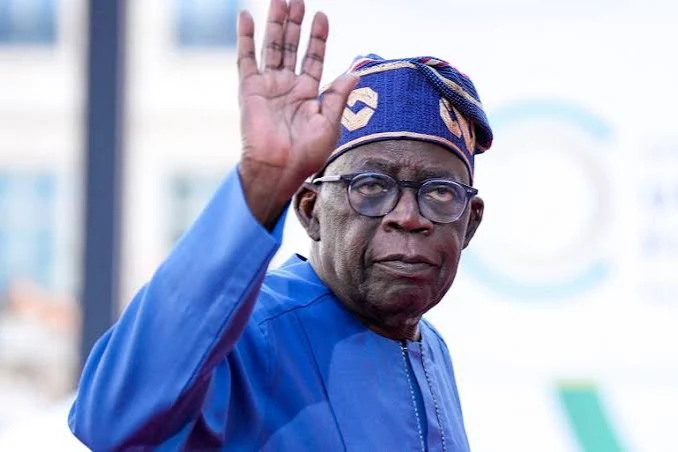
ABUJA, Nigeria — African Trend News Media has published a special report critically examining President Bola Ahmed Tinubu’s recent interview on the Nigerian Television Authority (NTA), arguing that key assertions made by the President on governance, the economy, security, and the credibility of the Independent National Electoral Commission (INEC) should be assessed against measurable evidence.
Titled “Rhetoric Versus Reality: A Data-Driven Rejoinder to President Bola Ahmed Tinubu’s NTA Interview on Governance, the Economy, Security, and Electoral Integrity,” the report evaluates two central claims made during the interview: that President Tinubu inherited “good governance” from the administration of former President Muhammadu Buhari, and that INEC has consistently discharged its constitutional responsibilities in a manner deserving of public confidence.
According to the publication, democratic accountability requires political statements to be tested against verifiable data, institutional records, and internationally recognized governance indicators rather than rhetoric alone.
On the economy, the report acknowledges that the Tinubu administration implemented major reforms, including the removal of the petrol subsidy and the liberalization of the foreign exchange market. It notes that international financial institutions, including the International Monetary Fund (IMF), have described the reforms as significant steps toward restoring macroeconomic stability while also emphasizing the substantial short-term costs borne by households.
The analysis cites data indicating that millions of Nigerians continue to experience poverty, inflationary pressures, declining purchasing power, and food insecurity despite improvements in certain fiscal indicators such as government revenue and external reserves.
Regarding security, the report recognizes that the Buhari administration left office amid persistent challenges, including insurgency, banditry, kidnapping, and communal violence. While acknowledging the Tinubu administration’s ongoing military operations and claims of improved security, it argues that insecurity remains a major concern for many communities across the country.
The publication further contends that while the Buhari administration recorded notable achievements—including railway expansion, major highway projects, the completion of the Second Niger Bridge, social investment programmes, and anti-corruption initiatives—its overall governance record should be viewed as mixed when assessed against indicators such as public debt, inflation, unemployment, poverty, and insecurity.
On electoral integrity, the report examines the historical performance of INEC, referencing criticisms of previous general elections, including those conducted in 2003, 2007, 2019, and the 2023 presidential election. It discusses the controversy surrounding the delayed upload of presidential polling-unit results to the IReV portal during the 2023 election, noting that domestic and international observer missions recommended further reforms to strengthen transparency and public confidence.
The report also revisits the 2019 Imo State governorship litigation, describing it as one of Nigeria’s most debated electoral cases while acknowledging that the Supreme Court’s judgment remains final and legally binding.
Concluding its analysis, African Trend argues that governments should be judged by measurable outcomes, electoral institutions by demonstrable transparency, and political claims by independently verifiable facts. It maintains that democratic legitimacy is strengthened when public confidence is built through accountability, evidence, and institutional performance.


