

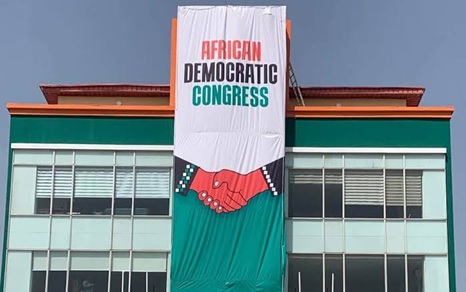
The South-South Zonal Publicity Secretary of the African Democratic Congress (ADC), Mabel Oboh, has warned against what she described as increasing judicial interference in the internal affairs of political parties, cautioning that excessive court involvement in party administration could undermine Nigeria’s democratic system.
Speaking on recent legal disputes involving political parties, Oboh argued that while the judiciary plays a vital role in interpreting the law and resolving disputes, courts should avoid assuming responsibilities that properly belong to political parties and their constitutional organs.
According to her, political parties are expected to manage their internal affairs through their constitutions, established procedures and democratic mechanisms. She maintained that allowing judicial pronouncements to determine routine party decisions could weaken internal democracy and reduce the authority of party leadership structures.
Oboh expressed concern that frequent litigation over party leadership, candidate selection and internal administrative matters has increasingly shifted political decision-making from party organs to the courtroom. She warned that such a trend could create uncertainty, encourage prolonged political conflicts and disrupt preparations for elections.
The ADC spokesperson stated that democracy flourishes when political parties are allowed to function independently within the limits of the law. She stressed that judicial intervention should remain an exceptional remedy reserved for clear violations of constitutional or statutory provisions rather than becoming the primary means of resolving internal political disagreements.
She further argued that overreliance on litigation could discourage dialogue, reconciliation and consensus-building among party members. According to her, strengthening internal conflict resolution mechanisms would help political parties maintain stability while preserving public confidence in the democratic process.
Oboh also called on political actors to respect party constitutions and utilise internal dispute resolution channels before approaching the courts. She said adherence to established procedures would reduce unnecessary legal battles and contribute to healthier political competition.
Her remarks come at a time when several political parties are involved in court cases relating to leadership contests, candidate nominations and organisational disputes ahead of preparations for the 2027 general elections.
Political analysts note that the judiciary has played a significant role in resolving electoral and party disputes over the years, often delivering judgments that have shaped Nigeria’s political landscape. While many observers regard judicial oversight as essential for upholding the rule of law, others have expressed concerns about the growing dependence on court decisions to settle issues traditionally handled by party institutions.
Legal experts argue that the courts remain constitutionally empowered to interpret laws and protect the rights of political actors where due process has been violated. However, they also acknowledge the importance of strengthening internal democratic practices within political parties to minimise avoidable litigation.
Civil society organisations have similarly urged political parties to improve transparency, fairness and accountability in their internal processes. They contend that credible party administration is essential for producing trustworthy electoral outcomes and sustaining democratic governance.
As political activities gather momentum ahead of future elections, Oboh reiterated that safeguarding the independence of political parties while respecting the constitutional role of the judiciary is critical to preserving Nigeria’s democracy. She called on political leaders, party members and institutions to work collectively toward strengthening democratic values through dialogue, respect for due process and adherence to the rule of law.


