

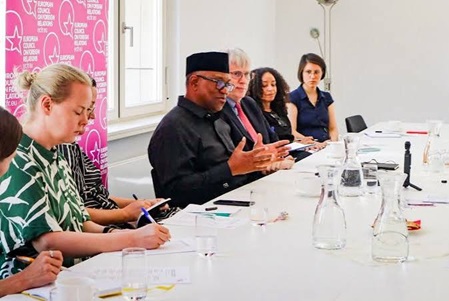
As Nigerians celebrate the 65th birthday of former Anambra State Governor and former presidential candidate, Peter Obi, a remarkable article written in 2014 by renowned journalist and columnist Olusegun Adeniyi has resurfaced, reminding the nation that Obi’s reputation for prudence, modesty and accountability long predates his presidential ambition.
The Democracy Day article was published shortly after Obi left office as Governor of Anambra State, nearly a decade before he became a leading figure in Nigeria’s 2023 presidential election and the Obidient Movement.
In the piece, Adeniyi recounted meeting Peter Obi in Abuja, where the former governor was searching for a rented apartment to pay for with his personal resources rather than relying on public funds or extravagant retirement benefits. He contrasted Obi’s conduct with that of many former governors who had enacted generous pension laws and continued to enjoy luxurious lifestyles at taxpayers’ expense.
The respected columnist described Obi as one of the most modest governors of the Fourth Republic, noting that he travelled on commercial flights with minimal aides, maintained a simple lifestyle despite his personal wealth, and managed public resources with exceptional discipline.
Adeniyi also highlighted Obi’s financial stewardship, writing that he left office with approximately ₦86.7 billion in cash, investments and approved refunds, while leaving Anambra State without unsustainable debt. He further noted that available financial documents supported the existence of the investments handed over to the incoming administration.
The article equally praised the progress recorded in education under Obi’s administration, pointing to Anambra State’s emergence as the top-performing state in the 2013 WAEC examinations as evidence that meaningful investments had been made in the education sector.
Drawing a sharp contrast with governors who approved lavish pensions, mansions and lifetime privileges for themselves after leaving office, Adeniyi argued that Nigeria needed leaders who viewed public resources as a sacred trust rather than a means for personal enrichment.
He concluded by describing Peter Obi as “a shining example of what a public servant should be,” recommending his modesty, frugality and sense of responsibility in managing public funds as qualities worthy of emulation by current and future political office holders.
The renewed circulation of the article on Peter Obi’s 65th birthday has reignited conversations about leadership, accountability and responsible governance in Nigeria. Supporters argue that the tribute demonstrates that Obi’s public image as a prudent and disciplined leader was established years before he sought the nation’s highest office.
As birthday wishes pour in from across Nigeria and the diaspora, the 2014 assessment by Olusegun Adeniyi continues to resonate as a historical reflection on the values many believe are essential for building a more accountable and prosperous nation.
Happy 65th Birthday, Peter Obi—Okwute.


