

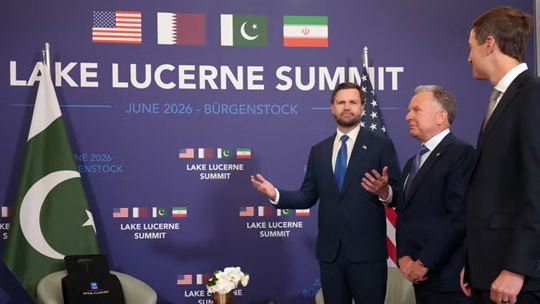
United States Vice President J.D. Vance has led a crucial round of negotiations with Iranian officials at the Lake Lucerne Summit in Switzerland, as Washington and Tehran seek to preserve a fragile agreement ending months of conflict and establish a pathway toward broader nuclear and regional security arrangements.
The summit brought together delegations from the United States, Iran, Pakistan, and Qatar, with Islamabad and Doha playing key mediation roles in the diplomatic effort. The talks are aimed at implementing a recently signed memorandum of understanding that established a 60-day framework for negotiations, including discussions on Iran’s nuclear activities, regional tensions, and the future security of the Strait of Hormuz, a critical global energy route.
Vance, accompanied by senior U.S. negotiators, including special envoy Steve Witkoff and adviser Jared Kushner, described the discussions as an opportunity to “turn over a new leaf” in relations between the two longtime adversaries. The first direct session between both sides reportedly lasted about 80 minutes, with separate meetings also held with Pakistani and Qatari mediators.
Despite the diplomatic breakthrough, tensions remain high. The talks have been complicated by the conflict in Lebanon involving Iranian-backed Hezbollah and Israeli forces, as well as disputes surrounding the Strait of Hormuz. The United States has demanded that Iran ensure the waterway remains open and has warned of severe consequences should Tehran or its allied groups escalate hostilities.
The atmosphere surrounding the summit reflected the underlying mistrust between the parties. Reports indicated disagreements over a planned joint photo opportunity and a visibly tense diplomatic reception, including an awkward moment involving members of the Qatari delegation. However, officials from all sides continued with negotiations behind closed doors.
President Donald Trump, speaking from Washington, issued a strong warning to Iran, saying any attempt to threaten shipping routes or expand proxy conflicts in the region would provoke a firm American response. Iranian leaders, meanwhile, have maintained that they will protect their strategic interests and continue to insist on their right to maintain civilian nuclear capabilities.
The Lake Lucerne Summit represents one of the most significant diplomatic engagements between the United States and Iran in recent years. While both sides have agreed to continue discussions, major disagreements over nuclear restrictions, regional influence, sanctions, and long-term security guarantees remain unresolved.
Analysts say the success or failure of the 60-day negotiation period could have far-reaching implications for Middle East stability, global oil markets, and the future relationship between Washington and Tehran.


