

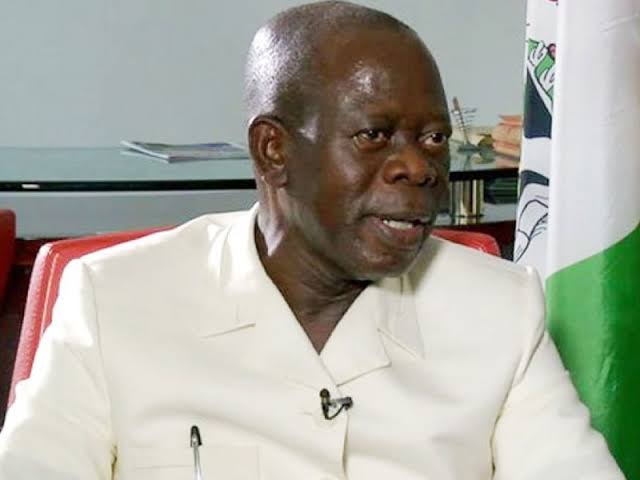
Former APC National Chairman Adams Oshiomhole has opened up about the circumstances surrounding his removal from office, recalling how the decision was communicated during a virtual meeting.
Former National Chairman of the All Progressives Congress (APC), Adams Oshiomhole, has revisited the events surrounding his departure from the leadership of Nigeria’s ruling party, revealing that he was informed of his removal through a virtual meeting process that remains one of the most talked-about episodes in the party’s history.
Speaking during a public engagement, Oshiomhole reflected on the internal political developments that led to the end of his tenure as APC national chairman, describing the experience as both unexpected and symbolic of the challenges that often accompany party politics.
According to the former Edo State governor, the decision that ultimately ended his leadership of the APC was communicated during a virtual meeting, highlighting the unusual circumstances under which the transition occurred.
Oshiomhole’s remarks have reignited discussions about one of the most turbulent periods in the history of the APC, a time marked by intense internal disagreements, leadership disputes, and growing tensions among influential party stakeholders.
The former labour leader rose to national prominence through his activism and trade union background before serving two terms as governor of Edo State.
Following his governorship, he emerged as a major figure within the APC and was eventually elected as the party’s national chairman, a position that placed him at the center of strategic political decisions and party administration.
During his tenure, Oshiomhole played a prominent role in party affairs, overseeing election preparations, membership expansion efforts, and internal organizational activities.
However, his time as chairman was also characterized by controversies and disputes involving party leaders, governors, and other stakeholders across different states.
Political observers recall that the APC experienced a series of internal crises during that period, with disagreements over candidate selection, party structures, and leadership decisions generating friction within the organization.
These tensions eventually contributed to a broader leadership crisis that culminated in changes at the party’s national level.
Speaking on the issue, Oshiomhole suggested that his removal reflected the realities of political leadership, where power dynamics and competing interests often influence outcomes.
He noted that politics requires resilience and the ability to adapt to changing circumstances, regardless of one’s position within an organization.
The former APC chairman did not hide his surprise at the manner in which the process unfolded, particularly given the significance of the office he occupied at the time.
His comments have drawn fresh attention from political analysts who continue to study the events that shaped the APC’s internal evolution.
Many observers view the leadership transition as a turning point that ultimately paved the way for subsequent reforms and restructuring within the party.
Following Oshiomhole’s departure, the APC introduced new administrative arrangements aimed at stabilizing the party and addressing internal disagreements.
The changes eventually led to the emergence of a new leadership structure that has continued to guide the party through national elections and governance responsibilities.
Political analysts argue that Oshiomhole’s reflections offer valuable insight into the complex nature of party politics in Nigeria.
According to them, internal democracy, leadership succession, and conflict resolution remain important challenges for political parties seeking to maintain unity and public confidence.
The former governor’s remarks have generated reactions among party supporters and political commentators.
Some supporters praised him for openly discussing his experiences and contributing to conversations about political leadership and accountability.
Others viewed the comments as a reminder of the importance of institutional processes and transparent decision-making within political organizations.
Meanwhile, APC members have largely focused on the party’s current priorities, emphasizing unity and preparation for future political contests.
Party leaders have repeatedly stressed the need to strengthen internal cohesion while building on previous electoral successes.
For many political observers, Oshiomhole’s recollection serves as a reflection on the unpredictable nature of political life.
His experience illustrates how rapidly political fortunes can change, even for individuals occupying some of the most influential positions in the country.
As Nigeria’s political landscape continues to evolve ahead of future elections, discussions about leadership transitions and party management are likely to remain relevant.
Oshiomhole’s account of his departure from the APC leadership adds another chapter to the story of one of Nigeria’s most influential political parties and the personalities who have shaped its journey over the years.


