

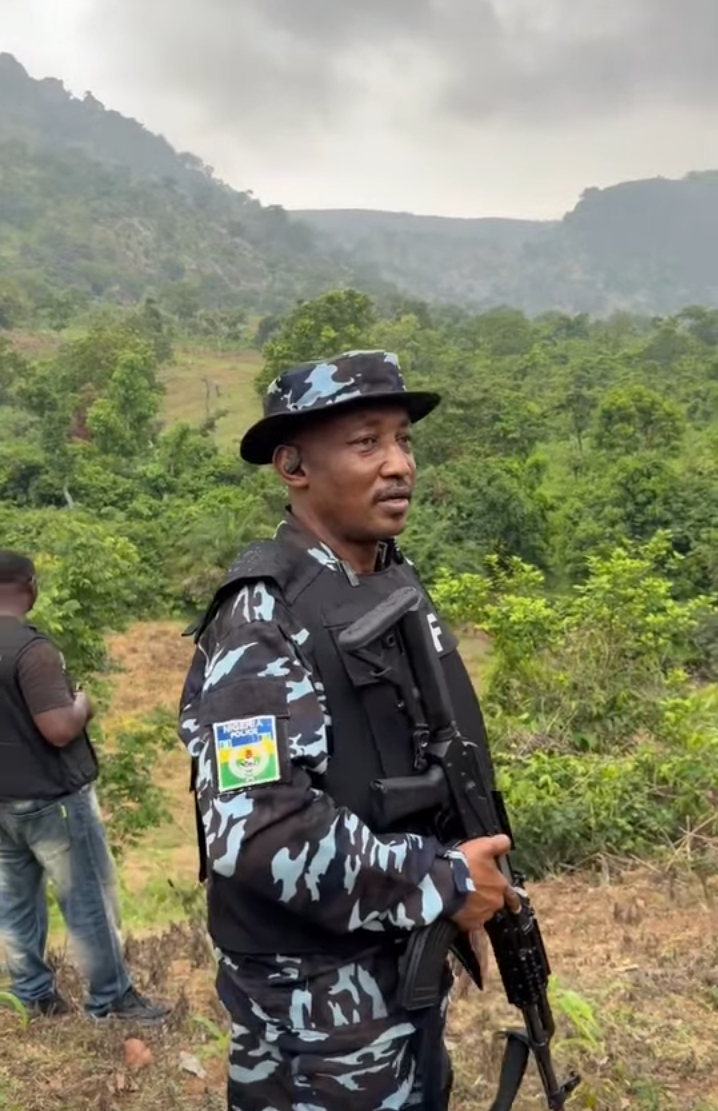
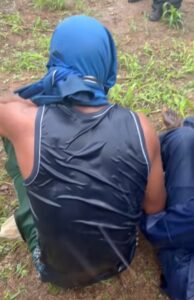
The growing security challenges confronting communities around Nigeria’s Federal Capital Territory have once again come into sharp focus following a major operation led by the Commissioner of Police for the FCT, Ahmed Muhammed Sanusi, against a suspected terrorist hideout within the Abuja area.
The operation, which reportedly resulted in the arrest of several suspects, has renewed public debate over the extent to which terrorist groups and other armed criminal networks may be expanding their influence into territories surrounding the nation’s capital.
For years, Abuja was largely perceived as a secure enclave insulated from the violence that plagued parts of the North-East and North-West. However, that perception has gradually changed as incidents of kidnappings, attacks on rural communities, and intelligence reports about terrorist infiltration have become increasingly common in settlements bordering the Federal Capital Territory.
Security experts have repeatedly warned that terrorist groups displaced from their traditional strongholds often seek refuge in forests and remote communities where government presence is weak. The vast forests stretching across parts of Niger, Kaduna, Nasarawa, Kogi, and the FCT have long been identified as potential transit and operational corridors for armed groups.
The significance of the latest operation therefore goes beyond the arrest of suspects. It highlights the reality that Abuja’s security cannot be separated from the security situation in neighboring states. When terrorists establish camps or operational cells within striking distance of the nation’s capital, the threat extends beyond local communities and becomes a national security concern.
Residents of satellite towns and rural communities around Abuja have in recent years reported increasing incidents of abductions, attacks on farms, and movements of armed men. Several high-profile kidnapping cases within and around the FCT have further fueled concerns that criminal and terrorist networks are becoming more emboldened.
Against this backdrop, the operation led by CP Ahmed Muhammed Sanusi has been widely welcomed as a demonstration of proactive policing. Rather than waiting for attacks to occur, security agencies appear to be intensifying efforts to identify and dismantle suspected terror cells before they can execute their plans.
Observers say such intelligence-driven operations are critical at a time when Nigeria faces evolving security threats from multiple fronts. They argue that disrupting terrorist networks before attacks occur is often more effective than responding after lives have already been lost.
The success of the operation also underscores the importance of cooperation between security agencies and local communities. In many cases, intelligence provided by residents plays a crucial role in identifying suspicious movements, unusual activities, and potential hideouts used by criminal elements.
However, analysts caution that isolated operations alone will not solve the broader security challenge. Sustained surveillance, improved intelligence gathering, enhanced border monitoring, technological support, and stronger collaboration among security agencies will be required to prevent terrorist groups from regrouping and establishing new bases.
The latest arrests should therefore be seen as one battle in a larger war against terrorism and violent criminality. While the operation may have disrupted a suspected network, the broader challenge remains ensuring that Abuja and its surrounding communities do not become fertile ground for terrorist expansion.
For many Nigerians, the fact that security agencies are carrying out such operations within the vicinity of the Federal Capital Territory is both reassuring and alarming. Reassuring because law enforcement is taking action; alarming because it suggests that the threat may be much closer to the seat of power than many previously believed.
As investigations continue and authorities release more details about the suspects and their activities, Nigerians will be watching closely. The outcome of this operation may provide important insights into the nature of the security threats facing the FCT and the measures required to safeguard the nation’s capital from terrorist infiltration.
What remains clear is that vigilance, intelligence-led policing, and sustained security operations will be essential if Abuja is to remain secure in the face of increasingly complex threats. :::


