

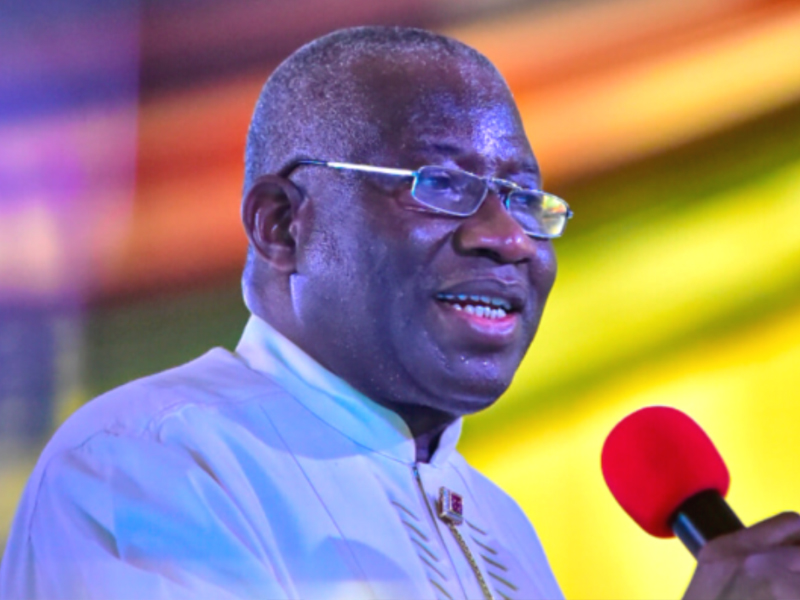
Former President Goodluck Jonathan has called for a stronger and more independent judiciary, warning that public confidence in democracy is weakened when government institutions force citizens into prolonged legal battles.
Former President Goodluck Jonathan has emphasized the need for a stronger and more independent judiciary in Nigeria, warning that public confidence in democratic institutions is threatened when government agencies engage in actions that compel citizens to seek justice through the courts.
Jonathan made the remarks during the opening ceremony of the 2026 Law Week in Bayelsa State, where he addressed legal practitioners, public officials, and stakeholders on the role of the judiciary in sustaining democracy and protecting citizens’ rights.
Speaking on the importance of justice and accountability, the former president expressed concern over situations in which government institutions are accused of wrongdoing and then direct affected individuals to pursue legal remedies in court.
According to Jonathan, such practices can create the perception that citizens are left to bear the burden of seeking justice even when public institutions are expected to act fairly and responsibly.
Drawing from a popular proverb, he suggested that confidence in the justice system could be weakened when those entrusted with upholding the law appear to contribute to disputes that eventually end up before judges.
Jonathan stressed that democratic governance depends heavily on strong institutions, particularly an independent judiciary capable of making decisions free from political interference or external pressure.
He argued that courts remain essential in resolving disputes and safeguarding constitutional rights, but noted that governments and public agencies should strive to minimize actions that unnecessarily burden citizens with lengthy legal battles.
The former president’s comments come amid ongoing national conversations about judicial reforms, election petitions, and delays in the administration of justice.
Over the years, concerns have been raised by legal experts, civil society groups, and political stakeholders regarding the time required to resolve court cases, especially those relating to elections and governance.
Jonathan emphasized the importance of ensuring that election-related disputes are resolved quickly and transparently. According to him, timely adjudication of electoral matters is critical to strengthening public confidence in democracy and preventing prolonged uncertainty after elections.
He noted that democracy functions best when citizens trust that institutions are capable of resolving disagreements fairly and efficiently.
The former Nigerian leader also reiterated the need for continued investment in judicial capacity, including improvements in infrastructure, legal processes, and institutional independence.
Observers at the event interpreted Jonathan’s remarks as a broader appeal for accountability and respect for the rule of law within Nigeria’s democratic system.
His comments quickly attracted attention across social media platforms and political circles, where many Nigerians praised his emphasis on judicial independence and institutional integrity.
Some supporters described the remarks as a timely intervention, particularly as the country prepares for future electoral contests and continues to address governance-related challenges.
Others interpreted the statement as an indirect criticism of certain political actors and government officials, though Jonathan did not specifically mention any individual during his speech.
Political commentators noted that references to government institutions directing citizens to the courts resonated with ongoing public debates surrounding election litigation, administrative decisions, and the role of the judiciary in resolving political disputes.
Despite the positive reactions from many quarters, some critics questioned Jonathan’s position, citing historical debates about judicial processes and governance during his own time in office.
Nevertheless, legal analysts argue that the issues raised by the former president remain relevant to Nigeria’s democratic development.
Experts have consistently maintained that an effective justice system is vital for national stability, economic growth, and public trust. They note that when citizens believe courts are independent and capable of delivering justice, confidence in democratic institutions tends to increase.
Jonathan’s address also highlighted the broader challenge of strengthening institutions rather than relying on individuals to drive governance reforms.
As discussions from the 2026 Law Week continue, many participants are expected to focus on practical measures for improving judicial efficiency, reducing case backlogs, and enhancing access to justice.
For Jonathan, the message was clear: democracy thrives when institutions are strong, citizens trust the legal system, and governments act in ways that reinforce rather than undermine confidence in the rule of law.
His remarks have once again placed judicial reform and institutional accountability at the center of national discourse, issues that many observers believe will remain critical to Nigeria’s democratic future.


