

Editorial by Akor Christian Oche
Every government has the right to present its achievements to the public. Every administration deserves to be assessed on the basis of its policies, programmes, and vision for the future. However, there is one fundamental responsibility that stands above every other obligation of government: the protection of lives and property.
When citizens cannot sleep peacefully in their homes, when farmers are afraid to cultivate their lands, when travelers fear using major highways, and when children can no longer attend school without the risk of being kidnapped, it becomes increasingly difficult to convince the people that meaningful progress is being made.
The painful reality confronting Nigeria today is that insecurity has become one of the defining experiences of millions of citizens. Across several parts of the country, families live with uncertainty. Communities invest in survival rather than development. Parents worry not only about feeding their children but also about whether those children will return safely from school.
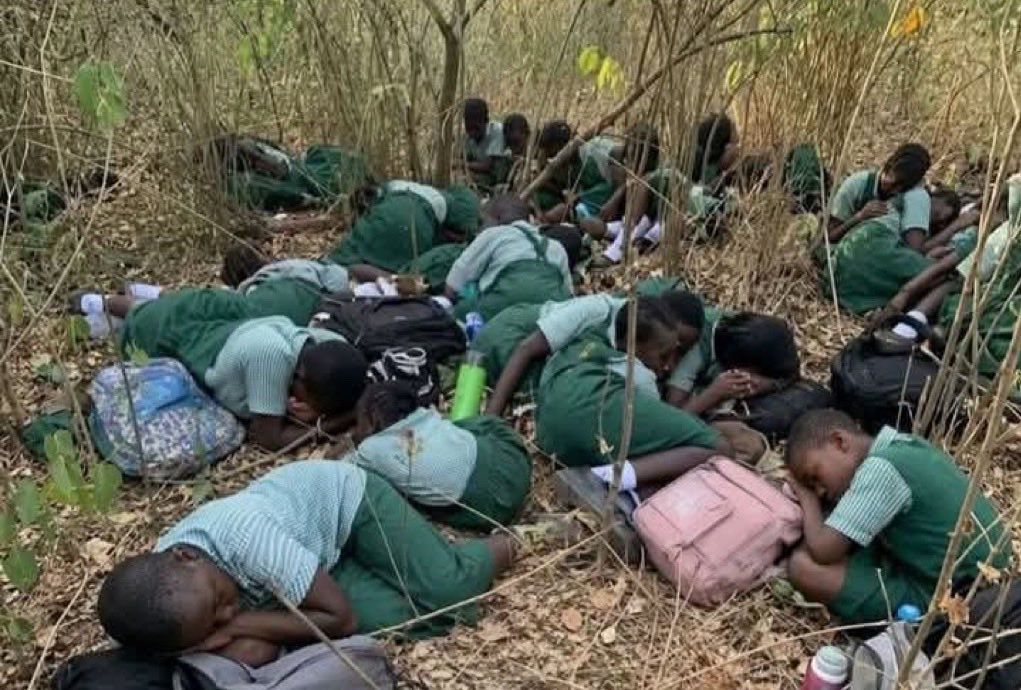
The recent abduction of schoolchildren and teachers in Oyo State is yet another reminder of the scale of the challenge. The image of innocent children separated from their families and held against their will should disturb the conscience of every Nigerian. It should also serve as a wake-up call to those entrusted with the responsibility of governing the country.
How can a nation celebrate progress when children are languishing in captivity? How can political leaders speak confidently about development while parents endure the agony of not knowing whether their sons and daughters are safe? How can government officials ask citizens to be patient when many communities have lived under the shadow of fear for years?
These are not questions born out of political opposition. They are questions arising from human compassion and civic responsibility.
No nation can achieve sustainable development under conditions of widespread insecurity. Investors are reluctant to commit resources where lives and property are not adequately protected. Farmers cannot contribute fully to food production when their farmlands are occupied by criminal elements. Teachers cannot perform effectively when schools become targets for kidnappers. Businesses cannot flourish when entrepreneurs spend more on security than on expansion.
Security is the foundation upon which every other aspect of national development rests.
This is why the continued wave of kidnappings, banditry, terrorism, and violent crimes should concern every level of government. Beyond the statistics are real human beings whose lives have been disrupted, traumatized, and in some cases permanently altered by criminal violence.
For the families of kidnapped victims, every passing day feels like an eternity. Every telephone call creates anxiety. Every rumour generates hope and fear in equal measure. The emotional and psychological burden is often impossible to quantify.
Government must therefore approach security not merely as an administrative challenge but as a humanitarian crisis demanding urgency, innovation, and accountability.
The security agencies deserve recognition for the sacrifices made by many officers who risk their lives daily in the service of the nation. However, Nigerians measure success not by efforts alone but by outcomes. Citizens want to see fewer abductions, safer communities, secure schools, and rescued victims returning home to their families.
The fight against insecurity cannot be won through military operations alone. It requires stronger intelligence gathering, better coordination among security agencies, modern surveillance technology, improved border security, judicial efficiency, community engagement, and a deliberate effort to address the socio-economic conditions that criminal groups often exploit.
Political leaders must also recognize that security should never be viewed through partisan lenses. Criminals do not ask their victims for political affiliation before attacking them. Insecurity affects supporters and opponents alike. It threatens the rich and the poor, urban residents and rural dwellers, young and old.
This is a moment that demands national unity and collective resolve.
Nigerians are not asking for perfection. They understand the complexity of the security challenges facing the country. What they seek is visible progress, genuine commitment, and measurable results. They want to see a government that treats every kidnapped child as its own child and every threatened community as a national priority.
The true test of leadership is not how leaders perform during moments of comfort and stability. It is how they respond during periods of crisis. Great nations are built by leaders who confront difficult realities rather than deny them, who prioritize the welfare of citizens above political calculations, and who understand that public trust is earned through action, not rhetoric.
As long as innocent Nigerians remain in captivity, as long as communities continue to live in fear, and as long as parents must worry whether their children will return safely from school, the national conversation cannot be limited to declarations of progress.
The most important measure of success remains the safety and wellbeing of the people.
Until every child is free, every community is secure, and every Nigerian can live without fear, the work of nation-building remains unfinished.
For many Nigerians who have endured years of economic hardship, insecurity, rising poverty, and declining public confidence in governance, the prospect of supporting the ruling APC again has become increasingly difficult to comprehend.
Indeed, many citizens now argue that after witnessing the consequences of policies and decisions that they believe have worsened their living conditions, returning the APC to power would amount to rewarding failure rather than demanding accountability.
The growing frustration across the country is rooted not in partisan sentiment alone but in the daily realities faced by ordinary Nigerians. Families struggling with the rising cost of living, communities threatened by insecurity, and young people confronted with limited economic opportunities are questioning whether the country can afford a continuation of the status quo.
For these Nigerians, the 2027 election is not merely a political contest; it is a referendum on governance, security, economic management, and the future direction of the nation.
Mr Akor Christian Oche otherwise known as Due Process is a publisher at COPDEM Media TV and a Human Right Activist.


