

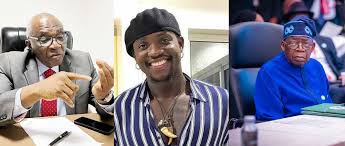
Special Adviser to President Bola Tinubu on Information and Strategy, Bayo Onanuga, has called for legal action against social media commentator VeryDarkMan over a viral video allegedly containing an AI-manipulated audio clip.
The controversy erupted after a video surfaced online showing VeryDarkMan criticizing Nigeria’s persistent electricity shortages. However, the clip reportedly included an additional audio layer believed to be artificially generated, which appeared to insert a voice resembling a political figure into the original footage.
The incident has triggered nationwide debate on misinformation, deepfake technology, and the growing influence of artificial intelligence in Nigeria’s digital information space.
Onanuga Calls for Investigation and Prosecution
Bayo Onanuga described the viral clip as misleading and dangerous, urging relevant security and regulatory agencies to investigate those responsible for its circulation.
He also called for VeryDarkMan to be held accountable, arguing that the spread of manipulated media could undermine public trust and distort national conversations on governance issues.
According to him, the alleged use of AI-generated audio to alter public perception represents a serious challenge to information integrity in Nigeria’s fast-growing digital ecosystem.
Government supporters have echoed similar concerns, describing the incident as an example of how technology can be misused to create confusion and misinformation online.
VeryDarkMan’s Viral Video Sparks Controversy
The original video by VeryDarkMan focused on criticism of Nigeria’s electricity supply challenges, a recurring national issue affecting households and businesses across the country.
However, the controversy began after the clip was edited and reposted with what many observers described as an artificially generated audio overlay that changed the context of the message.
The influencer, who has previously been involved in public disputes with government officials and institutions, is currently outside Nigeria following earlier clashes with authorities.
The manipulated version of the video quickly spread across social media platforms, attracting millions of views and sparking heated debates among supporters and critics.
Media and Fact-Checkers Confirm Editing
Several media outlets and fact-checking organizations, including BBC Pidgin, have reported that the viral clip was digitally altered.
Analysts confirmed that while the original video contained criticism of government infrastructure challenges, the additional audio did not originate from the speaker in the footage.
The findings have intensified discussions about the rise of deepfake technology and its potential misuse in political and social discourse.
Experts warn that AI-generated content, if left unchecked, could significantly impact public trust in media and further complicate Nigeria’s already polarized information environment.
Debate Over Free Speech and Digital Responsibility
The controversy has sparked wider debates about free speech, accountability, and digital responsibility in Nigeria’s online space.
Some critics argue that social media influencers should exercise caution when sharing content that could be manipulated or misinterpreted.
Others, however, caution against excessive regulatory action, warning that it could be used to silence dissenting voices and restrict freedom of expression.
Civil society organizations have called for a balanced approach that addresses misinformation without undermining democratic freedoms.
Growing Concerns Over Deepfake Technology
The incident has highlighted increasing concerns about the use of artificial intelligence to create realistic but misleading audio and video content.
Technology experts say deepfake tools are becoming more accessible, making it easier for individuals to manipulate media in ways that are difficult to detect without specialized tools.
In Nigeria, where social media plays a major role in shaping public opinion, the risk of misinformation spreading rapidly has become a growing concern for regulators and citizens alike.
Political and Public Reactions
Reactions to the controversy have been divided, with government supporters backing Onanuga’s call for accountability, while others question whether the response is proportionate.
Some commentators argue that the focus should be on addressing the underlying issues raised in the original video, particularly power shortages and infrastructure challenges.
Others believe the incident underscores the need for stronger digital literacy and fact-checking awareness among social media users.
Call for Stronger Digital Regulation
Policy experts have called for improved regulation of AI-generated content and clearer guidelines on the use of synthetic media in public communication.
They argue that Nigeria must develop frameworks to identify and manage deepfake content while protecting legitimate freedom of expression.
As investigations continue, the case involving VeryDarkMan remains a focal point in discussions about technology, politics, and media responsibility in Nigeria’s evolving digital landscape.
The controversy is expected to further intensify conversations around misinformation, governance, and the future of online speech in the country.


