

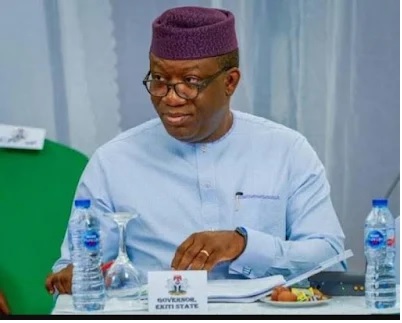
Former Ekiti State governor Kayode Fayemi has revealed details of his role in helping President Bola Tinubu secure victory in the 2023 presidential election while also describing former Labour Party candidate Peter Obi as a major political phenomenon in Nigeria’s democratic history.
Speaking during a recent appearance on the State Affairs podcast, Fayemi explained how he worked behind the scenes to rally support for Tinubu, including engaging influential governors associated with the G5 political bloc during the fiercely contested 2023 election.
Tinubu eventually won the election with about 36 percent of the total vote in a highly fragmented race involving multiple strong opposition candidates.
Fayemi, a prominent member of the All Progressives Congress (APC) and former chairman of the Nigeria Governors’ Forum, acknowledged Obi’s remarkable rise in Nigerian politics, particularly among young voters and urban supporters.
He described Obi as a “phenomenon,” noting that the former Anambra governor reshaped political conversations and mobilized unprecedented youth participation during the election.
At the same time, Fayemi criticized the APC for gradually abandoning some of its founding progressive ideals, especially through increasing reliance on top-down decision-making and consensus arrangements in party affairs.
According to him, the party risks internal instability if it continues suppressing open debate and grassroots participation in candidate selection processes.
The former governor also suggested that President Tinubu should consider building a broader government of national inclusion by engaging competent individuals across party lines, including figures from the opposition such as Obi.
Political observers say the comments reflect growing concerns among some senior APC figures about internal party cohesion and the future direction of governance ahead of the 2027 elections.
Fayemi further recounted a lighter diplomatic moment involving Tinubu and Obi during the inauguration of Pope Leo XIV, where he reportedly persuaded Obi to greet Tinubu as “our leader” despite lingering political rivalry.
The anecdote has attracted attention online, with supporters of both politicians debating its political meaning and symbolism.
Analysts say Fayemi’s remarks underscore the continuing relevance of Obi within Nigeria’s political landscape despite the outcome of the 2023 election and subsequent political realignments.
The comments also highlight ongoing conversations around opposition inclusion, political reconciliation, and the possibility of broader coalition-building as Nigeria gradually moves toward another major election cycle in 2027.


