

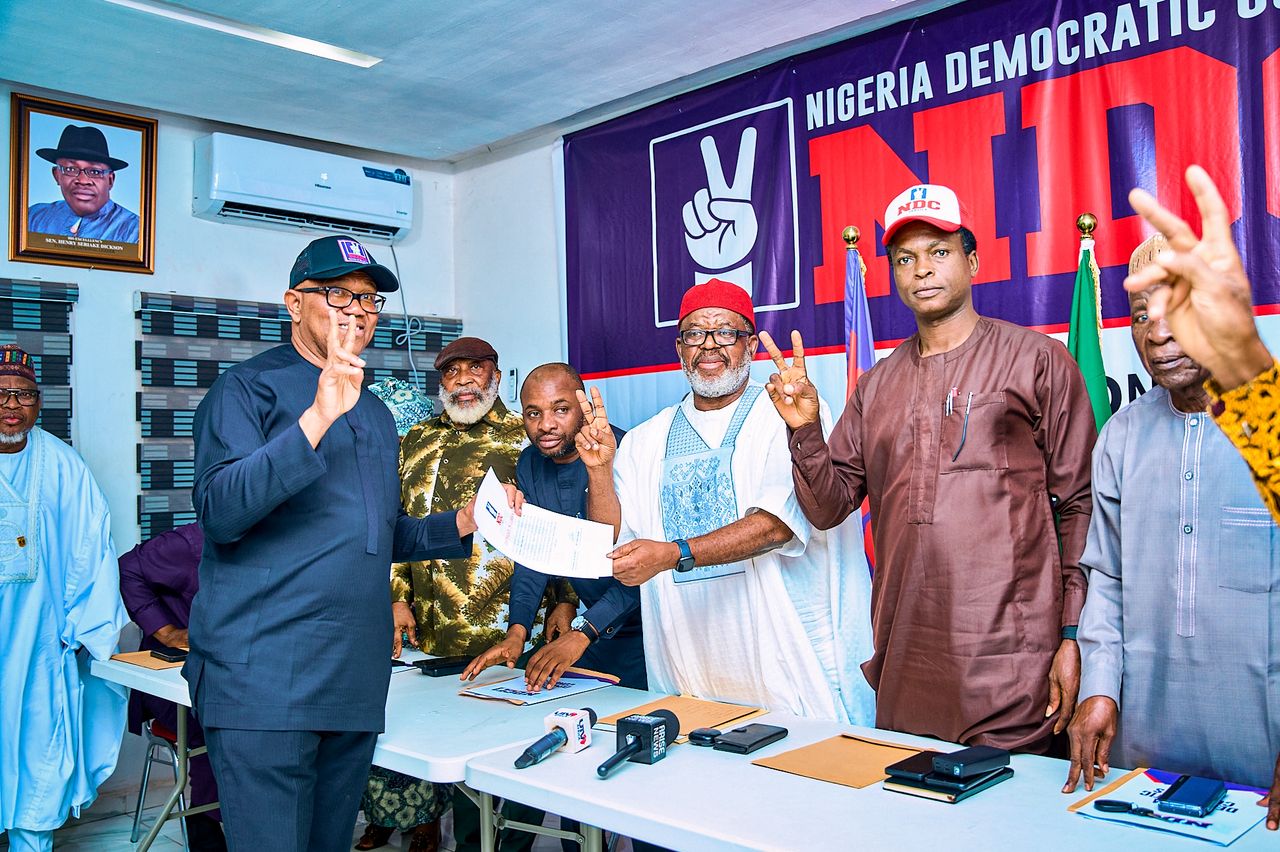
Former Anambra State Governor and presidential hopeful, Peter Obi, has announced his successful clearance by the screening committee of the Nigeria Democratic Congress ahead of the party’s presidential primary.
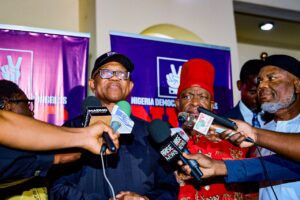
Speaking after the screening exercise held on Tuesday, May 19, in Abuja, Obi disclosed that the process lasted over two and a half hours, during which the committee carefully examined his academic credentials, NYSC certificate, age declaration documents, and other relevant records.
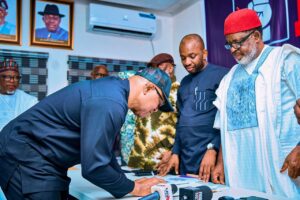
According to him, the committee also engaged him extensively on his vision for a new Nigeria and the kind of leadership required to address the country’s current socio-economic and political challenges.
Following the screening, Obi confirmed that he was officially cleared to contest and subsequently received the party’s presidential nomination form, which he had earlier purchased.

The former Labour Party presidential candidate commended the screening panel, headed by former Ebonyi State governor, Sam Egwu, describing the exercise as thorough, transparent, and professional.
He also praised the leadership of the Nigeria Democratic Congress for what he called its commitment to internal democracy and due process.
“A New Nigeria is POssible,” Obi stated at the conclusion of his remarks.
The development further heightens political activities ahead of the 2027 general elections, as parties continue consultations, screenings, and strategic alignments in preparation for their primaries.
Editorial Analysis: Why Peter Obi Could Remain a Strong Contender for Aso Rock.
The clearance of Peter Obi by the Nigeria Democratic Congress for the presidential race has renewed conversations around his political prospects and possible pathway to Nigeria’s highest office at the Aso Rock Presidential Villa.
While elections remain unpredictable and ultimately decided by voters, several factors could strengthen Obi’s chances if sustained through the campaign season.
1. Persistent National Appeal and Brand Recognition
Obi enters the race with an already established national profile built from previous presidential campaigns and years of public engagement. His message around prudence, governance reforms, accountability, and economic restructuring has earned him visibility among diverse voter blocs, particularly young Nigerians, professionals, and urban voters.
Unlike many candidates who begin by building name recognition, Obi starts from a position of familiarity, giving him an organisational and communication advantage.
2. Reputation Around Fiscal Discipline
A recurring theme in Obi’s political messaging is economic management, debt concerns, productivity, and public accountability. At a time when inflation, unemployment, exchange-rate instability, and cost-of-living pressures dominate national discourse, economic credibility may become a decisive electoral issue.
For voters focused on governance outcomes rather than party loyalty, this could strengthen his appeal.
3. Youth and Digital Mobilisation
One of Obi’s notable political strengths in recent cycles has been grassroots enthusiasm amplified through digital engagement. Younger demographics increasingly shape political narratives online and influence public discourse beyond traditional party structures.
If that energy translates into voter registration, turnout, and coordinated political organisation, it could improve his competitiveness.
4. Cross-Regional Messaging
Though often viewed through regional political lenses, Obi has repeatedly framed his ambition around national development, production, security, education, and economic revival. A successful presidential run in Nigeria typically requires broad-based support across regions, religions, and demographics.
His chances would likely improve if he consolidates support beyond existing strongholds and expands appeal in northern and middle-belt constituencies while maintaining support in southern regions.
5. Public Appetite for Political Alternatives
Periods of economic difficulty and public dissatisfaction often create openings for candidates presenting themselves as reform-minded or outside traditional political establishments. If public sentiment continues to favour governance reforms and accountability, candidates projecting competence and change narratives may gain traction.
6. Internal Party Process and Early Positioning
His clearance by the Nigeria Democratic Congress suggests an organised early start within the party structure. Early positioning can help in coalition-building, fundraising, grassroots mobilisation, and policy messaging before the campaign intensifies.
The Major Test Ahead
Despite these strengths, presidential victory in Nigeria depends on several variables: party machinery, nationwide alliances, voter turnout, regional penetration, campaign financing, security conditions, and the strength of rival candidates. Momentum alone rarely guarantees victory.
For Obi, the central question may be whether enthusiasm can be converted into broad electoral numbers across multiple regions and voting blocs.
As political activities intensify, the road to the Aso Rock Presidential Villa will likely be shaped not only by popularity, but by organisation, coalition-building, and voter confidence.


