

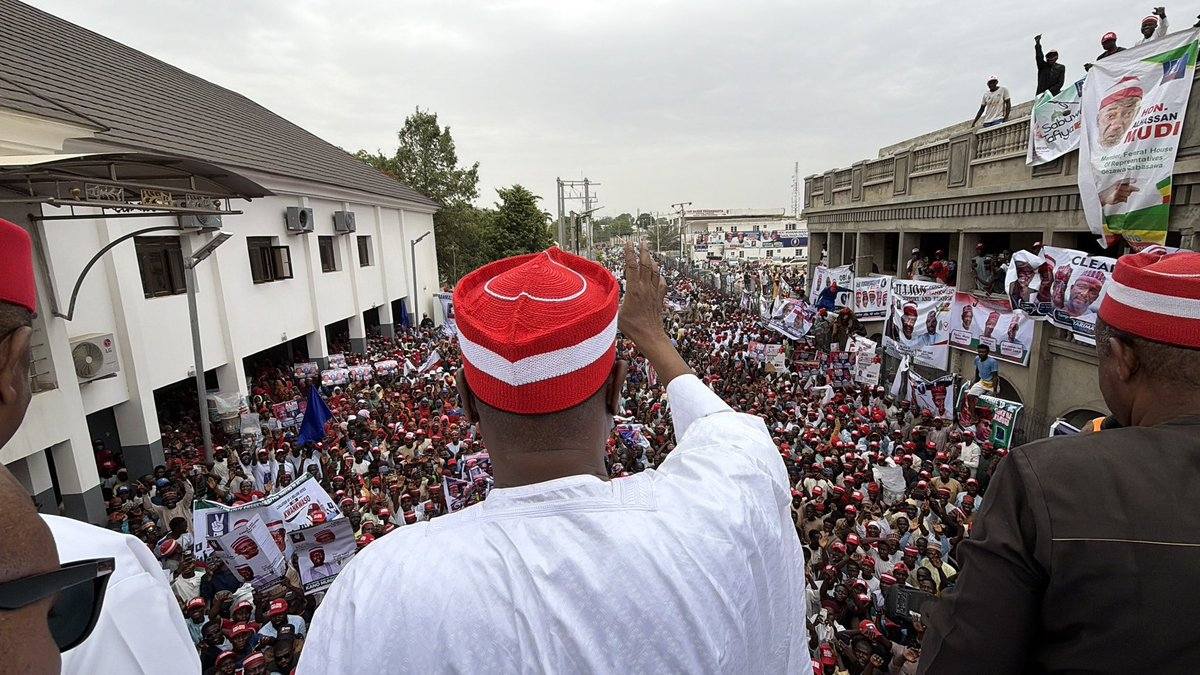
Supporters of former Kano State governor Rabiu Kwankwaso and the Nigeria Democratic Congress (NDC) turned out in large numbers on Saturday in what party loyalists described as a strong demonstration of support for the movement’s growing political influence ahead of the 2027 elections.
Organizers of the gathering claimed that millions of supporters participated in the rally, portraying the turnout as evidence of rising public confidence in the NDC and its vision for national transformation. Crowds of supporters were seen waving party symbols, chanting slogans, and expressing optimism about the party’s future role in Nigeria’s political landscape.
According to party supporters, the event reflected increasing unity among Nigerians seeking alternative political leadership and a platform focused on reform, inclusion, and national development.
Speakers at the gathering praised Kwankwaso’s political experience and grassroots appeal, particularly in northern Nigeria, while also emphasizing the NDC’s broader mission of attracting citizens from different regions, backgrounds, and political movements.
The rally comes amid ongoing political realignments involving major opposition figures, including recent reports linking former Labour Party presidential candidate Peter Obi with the NDC as coalition discussions continue ahead of the next general elections.
Supporters at the event described the movement as a symbol of hope and collective determination to build what they called “a better and more prosperous Nigeria.” Many participants also highlighted themes of youth inclusion, democratic change, and national unity.
Political observers note that large political gatherings have increasingly become tools for demonstrating grassroots strength and testing public momentum as parties prepare for future electoral contests. However, analysts also caution that crowd size claims made during political rallies are often difficult to independently verify.
The growing visibility of the NDC has intensified discussions within Nigeria’s opposition space, where parties and political actors continue to explore alliances capable of reshaping the country’s electoral dynamics ahead of 2027.
As political mobilization accelerates nationwide, the latest rally adds to the mounting momentum surrounding emerging coalitions and alternative political platforms seeking to challenge established structures in Nigeria’s evolving democratic landscape.


