

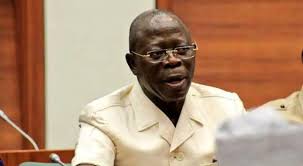
Senior All Progressives Congress (APC) chieftain Adams Oshiomhole has claimed that former Vice President Atiku Abubakar is unintentionally helping the ruling party’s 2027 campaign through continued political attacks on fellow opposition figures, especially Peter Obi.
Speaking during an appearance on Channels Television’s Politics Today programme on May 13, 2026, Oshiomhole argued that the growing divisions among opposition politicians are strengthening President Bola Ahmed Tinubu and improving the APC’s chances ahead of the next presidential election.
The former Edo State governor said opposition leaders have become increasingly focused on attacking one another instead of building a united front capable of challenging the ruling party in 2027.
APC Sees Advantage in Opposition Tensions
According to Oshiomhole, Atiku’s repeated criticisms of Peter Obi have effectively turned the former vice president into what he described as the APC’s “best campaign manager.”
He also referenced tensions involving Obi and former Rivers State governor Rotimi Amaechi, arguing that internal disagreements among opposition figures continue to expose weaknesses within efforts to form a broad political coalition.
The APC leader maintained that the ruling party remains politically stable compared to the fragmented opposition landscape currently emerging ahead of the elections.
He suggested that unless opposition leaders resolve their differences, the APC would maintain a significant electoral advantage going into 2027.
Opposition Coalition Talks Face Setbacks
The comments come amid ongoing political realignments and coalition negotiations among opposition politicians seeking to challenge the APC.
Recent reports indicate that Peter Obi and former Kano State governor Rabiu Musa Kwankwaso have moved toward the Nigeria Democratic Congress (NDC) following disagreements linked to coalition discussions involving the African Democratic Congress (ADC).
Meanwhile, Atiku Abubakar and Rotimi Amaechi are believed to still be involved in separate opposition consultations as negotiations continue across multiple political blocs.
Political observers say disagreements over leadership, presidential ambitions, zoning, and party structure have complicated attempts to build a united opposition movement.
APC Projects Confidence Ahead of Tinubu’s Re-Election Bid
Oshiomhole’s remarks also reflected growing confidence within the APC over President Tinubu’s expected re-election campaign.
The ruling party recently waived competitive screening procedures for Tinubu’s anticipated 2027 presidential bid, reinforcing perceptions that he remains firmly in control of the APC structure.
Party leaders have repeatedly expressed confidence that the opposition remains too divided to mount a serious challenge in the next election cycle.
According to Oshiomhole, the APC expects opposition parties to suffer a decisive defeat if current internal conflicts continue.
Atiku and Obi Rivalry Remains Key Political Issue
The political relationship between Atiku Abubakar and Peter Obi has remained closely watched since the 2023 elections.
Obi previously served as Atiku’s running mate during the 2019 presidential election under the Peoples Democratic Party (PDP) before leaving the party to contest the 2023 presidential race under the Labour Party.
Since then, both politicians have developed separate political structures and loyal support bases, occasionally leading to public disagreements among their followers.
Analysts say these tensions continue to affect efforts to unite opposition forces ahead of 2027.
Public Reactions Remain Divided
Oshiomhole’s comments quickly generated reactions online and across political circles.
APC supporters praised the former governor’s remarks, arguing that opposition politicians have failed to provide a united alternative vision for the country.
Some supporters of the ruling party claimed the ongoing disputes among opposition leaders demonstrate weak coordination and lack of strategic direction.
However, opposition supporters accused Oshiomhole of attempting to exploit political disagreements for partisan gain.
Supporters of Obi, Atiku, and other opposition figures also exchanged criticisms online, highlighting the deep divisions that currently exist within Nigeria’s opposition landscape.
Analysts Warn About Fragmented Opposition
Political analysts say the continued fragmentation among opposition parties could benefit the APC significantly if unresolved before the next elections.
Observers note that Nigeria’s political history often favors parties capable of maintaining strong alliances, broad coalitions, and internal stability.
They warn that unless opposition figures overcome personal rivalries and agree on a unified strategy, the ruling party may retain a substantial advantage heading into 2027.
At the same time, analysts caution that political alliances in Nigeria can change rapidly as elections draw closer.
Focus Turns Toward 2027 Elections
As preparations for the next general elections gradually intensify, political debates surrounding coalition-building, opposition unity, and party strategy are expected to dominate national discussions.
For the APC, the current divisions within opposition ranks are viewed as an opportunity to consolidate political strength and strengthen President Tinubu’s re-election prospects.
For opposition politicians, however, the growing tensions highlight the urgent challenge of building trust, cooperation, and a unified platform ahead of what is expected to be another highly competitive presidential race.
With negotiations, defections, and strategic alliances continuing across party lines, Nigeria’s political landscape remains highly dynamic as the country moves closer to the 2027 elections.


