

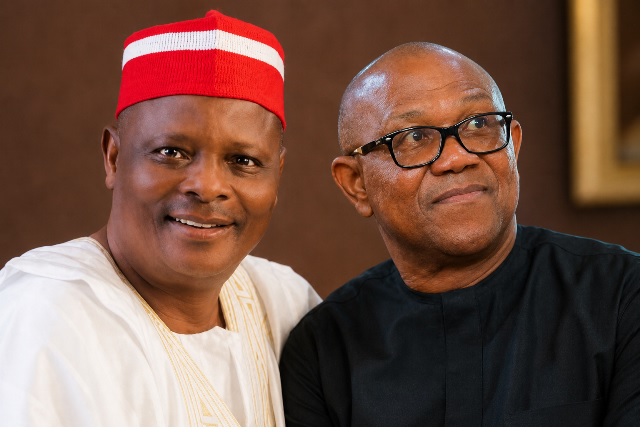
The National Chairman of the Peoples Redemption Party (PRP), Hakeem Baba-Ahmed, has explained why former Labour Party presidential candidate Peter Obi and the leader of the New Nigeria People’s Party (NNPP), Rabiu Kwankwaso, were unable to align with the PRP ahead of the 2027 general elections.
Speaking on the ongoing political realignments within the opposition space, Baba-Ahmed said discussions and consultations had taken place with various political actors seeking stronger alliances capable of challenging the ruling establishment. However, he noted that differences in political calculations, structures, and strategic direction prevented Obi and Kwankwaso from formally joining the PRP.
According to him, the PRP remains committed to building a credible and principled political alternative but would not compromise its foundational ideals and internal processes simply to accommodate high-profile political figures.
“We are open to collaboration with individuals and groups that share our vision for Nigeria,” Baba-Ahmed reportedly said. “But political partnerships must be based on shared principles, mutual understanding, and long-term commitment, not merely electoral convenience.”
His comments come amid increasing speculation over coalition-building efforts among opposition politicians ahead of the next presidential election. In recent months, Obi and Kwankwaso have both been linked to several political discussions and emerging platforms as stakeholders explore possible alliances capable of reshaping Nigeria’s political landscape.
Political analysts suggest that opposition parties are under growing pressure to form broader coalitions if they hope to mount a serious challenge in 2027. However, they also note that ideological differences, leadership ambitions, and regional political interests continue to complicate merger talks and alliance negotiations.
The PRP, one of Nigeria’s oldest political parties with roots in progressive politics, has consistently positioned itself as a platform focused on social justice, grassroots empowerment, and democratic reforms. Baba-Ahmed stressed that while the party welcomes cooperation, it would avoid arrangements that could weaken its identity or internal cohesion.
Observers say the inability of Obi and Kwankwaso to join the PRP highlights the fragmented nature of Nigeria’s opposition politics, where multiple parties and personalities continue to compete for influence and strategic advantage.
Despite the setback, Baba-Ahmed expressed optimism that broader opposition collaboration could still emerge before the 2027 elections, especially as economic hardship and governance concerns continue to dominate national discourse.
For now, the remarks add another dimension to the ongoing political maneuvering taking shape across the country, as major political actors continue to reposition themselves in preparation for what is expected to be a fiercely contested electoral cycle.


