

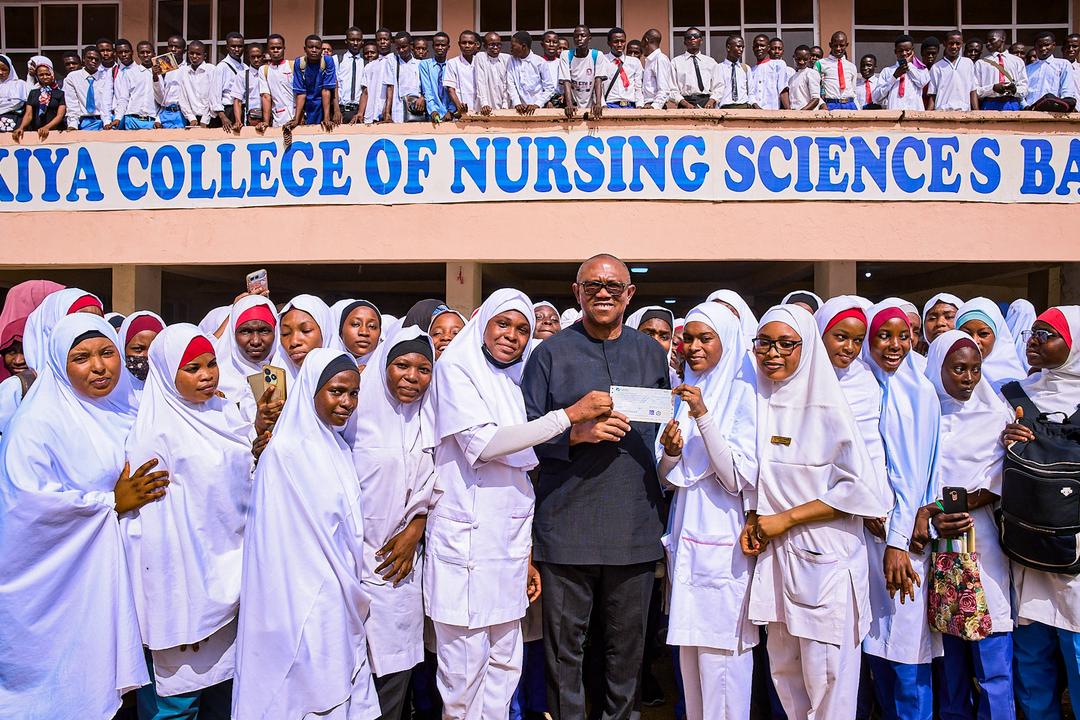
Former Anambra State governor and 2023 presidential candidate, Peter Obi, has donated ₦10 million to the Grimard Catholic College of Nursing Sciences in commemoration of International Nurses Day.
Obi made the donation while paying tribute to nurses across Nigeria and around the world for their dedication and sacrifices in the face of mounting healthcare challenges. He praised healthcare workers for continuing to serve despite heavy patient loads, inadequate medical equipment, and difficult working conditions in many parts of the country.
Speaking during the occasion, Obi emphasized the need for greater investment in education and healthcare, describing nurses as critical pillars of national development. He stated that any serious effort to build a better Nigeria must prioritize strengthening healthcare institutions and supporting frontline medical professionals.
“Nurses remain among the most important contributors to society, often working under enormous pressure to save lives,” Obi reportedly said. “We must continue to invest in the people and institutions that sustain our healthcare system.”
The donation to Grimard Catholic College of Nursing Sciences adds to Obi’s growing record of financial support for educational and health institutions across Nigeria. In recent years, he has made similar contributions to schools and colleges in states including Kogi State, Imo State, and Anambra State, reinforcing his long-standing advocacy for human capital development.
This year’s International Nurses Day was marked globally under the theme, “Our Nurses. Our Future. Empowered Nurses Save Lives.” Governments, health organizations, and public figures across several countries—including India and the United Kingdom—celebrated the contributions of nurses while calling for improved welfare, training, and professional support.
Across social media and healthcare communities, many nurses also shared personal stories of resilience, sacrifice, and commitment to patient care. The occasion highlighted ongoing concerns over burnout, migration of healthcare professionals, and shortages of trained personnel in many developing countries, including Nigeria.
Health experts have repeatedly warned that Nigeria’s healthcare sector faces significant challenges, including underfunding, inadequate infrastructure, and the continued emigration of medical workers seeking better opportunities abroad. They argue that sustained investment in nursing education and welfare is essential to strengthening the country’s healthcare system.
Obi’s gesture has been welcomed by students, healthcare advocates, and supporters who view it as a symbolic recognition of the vital role nurses play in society. Political analysts also note that such interventions continue to shape Obi’s public image as a leader strongly associated with education, healthcare, and social development initiatives.
As celebrations for International Nurses Day continue worldwide, the spotlight remains on the urgent need to empower healthcare professionals and create systems that allow them to serve effectively and sustainably.


