

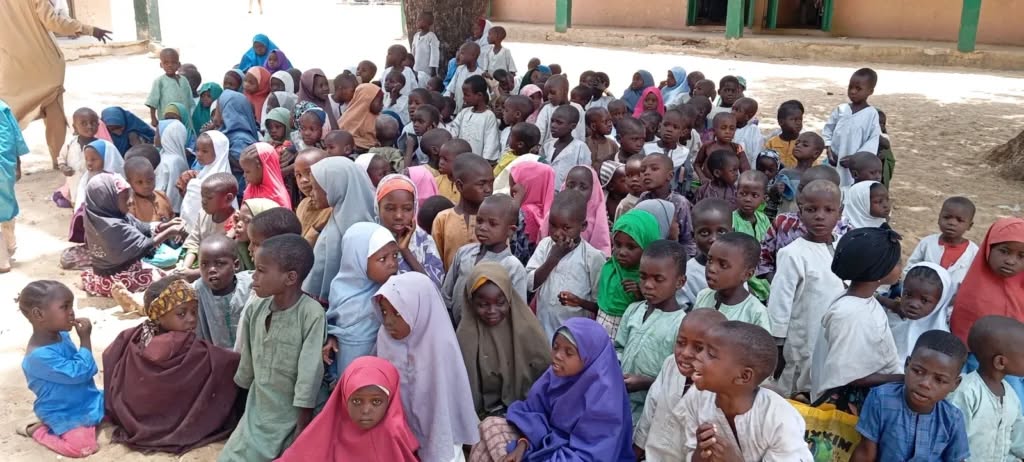
The United Nations Children’s Fund (UNICEF) has raised alarm over Nigeria’s deepening education crisis, revealing that Jigawa State, Kano State, and Katsina State account for the highest number of out-of-school children in the country.
According to UNICEF, Nigeria currently has an estimated 18.3 million children out of school—one of the highest figures globally—underscoring a national emergency that threatens the country’s social and economic future. The agency noted that the concentration of this crisis in northern states reflects a combination of poverty, cultural barriers, insecurity, and weak educational infrastructure.
Education experts warn that the implications of such a large population of out-of-school children are far-reaching. Beyond limiting individual opportunities, the trend poses risks to national development, increases vulnerability to child labour and exploitation, and fuels cycles of poverty and inequality.
UNICEF emphasized that early childhood education remains a critical solution to reversing the trend. The agency argued that investing in foundational learning not only improves school enrollment and retention but also enhances long-term cognitive and social outcomes for children. However, access to early education remains limited in many parts of northern Nigeria, where facilities are inadequate and enrollment rates are low.
In states like Jigawa, Kano, and Katsina, multiple factors intersect to keep children out of classrooms. Economic hardship often forces families to prioritize survival over schooling, while traditional practices and gender norms sometimes discourage formal education, particularly for girls. Additionally, insecurity in parts of the region has disrupted schooling and displaced communities, further complicating access to education.
UNICEF called on federal and state governments to intensify efforts to address the crisis through targeted policies, increased funding, and community engagement. It also urged the strengthening of teacher training, expansion of school infrastructure, and implementation of social protection programs to support vulnerable families.
Stakeholders in the education sector have echoed these concerns, stressing that without urgent and coordinated intervention, Nigeria risks raising a generation without adequate skills for the modern economy. They argue that addressing the crisis requires not only government action but also collaboration with traditional leaders, civil society, and international partners.
As Nigeria grapples with this growing challenge, the spotlight remains on how effectively authorities can translate policy commitments into tangible outcomes. For millions of children currently out of school, the urgency of action cannot be overstated.


