

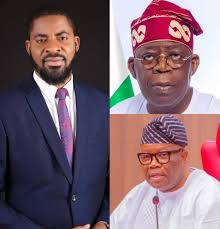
Human rights lawyer and activist Deji Adeyanju has criticized the economic strategy of President Bola Tinubu, calling for the reinstatement of fuel subsidies amid rising petrol prices and worsening economic hardship.
Speaking in a widely circulated podcast clip, Adeyanju argued that the removal of fuel subsidies—one of the Tinubu administration’s flagship reforms—has had a devastating impact on ordinary Nigerians. He maintained that reinstating the subsidy would provide immediate relief, given the country’s heavy dependence on petrol for transportation, electricity generation, and daily economic activity.
According to available data, petrol prices have surged dramatically from about ₦185 per litre in May 2023 to an average of over ₦1,200 by April 2026. The sharp increase has significantly raised the cost of living, affecting transportation, food prices, and small businesses across the country.
Adeyanju contended that while the government has highlighted savings from subsidy removal, those benefits have not translated into tangible improvements in citizens’ lives. “If subsidies are restored, people will feel relief instantly,” he suggested, framing the policy reversal as a practical solution to current economic pressures.
The Tinubu administration, however, has consistently defended its decision to remove fuel subsidies, arguing that the policy was unsustainable and riddled with inefficiencies. Officials have maintained that funds previously spent on subsidies are being redirected toward infrastructure development, social programs, and long-term economic reforms.
The debate over subsidy removal remains one of the most contentious issues in Nigeria’s economic discourse, with experts divided on its impact. While some economists support the policy as necessary for fiscal sustainability, others argue that its implementation lacked adequate safety nets for vulnerable populations.
Beyond fuel policy, Adeyanju also weighed in on governance at the state level, drawing comparisons between two governors. He praised Ademola Adeleke for what he described as visible progress in road infrastructure in Osun State.
In contrast, he criticized Alex Otti, questioning the pace and visibility of development efforts in Abia State. His remarks have added to ongoing public discourse comparing the performance of state governments across Nigeria.
Political observers note that such commentary is increasingly shaping public perception ahead of the 2027 general elections, as citizens evaluate leaders based on performance and policy outcomes.
Reactions to Adeyanju’s statements have been mixed. Supporters agree that the current fuel price regime is unsustainable for many Nigerians and believe a policy adjustment is necessary. Critics, however, argue that returning to subsidies could reintroduce fiscal burdens and corruption risks that the government is attempting to eliminate.
As Nigeria continues to navigate economic reforms and their social consequences, the fuel subsidy debate remains central to discussions about governance, equity, and the balance between short-term relief and long-term sustainability.
With fuel prices still high and public frustration growing, calls like Adeyanju’s are likely to intensify, keeping pressure on policymakers to address the economic realities faced by millions of Nigerians.


