

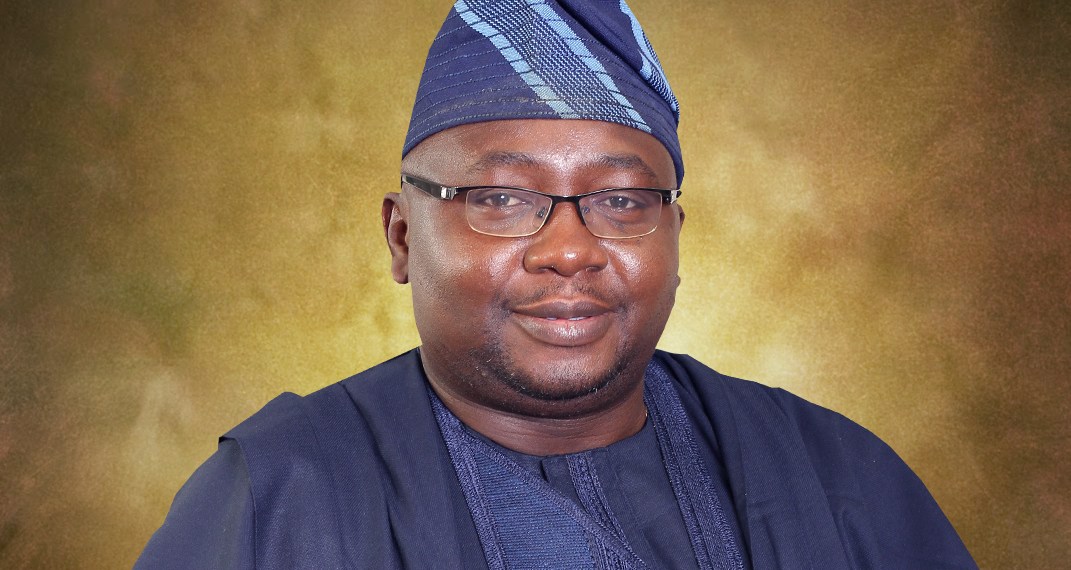
Nigeria’s Minister of Power, Adebayo Adelabu, has formally resigned from his position to pursue his long-anticipated ambition of becoming governor of Oyo State in the 2027 general elections.
In a resignation letter addressed to President Bola Tinubu and dated April 22, 2026, Adelabu confirmed that his exit from office would take effect on April 30, bringing to an end nearly three years at the helm of Nigeria’s power sector.
His departure signals the beginning of what is expected to be a high-stakes political contest in Oyo State, as he prepares for his second attempt at the governorship following his unsuccessful bid in 2019.
Supporters of the outgoing minister have praised his tenure, pointing to improvements in generation capacity, which they claim rose from about 13,000 megawatts to over 14,000 megawatts during his time in office. They also highlight reported growth in sector revenue, which allegedly increased by approximately 70 percent to reach N1.7 trillion.
“These are significant strides in a sector that has historically faced deep-rooted challenges,” one supporter remarked, noting that reforms and policy adjustments under Adelabu contributed to measurable progress.
However, critics have offered a starkly different assessment. Many Nigerians continue to grapple with persistent blackouts, grid collapses, and unreliable electricity supply, leading detractors to label him the “Minister of Darkness.” They argue that despite reported improvements in figures, the average citizen has seen little change in daily power availability.
Energy analysts suggest that the mixed reactions reflect the complexity of Nigeria’s electricity sector, where structural issues—including transmission constraints, distribution inefficiencies, and gas supply challenges—often limit the impact of policy reforms.
During his tenure, Adelabu also proposed the creation of a “Coordinating Minister for Energy,” a role he said would enhance synergy across the various segments of the power and energy value chain. While the proposal has not yet been implemented, it has sparked discussions about the need for more integrated oversight of Nigeria’s energy sector.
Following his resignation, Adelabu returned to Ibadan, where he was reportedly received by supporters and political allies. The warm reception underscores his continued influence in the state and signals early momentum for his gubernatorial campaign.
Political observers note that Oyo State is likely to witness intense competition ahead of the 2027 elections, with multiple contenders expected to emerge across party lines. Adelabu’s experience at the federal level could serve as both an asset and a point of scrutiny, as voters weigh his record in the power sector against his promises for the state.
His move also reflects a broader trend in Nigerian politics, where federal appointees often resign ahead of elections to pursue elective positions, leveraging their national exposure and political networks.
As the political landscape begins to take shape, Adelabu’s candidacy is expected to generate significant debate around governance, performance, and leadership. For many voters in Oyo State, the coming months will be an opportunity to assess whether his track record at the national level translates into a compelling vision for state leadership.
With his resignation now official, attention shifts from policy corridors in Abuja to the political battleground in Oyo, where the race for 2027 has quietly begun.


