

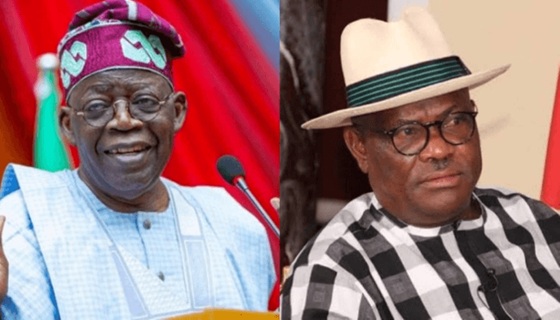
President Bola Tinubu is expected to intervene in the growing political disagreement between Minister of the Federal Capital Territory, Nyesom Wike, and governors elected on the platform of the All Progressives Congress, APC, amid preparations for the 2027 general elections.
According to a report by The PUNCH on Friday, the intervention could take place in France, where the President is currently on vacation, before his expected return to Nigeria. The proposed intervention is aimed at resolving differences between Wike and the APC governors.
The disagreement has centred largely on Wike’s political activities through the emerging Rainbow Coalition, which he has said is designed to mobilise support for President Tinubu’s re-election while allowing politicians to support candidates of their choice in other contests.
Wike, who remains a member of the Peoples Democratic Party, is serving as FCT Minister in the APC-led Federal Government. His continued involvement in opposition politics while supporting Tinubu at the presidential level has generated concerns among some APC governors.
The immediate disagreement became more pronounced following comments by the Chairman of the Progressive Governors’ Forum and Imo State Governor, Hope Uzodimma.
Uzodimma said after a meeting of APC governors in Abuja that the governors would not support any political alliance or arrangement capable of weakening the APC, undermining the President’s re-election bid or working against candidates officially sponsored by the party.
He stated that the governors’ campaign commitment was to APC candidates at all levels in the 2027 elections.
Wike, however, has maintained that his support for Tinubu does not mean he has abandoned the PDP or agreed to prevent the opposition party from fielding candidates in other elections.
In an interview with Arise Television, the FCT Minister argued that his Rainbow Coalition was not an APC structure. Rather, he described it as a platform bringing together politicians and political groups supporting Tinubu’s presidential bid.
Wike also rejected the position that supporting Tinubu at the presidential level required him to support APC candidates in governorship, National Assembly and state assembly elections.
His position has brought him into direct disagreement with governors who want the party’s structures and candidates to receive unified support ahead of the elections.
The controversy has also attracted reactions from APC leaders in different parts of the country.
The South-East leadership of the APC recently backed the Progressive Governors’ Forum and criticised Wike’s remarks about the governors. The party leaders argued that elected governors should be allowed to manage their political structures and accused the minister of attempting to influence their political fortunes ahead of 2027.
The dispute has also generated commentary from politicians outside the immediate camps of Wike and the APC governors.
A former South-East spokesman to President Tinubu, Denge Onoh, attributed the disagreement to Wike’s continued political influence and links with structures within the PDP despite his position in the APC-led Federal Government. Onoh argued that this had created concerns among APC governors about the possible impact of Wike’s activities on their political interests.
The latest development comes as political parties and major political actors intensify preparations for the 2027 elections.
Wike’s position has remained that politics at the state and local levels should be determined by political actors in those areas, while his support for Tinubu is specifically directed at the presidential contest.
The APC governors, on the other hand, have emphasised party cohesion and support for candidates officially nominated by the APC.
The proposed intervention by Tinubu therefore comes against the background of competing political interests within the ruling party and the wider opposition landscape.
The outcome of any meeting between the President, Wike and the affected governors could have implications for how political alliances and campaign structures develop ahead of the 2027 elections. However, as of Friday, no formal agreement resolving the disagreement had been publicly announced.
The reported plan for an intervention in France remains subject to confirmation of the meeting and any agreement that may emerge from it.


