

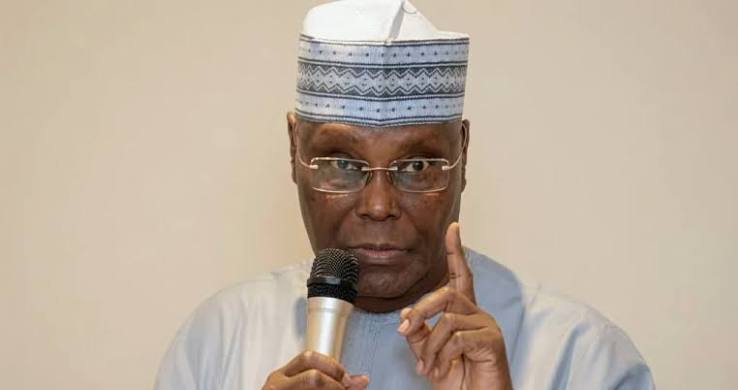
Former Vice President Atiku Abubakar has criticised the Bola Tinubu administration over what he described as excessive domestic borrowing, questioning why the Federal Government continues to raise funds from the local market despite higher crude oil prices and improved revenues.
Atiku, the African Democratic Congress (ADC) presidential candidate for the 2027 election, said the Federal Government borrowed ₦24.7 trillion between January and August 2026, representing a 90.5 per cent increase from the ₦12.98 trillion borrowed during the same period in 2025.
He argued that the increase was difficult to justify because the 2026 budget was based on an oil price benchmark of about $64.85 per barrel, while Brent crude had risen substantially above that level. Recent market reports put Brent crude close to $100 per barrel amid supply concerns and geopolitical tensions.
“At the beginning of this fiscal year, the Federal Government budgeted on an oil benchmark of $64.85 per barrel. Today, crude oil prices have risen substantially above that benchmark,” Atiku said.
He questioned why the higher oil revenues had not translated into lower borrowing, stronger businesses or greater economic relief for Nigerians.
“Yet, instead of this windfall translating into lower borrowing, stronger businesses and relief for Nigerians, the Federal Government went into the domestic market and borrowed a staggering N24.7 trillion between January and August 2026,” he added.
Atiku further claimed that government credit had expanded by 43 per cent, compared with 9.6 per cent growth in private-sector credit. He warned that increased government demand for domestic funds could make borrowing more expensive for businesses and restrict investment.
The criticism is significant because Nigeria relies heavily on oil revenue to finance government expenditure. Atiku has previously argued that stronger oil earnings should reduce pressure on domestic borrowing.
The Tinubu administration, meanwhile, has pursued fiscal and monetary reforms including fuel subsidy removal and exchange-rate changes, which the government says are intended to improve public finances and strengthen the economy.
The latest exchange highlights the continuing political debate over Nigeria’s borrowing strategy, revenue management and the impact of government financing on businesses ahead of the 2027 general election.


