

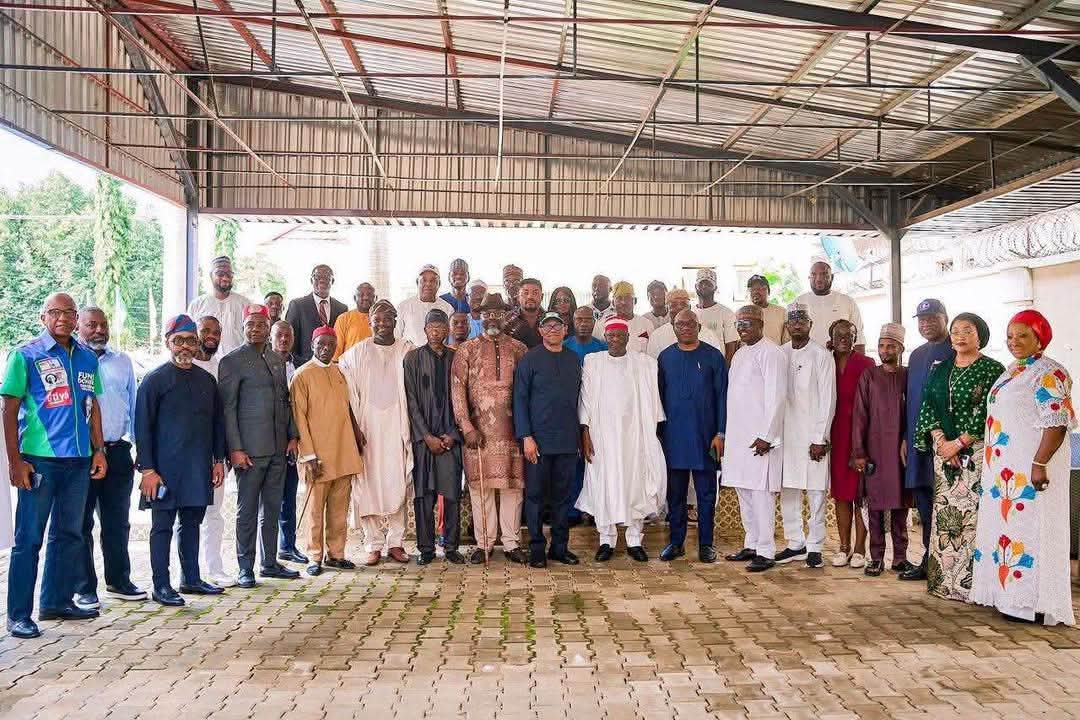
Nigeria Democratic Congress (NDC) presidential candidate, Peter Obi, has hosted former Kano State governor and NDC Vice Presidential candidate NDC, Dr Rabiu Musa Kwankwaso, alongside the party’s gubernatorial, senatorial and other candidates at the Obidient Headquarters in Abuja.
The meeting brought together candidates and key political actors within the NDC as the party steps up its preparations for the 2027 general elections and seeks to build a stronger political presence across Nigeria.
At the centre of the discussions was the need to move the party’s political message beyond major cities and establish a formidable presence in communities, wards and rural areas across the country. Participants examined strategies for taking what they described as the NDC’s message of national redemption directly to Nigerians at the grassroots.
The engagement between Obi, Kwankwaso and other candidates is also being viewed as an important demonstration of political coordination within the opposition platform as preparations for the 2027 elections gather momentum.
The participants emphasised the importance of developing a political structure capable of listening to ordinary Nigerians, understanding the challenges confronting communities and translating the party’s proposed policies into practical solutions.
According to the statement issued after the meeting, the partnership with Obi is built around a shared commitment to tackling poverty and creating opportunities for Nigerians who have been left vulnerable by the country’s economic challenges.
Poverty reduction featured prominently among the issues identified by the participants. The NDC leadership said it wants to pursue policies capable of moving vulnerable Nigerians from dependence to productive economic participation.
The party also identified Nigeria’s growing out-of-school population as a major national challenge requiring urgent attention. According to the participants, expanding access to quality education remains critical to addressing poverty and creating a productive workforce for the future.
Another major focus was the development of small and medium-sized businesses, which the party considers essential to job creation and economic expansion. The NDC said greater support for entrepreneurs and small businesses would be necessary to unlock economic opportunities at the grassroots.
The meeting also addressed the issue of national security, with participants stressing the importance of creating a safer environment for citizens, farmers, businesses and communities. The party linked security to economic development, arguing that Nigerians cannot fully participate in productive activities when their lives and livelihoods remain under threat.
National unity was equally identified as a major component of the party’s agenda. The NDC leadership maintained that Nigeria’s diversity should be treated as a strength and that political leadership must work towards reducing divisions while promoting a stronger sense of shared national identity.
A further emphasis was placed on transforming Nigeria from what the participants described as a consumption-oriented economy into a production-driven economy.
The party argued that Nigeria possesses the human and natural resources required to produce more of what its citizens consume, create employment and reduce excessive dependence on imports.
The Abuja engagement therefore served not only as a meeting of candidates but also as an opportunity to reinforce the political direction being projected by the NDC ahead of the 2027 elections.
With Obi at the centre of the party’s presidential campaign and Kwankwaso among the prominent political figures participating in the engagement, the meeting highlighted the importance the party is placing on broad-based mobilisation and political coordination.
The NDC is expected to take the outcome of the Abuja discussions into its wider campaign and grassroots mobilisation efforts as the 2027 election approaches.
For the party, the central challenge will now be translating the political enthusiasm surrounding its leadership into an effective nationwide structure capable of reaching voters in communities across the federation.
The meeting concluded with a message of optimism and determination from the participants:
“Nigeria will be OK.”


