

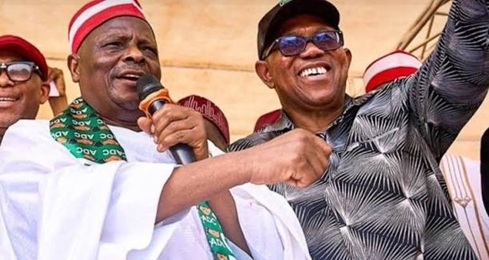
A candidate of the Nigeria Democratic Congress in Kaduna State has called on opposition politicians and supporters to unite behind the Peter Obi-Rabiu Kwankwaso ticket ahead of the 2027 presidential election, describing the proposed combination as an opportunity to provide Nigerians with a credible alternative to the ruling All Progressives Congress.
The candidate made the appeal amid growing political activity within the NDC and increasing efforts by opposition groups to consolidate their structures ahead of the 2027 elections.
The call for unity reflects a broader campaign within the Kaduna NDC, where party leaders have previously expressed support for an Obi-Kwankwaso presidential ticket. The Kaduna State chapter endorsed the combination in May, with party officials arguing that the two politicians could attract support across Nigeria’s different regions and political constituencies.
Supporters of the proposed ticket believe that Obi’s strong support among young Nigerians and voters in parts of southern Nigeria could complement Kwankwaso’s political influence, particularly in Kano and parts of the North.
The argument is that bringing the two political figures together could create a broader electoral coalition than either politician might be able to build independently.
Obi, a former governor of Anambra State and the Labour Party’s presidential candidate in the 2023 election, emerged as one of the most prominent opposition figures following his strong performance in that contest. Kwankwaso, a former governor of Kano State and former senator, contested the 2023 presidential election on the platform of the New Nigeria Peoples Party.
The two politicians have since become central figures in discussions about opposition realignment ahead of the 2027 election.
The Kaduna candidate’s appeal comes at a time when political parties are attempting to determine how best to challenge the APC at the presidential level. The opposition faces the strategic challenge of overcoming regional voting patterns and avoiding the fragmentation that characterised the 2023 presidential contest.
In the 2023 election, Kaduna State was won by Atiku Abubakar of the Peoples Democratic Party, who secured 40.8 per cent of the state’s presidential vote. Tinubu polled 29.4 per cent, Obi 21.7 per cent, while Kwankwaso received 6.8 per cent.
Supporters of the Obi-Kwankwaso arrangement argue that the figures demonstrate the potential for an opposition alliance to consolidate votes that were previously divided among different candidates.
However, the proposed ticket is not without critics. Former APC National Chairman Abdullahi Ganduje has argued that the Obi-Kwankwaso ticket would struggle in Kano and described it as “dead on arrival.” He questioned the governing records of both politicians and their ability to translate their previous political achievements into a successful national campaign.
Supporters of Obi and Kwankwaso have rejected such criticism, pointing to Kwankwaso’s education programmes and grassroots political network in Kano, as well as Obi’s record as Anambra governor and his performance in the 2023 election.
The debate illustrates the competing calculations surrounding the 2027 election. For the opposition, the central question is whether individual political ambitions can be subordinated to a common electoral strategy.
Political observers have argued that opposition unity would require more than an agreement between two presidential contenders. It would also require coordination among political parties, state structures, local organisers, youth groups and other influential political actors.
The Kaduna NDC candidate’s call therefore places particular emphasis on unity, suggesting that supporters should focus on the broader objective of political change rather than allowing personal, regional or party differences to undermine the opposition’s chances.
For the NDC, Kaduna represents an important political battleground. The state has historically been politically competitive and contains both substantial northern Muslim and southern Christian populations, making it strategically important to any presidential campaign seeking nationwide support.
The proposed Obi-Kwankwaso combination is consequently being presented by its supporters as an attempt to build bridges across Nigeria’s regional and demographic divisions.
Whether the arrangement can translate enthusiasm into votes, however, will depend on the strength of the NDC’s grassroots organisation, the ability of its leaders to maintain internal cohesion and the extent to which the ticket can convince voters beyond the traditional support bases of its two leading figures.
As the 2027 election approaches, calls for opposition unity are expected to become more pronounced. The success or failure of such efforts could ultimately determine whether the APC faces a fragmented opposition or a coordinated challenger capable of mounting a serious nationwide campaign.


