

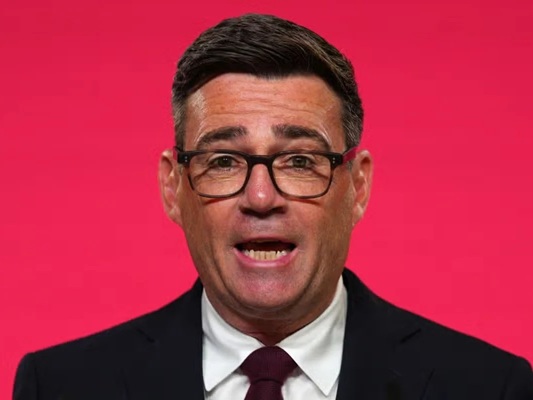
British Prime Minister Andy Burnham has told ministers that they will be free to vote according to their personal convictions when Parliament considers a renewed bill seeking to legalise assisted dying for terminally ill adults in England and Wales.
The decision means ministers will not be bound by the principle of collective responsibility on the issue, allowing members of Burnham’s government to support, oppose or abstain from the legislation according to their individual views.
Burnham has also indicated that he himself intends to abstain when the bill returns to the House of Commons, saying he does not want his position as Prime Minister to unduly influence the parliamentary debate. The bill is scheduled to return to the Commons on September 11.
The proposed legislation, known as the Terminally Ill Adults (End of Life) Bill, would seek to give eligible terminally ill adults greater control over the circumstances of their deaths.
The measure follows an earlier version of the bill that passed the Commons but subsequently ran out of parliamentary time in the House of Lords after extensive amendments.
The renewed legislation has reopened one of Britain’s most sensitive political and ethical debates, with supporters arguing that terminally ill people should have the right to choose the manner and timing of their deaths under strict safeguards.
Opponents, however, have raised concerns about the protection of vulnerable people and the possibility that elderly, disabled or seriously ill individuals could feel pressured into choosing assisted death.
Burnham’s decision to allow a free vote reflects the deeply personal nature of the issue and the divisions it has historically created across political parties.
The Prime Minister has previously expressed support for assisted dying in principle. However, he has more recently stressed that Britain’s palliative and social-care systems should be properly funded and strengthened before such legislation is introduced.
In July, Burnham argued that it would be difficult to conduct the debate in a situation where terminally ill people and other vulnerable citizens do not have adequate access to palliative and social care.
His latest position therefore combines parliamentary neutrality with a warning that end-of-life care must remain a central consideration.
The bill’s return to Parliament is expected to generate intense debate among MPs, medical professionals, religious organisations, disability advocates and campaign groups.
Supporters of assisted dying argue that mentally competent adults with terminal illnesses should be allowed to make deeply personal decisions about their final days, subject to safeguards and independent assessments.
Campaigners against the proposal maintain that legalising assisted dying could fundamentally alter the relationship between vulnerable patients and the healthcare system.
They argue that the priority should instead be ensuring universal access to high-quality palliative care capable of managing pain and providing emotional and psychological support at the end of life.
The debate is particularly significant because the previous bill demonstrated that assisted dying has substantial support within Parliament but also faces strong opposition.
The earlier legislation passed the Commons in June 2025 by 314 votes to 291, before failing to complete its passage through the Lords by the end of the parliamentary session.
The new bill is expected to face scrutiny over its eligibility requirements, safeguards and mechanisms for ensuring that decisions are voluntary.
Under the previous proposal, eligibility centred on terminally ill, mentally competent adults with six months or less to live, with safeguards involving medical assessments and independent oversight.
Burnham’s approach also highlights the distinction between government policy and individual conscience on controversial moral questions.
Rather than directing ministers to vote as a bloc, the Prime Minister has chosen to allow them to exercise their own judgment.
He has also urged ministers to avoid publicly attempting to influence the vote, reinforcing his stated intention to maintain government neutrality on the issue.
For the Labour government, the free vote could prevent assisted dying from becoming a major source of internal division.
For Parliament, however, the decision leaves MPs with the responsibility of determining whether the proposed safeguards are sufficient and whether British law should be changed.
The debate will ultimately centre on competing principles: individual autonomy and dignity on one side, and the protection of vulnerable people and the preservation of a strong healthcare system on the other.
As the September vote approaches, assisted dying is once again set to become one of the most closely watched issues in Westminster.
With ministers free to follow their consciences and the Prime Minister choosing not to vote, the outcome will depend largely on the individual judgments of MPs.
Whatever Parliament decides, Burnham has made clear that his government will implement the decision reached by lawmakers.
The coming debate is therefore likely to have consequences far beyond party politics, potentially reshaping Britain’s approach to terminal illness, end-of-life care and individual choice.


