

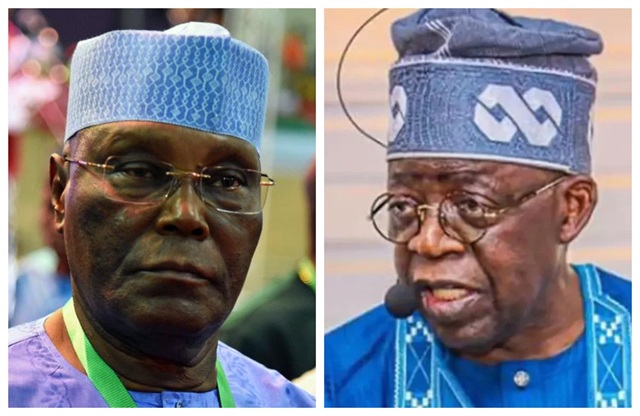
The Federal Government and the All Progressives Congress have intensified their criticism of former Vice President Atiku Abubakar over his proposal to introduce a targeted petrol subsidy, but the opposition camp insists the debate should be about relieving Nigerians from crushing economic hardship rather than defending unpopular policies.
Atiku, the presidential candidate of the African Democratic Congress, has proposed a controlled intervention in the petroleum sector under his 2027 economic recovery plan. Rather than simply returning to the former opaque subsidy regime, Atiku says his proposal would involve providing crude to qualifying domestic refineries at preferential prices, with strict monitoring to ensure the benefit reaches consumers through lower petrol prices.
The proposal has triggered a strong response from the Tinubu administration, which has defended the 2023 removal of petrol subsidy as a necessary economic reform.
The Federal Government argues that the subsidy system placed an unsustainable burden on public finances and was vulnerable to abuse, smuggling and corruption. It has also highlighted the reported N15.8 trillion in resources generated for the Federation between June 2023 and December 2025 following the reforms.
However, the opposition’s response is that the central question is not whether subsidy removal was theoretically desirable, but what Nigerians have actually gained from it.
Since the removal of the subsidy, petrol prices have risen sharply, contributing to higher transportation, logistics and production costs. The wider economic reforms have also been accompanied by a significant depreciation of the naira and a severe cost-of-living crisis.
Recent reporting has noted that the Tinubu administration’s reforms have attracted investors and increased government revenues, but have simultaneously generated widespread public dissatisfaction over living costs and declining purchasing power.
This has provided political ammunition for Atiku and other opposition figures seeking to challenge the APC in 2027.
Atiku’s argument is that government should be prepared to intervene when market-driven fuel prices become too burdensome for citizens, particularly when domestic crude production and refining capacity can potentially be leveraged to reduce costs.
Importantly, Atiku has sought to distinguish his proposal from the old subsidy regime. He has argued that every barrel allocated under the proposed arrangement would be tracked from crude allocation through refining and distribution, with support capped, budgeted and tied to measurable benefits for consumers.
The distinction is central to the opposition’s case.
Rather than advocating a return to a system accused of opacity and massive leakage, Atiku’s camp presents the proposal as a targeted mechanism for using Nigeria’s own crude resources to lower the cost of refined petroleum products for Nigerians.
The Presidency, however, has described the proposal as retrogressive and fiscally unsustainable, arguing that Nigeria has already moved into a fundamentally different petroleum environment, particularly with the emergence of large-scale domestic refining capacity.
The disagreement therefore represents more than an argument about petrol pricing. It is becoming an early test of the competing economic philosophies that will shape the 2027 presidential campaign.
The APC is defending continuity, arguing that Nigerians must endure the short-term consequences of reform in order to secure long-term economic stability.
The opposition, meanwhile, is increasingly asking whether Nigerians can realistically be expected to wait for promised long-term benefits while households continue struggling with food, transport, energy and other basic expenses.
That tension is particularly significant as the 2027 campaign season gathers momentum.
The government can point to increased fiscal resources, infrastructure spending and improved oil-sector developments as evidence of progress. Indeed, the Federal Government says it spent N6.47 trillion on strategic infrastructure between June 2023 and December 2025.
But opposition politicians are likely to continue asking a different question: If government revenues and savings have increased, why are ordinary Nigerians still struggling to afford basic necessities?
That question could become one of the defining themes of the 2027 election.
For Atiku and the opposition, the subsidy controversy provides an opportunity to turn public frustration over petrol prices and living costs into a broader argument about economic governance.
For the APC, the challenge is to convince voters that the hardship associated with its reforms represents a temporary sacrifice for a stronger economy rather than evidence of failed policy.
With the election campaign now underway, the battle over petrol subsidy is therefore unlikely to disappear.
Instead, it could become a major referendum on the Tinubu administration’s economic record—and on whether Nigerians want continuity of the current reform path or a fundamentally different approach to managing the country’s resources and protecting household incomes.


