
Nigerians and How Voters Fought Back
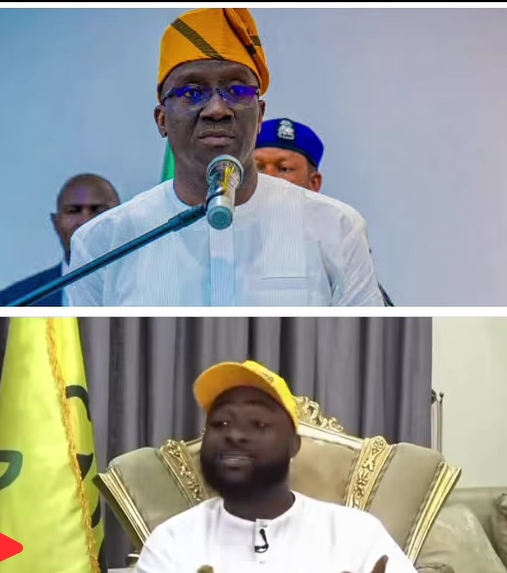
Afrobeats superstar David Adeleke, popularly known as Davido, has given an extensive account of his experience during the recently concluded Osun State governorship election, describing the contest as one in which enormous financial resources were allegedly deployed to influence voters and determine the outcome.
Davido, who is a nephew of Osun State Governor Ademola Adeleke, spoke during an exclusive interview with News Central TV on Tuesday, August 18, 2026, where he recounted events surrounding the election, his monitoring of the process, his social-media interventions and alleged attempts by influential individuals to persuade him to remove his posts.
‘They brought ₦110 billion’
One of the strongest allegations made by Davido was that an enormous amount of money was allegedly brought into Osun State in an attempt to influence the election.
According to him, information from an insider involved in monitoring the process enabled his camp to track what he described as the movement of huge amounts of cash.
Davido said he had subsequently “confirmed” that about ₦110 billion was spent or deployed in connection with efforts to influence the election.
He expressed concern that, had such a strategy succeeded, it could have established a dangerous precedent for future Nigerian elections.
His argument was that if politicians could successfully combine enormous amounts of money with intimidation and other forms of electoral manipulation, future elections could become contests determined not by voters’ preferences but by whoever had the largest financial war chest.
Davido therefore framed the Osun election as bigger than the political battle between his uncle and the APC candidate, saying the outcome had implications for the future of Nigerian democracy.
‘We didn’t spend a dime on election day’
Despite alleging that massive funds were deployed by their opponents, Davido insisted that his own camp did not spend money on election day to influence voters.
He said their strategy was essentially to trust the people and hope that voters would accept whatever inducements were offered to them but still vote according to their conscience.
In his account, the campaign’s attitude was effectively: if money was being offered, let the people collect it but still vote for their preferred candidate.
Davido said:
“We didn’t spend a dime on election day. All we could do was just pray that these people take their money and vote for us.”
He presented this as evidence that financial inducement does not necessarily guarantee electoral victory when voters have already made up their minds.
The singer said the experience reinforced his belief that the electorate could still resist attempts to purchase their votes.
‘People are tired’
Davido also described what he said was a remarkable reaction from ordinary Osun residents during the election.
According to him, there were situations in which people confronted individuals allegedly attempting to seize ballots.
He said the resistance became so strong that ordinary citizens themselves were confronting those whom they believed were attempting to disrupt the process.
“It got to a point where it was the Osun people that were beating the people that were trying to seize ballots. People are tired,” he said.
Davido interpreted this as an indication of growing frustration among Nigerians with electoral manipulation.
For him, the development demonstrated that voters were increasingly unwilling to simply stand by while their votes were allegedly interfered with.
Pressure over his social-media posts
Another major part of Davido’s account concerned his activities on social media during the election.
The singer had been posting updates and criticisms relating to the conduct of the election, including comments directed at the Independent National Electoral Commission (INEC) and political actors.
He said those posts attracted the attention of powerful individuals who allegedly wanted him to delete them.
Davido specifically named Senate President Godswill Akpabio and businessman Aliko Dangote.
According to him, Akpabio contacted him and asked him to delete one of his posts.
Davido said he refused.
He explained that he told Akpabio that, in his view, political actors had already taken positions against his uncle and that he therefore could not simply remove his comments.
Reports of the interview quote Davido as saying that he told Akpabio, in effect, that he could not delete anything because of what he believed had happened to his uncle during the election.
Dangote also allegedly contacted him
Davido further claimed that Aliko Dangote also reached out to him.
According to the singer, he similarly declined to remove his posts.
He said his position was that he would not delete the material until INEC had officially announced the election result.
In his account, the decision was deliberate: he wanted the posts and observations he had made during the process to remain available until the electoral commission completed the official declaration.
This, he said, was why he resisted pressure from influential people who wanted him to take down his social-media commentary.
His criticism of INEC
Davido also spoke about his criticism of INEC during the election period.
He had used his social-media platforms to express concerns about developments surrounding the poll and the collation process.
His position, as presented in the interview, was that public figures and citizens should not remain silent when they believe the electoral process is being compromised.
He argued that he had a responsibility to speak because he was physically following events and receiving information from people involved in monitoring the election.
His refusal to delete his posts therefore became part of his broader argument about transparency and accountability during elections.
‘If they had gotten away with it, Nigeria is finished’
Davido’s strongest warning concerned what he believed the alleged financial deployment represented for Nigeria’s democratic future.
He argued that the danger was not merely about who won or lost the Osun election.
Rather, he feared that successfully buying an election on such a massive scale could establish a template for future contests.
He reportedly warned that if such a strategy had succeeded, “the blueprint for election will now be violence and money.”
In other words, his concern was that elections could gradually become competitions between political groups with access to enormous financial resources and the capacity to deploy those resources at polling units.
Davido says Adeleke’s victory was against the odds
The singer also used the interview to praise his uncle, Governor Ademola Adeleke.
He argued that Adeleke’s victory, as he viewed it, was significant because of the challenges his camp allegedly faced during the election.
Davido said his uncle should serve as an example to other governors, arguing that political leaders who genuinely work for their people can build enough goodwill to withstand political pressure.
“My uncle should be an example to other governors. With all odds against us, my uncle still won,” he said.
The message behind the statement was that political loyalty should not simply be manufactured through money or political machinery; it should be earned through a government’s relationship with its citizens.
The role of the Adeleke family
Davido also spoke about the role his family played during the election.
He said his father, businessman Adedeji Adeleke, remained deeply supportive of Governor Adeleke throughout the tense period.
According to Davido, his father was praying and fasting repeatedly for his brother during the election period.
He described the family’s commitment as extending beyond political campaigning into a personal struggle to ensure Adeleke’s political survival.
Davido’s broader message to Nigerian politicians
Beyond the specific allegations about the Osun election, Davido’s comments amounted to a broader warning about the future of Nigerian elections.
His central argument was that political leaders should not assume that money, intimidation or political influence automatically translates into control of the electorate.
He suggested that citizens can accept inducements and still vote according to their own preferences.
More importantly, he portrayed the reaction of some Osun voters as evidence that Nigerians are becoming increasingly conscious of the power of their votes.
What the allegations mean
Davido’s claims have injected another dimension into the post-election debate in Osun.
The ₦110 billion figure, alleged attempts at vote-buying and claims of attempts to interfere with the electoral process are Davido’s allegations and should not be treated as independently established facts without corroborating evidence. The reports reviewed attribute these claims to Davido’s News Central interview.
Nevertheless, his account has generated significant attention because it comes from one of the most prominent entertainers involved in the election and because he says he was directly involved in monitoring events surrounding his uncle’s re-election campaign.
His comments also highlight three major issues that continue to shape Nigeria’s electoral debate: vote-buying, the protection of ballots at polling units and the independence and credibility of electoral institutions.
A political lesson from Osun
At the heart of Davido’s narrative is a simple political argument: money may influence an election, but it cannot always determine how citizens ultimately vote.
His account portrays the Osun election as a contest between financial and political machinery on one side and grassroots loyalty and voter determination on the other.
Whether every allegation made by Davido can ultimately be substantiated is a separate question. But his testimony has ensured that the debate over what happened in Osun will extend beyond the final figures and into questions about how much money was allegedly deployed, how voters responded, whether electoral rules were respected and whether Nigeria’s electoral system can withstand increasingly sophisticated attempts at manipulation.
For Davido, the most important outcome was not simply that his uncle survived a difficult political contest. It was what he believes the election demonstrated about the Nigerian voter: **that citizens can still make their own choices even when powerful political interests attempt to influence them.**
Davido Gives Detailed Account of Osun Governorship Election: Alleged ₦110bn Vote-Buying, Pressure From Powerful

- Advertisement -

