

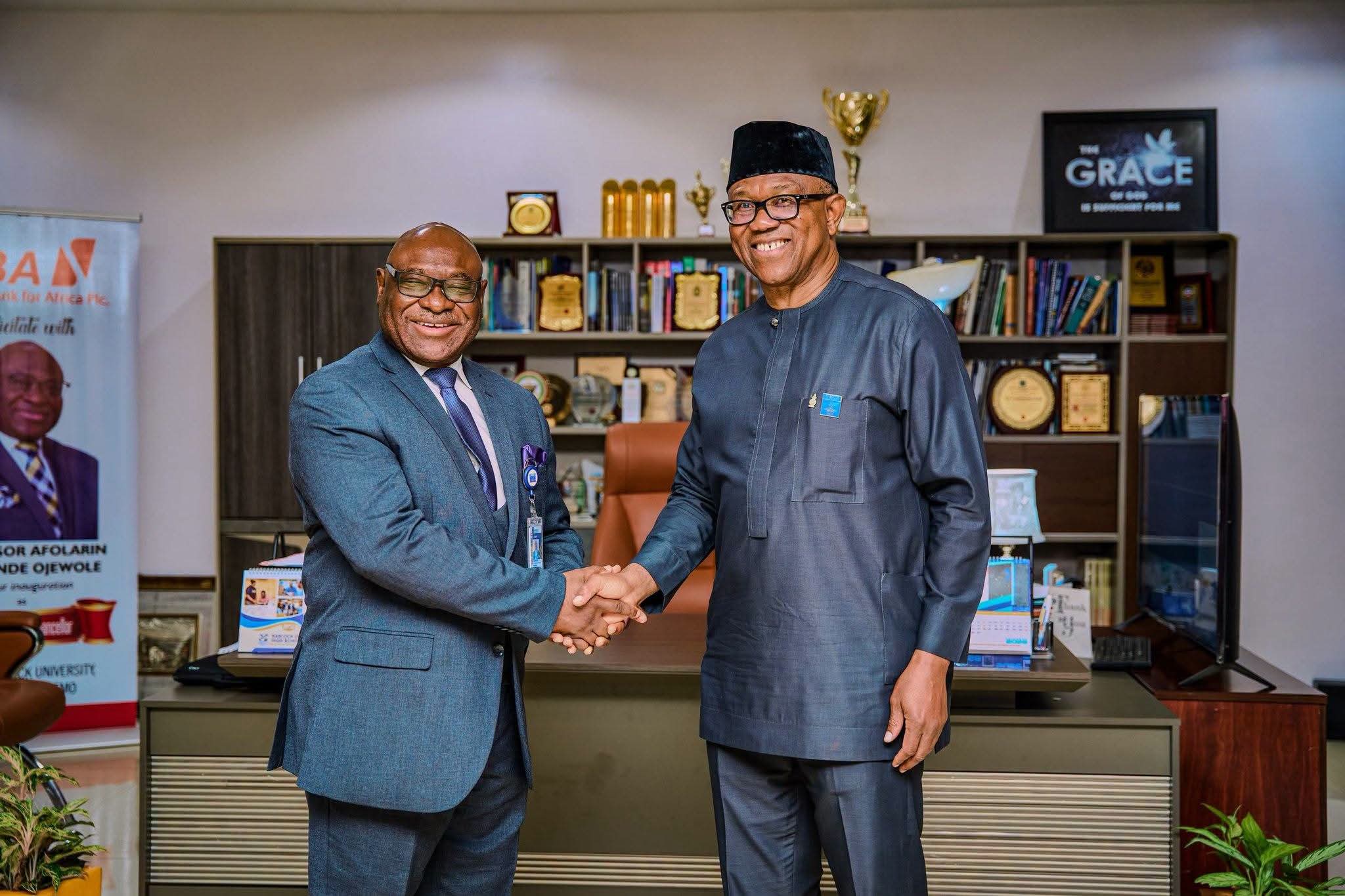
Peter Obi has called on Nigerian youths to remain steadfast in their belief in people-driven leadership, recounting his 2022 presidential election experience where, according to him, he did not have a single elected councillor backing his campaign, yet still secured widespread support from ordinary citizens across the country.
He made the remarks on Monday while speaking as a guest speaker at the 2026 edition of the Babcock International Model United Nations (BIMUN 26) held at Babcock University, Ilishan-Remo, Ogun State. The conference was themed, “Better Together: A Decade of BIMUN Advancing the United Nations Vision for Peace, Development, and Human Rights.”
Before his address, Obi met with the university’s management, where he commended the institution for its commitment to discipline, academic excellence, and leadership development. He described the university environment as one that nurtures responsibility and prepares young people for nation-building.
Addressing the students, Obi reflected on his political journey and the lessons from the 2022 general elections, emphasizing that true leadership is rooted in the people rather than political structures.
“In 2022, I had no councillor, no governor, and no entrenched political machinery behind me,” he said. “Yet, millions of Nigerians believed in a different kind of leadership and came out to support a vision of a better country.”
He urged young people to understand the power they hold in shaping the future of Nigeria, stressing that meaningful change does not always come from established systems but from collective determination and civic engagement.
Obi also spoke on governance, accountability, and nation-building, reiterating the need for a country where leadership is defined by competence, integrity, and service to the people rather than political privilege.
He encouraged students to remain active participants in civic life, noting that Africa’s youthful population remains its greatest strength if properly harnessed.
According to him, Nigeria’s challenges can be overcome when citizens refuse to lose hope and instead commit themselves to building a more just and functional society.
He concluded with a message of optimism, reaffirming his belief that a better Nigeria is possible through unity, responsibility, and people-centered leadership.


