

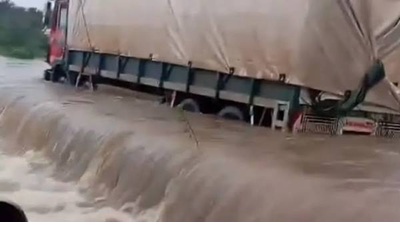
Heavy rainfall has caused severe flooding along a section of the Benin-Ore Expressway in Odigbo Local Government Area of Ondo State, leaving hundreds of commuters and motorists stranded and disrupting movement between Nigeria’s South-West and South-South regions.
The torrential downpour submerged a major stretch of the highway, transforming the busy federal road into a virtual waterway and forcing vehicles to remain stationary for several hours as floodwaters made passage impossible.
Travellers reported long queues of vehicles on both sides of the affected road, with many commuters unable to continue their journeys due to the rising water level.
Among those affected was Joshua Oladele, who recounted spending several hours on the road before eventually seeking accommodation at a nearby hotel after it became clear that the floodwaters would not recede quickly.
Beyond the expressway, the heavy rains also caused widespread flooding in Ondo town, Irele, and Igbokoda, where homes, shops and vehicles were inundated.
Residents said the floods destroyed household property, damaged business premises and left many families counting losses estimated to run into millions of naira.
Despite the extensive destruction, no fatalities had been reported at the time of filing this report, although affected communities continued to assess the full extent of the damage.
The flooding has once again highlighted the vulnerability of critical transport infrastructure during the rainy season, particularly on major highways linking different parts of the country.
The Benin-Ore Expressway serves as one of Nigeria’s busiest transportation corridors, connecting commercial activities between the South-West, South-South and parts of the South-East.
Prolonged disruption along the route is expected to affect the movement of passengers, agricultural produce and commercial goods, with potential economic implications for businesses dependent on the highway.
In response to the situation, the Ondo State Government said it had deployed excavators and other heavy equipment to carry out emergency desilting of blocked drainage channels and restore the free flow of water.
Government officials also appealed to residents to promptly report blocked drains and flood-prone locations to relevant authorities to facilitate timely intervention and reduce the risk of further flooding.
Emergency response teams have continued to monitor affected communities while advising motorists to avoid flooded sections of roads and exercise caution during periods of heavy rainfall.
Environmental experts have attributed the recurring floods to a combination of intense rainfall, inadequate drainage infrastructure, blocked waterways and rapid urban development, calling for sustained investment in flood-control measures.
They stressed that regular desilting of drainage systems, improved urban planning and stronger enforcement against indiscriminate waste disposal would help reduce the impact of seasonal flooding.
As the rainy season continues, authorities have urged residents in flood-prone areas to remain vigilant, heed weather advisories and cooperate with emergency agencies to minimise risks to lives and property.
The latest flooding incident adds to growing concerns over the increasing frequency of extreme weather events across Nigeria, reinforcing calls for long-term investments in climate resilience, drainage infrastructure and disaster preparedness.


