

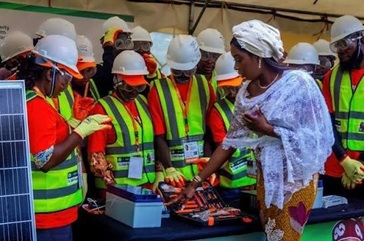
The Federal Government has commenced the training of 5,000 smart meter installers across Nigeria as part of efforts to improve electricity metering, expand access to reliable power and create employment opportunities for young Nigerians.
The initiative forms part of the government’s broader strategy to address the country’s longstanding metering gap, enhance efficiency in electricity distribution and strengthen the nation’s power sector.
According to officials, participants will receive practical and technical training in the installation, maintenance and management of smart electricity meters, equipping them with skills required to support ongoing metering programmes nationwide.
The programme is expected to produce a pool of certified installers capable of assisting electricity distribution companies in accelerating meter deployment to homes and businesses across the country.
Government representatives said the initiative is also designed to generate employment by providing participants with marketable technical skills in a sector where demand for qualified personnel continues to grow.
Smart meters enable consumers to monitor electricity consumption more accurately while allowing distribution companies to improve billing efficiency, reduce estimated billing and detect faults or energy losses more effectively.
Authorities noted that wider deployment of smart metering technology would contribute to increased transparency in electricity billing and improve trust between consumers and electricity distribution companies.
The training programme aligns with ongoing reforms aimed at modernising Nigeria’s electricity sector through the adoption of digital technologies and improved service delivery.
Energy experts have welcomed the initiative, describing smart metering as a critical component of power sector reform that can enhance revenue collection, reduce commercial losses and promote more efficient energy management.
They, however, stressed that sustained investment in electricity generation, transmission and distribution infrastructure remains essential to achieving meaningful improvements in power supply.
Consumer advocacy groups also expressed support for expanded metering, noting that many Nigerians have long complained about estimated billing and delays in receiving prepaid meters.
Stakeholders believe that increasing the number of trained installers could help accelerate the rollout of smart meters, reduce installation backlogs and improve customer satisfaction.
The Federal Government reaffirmed its commitment to bridging the country’s metering deficit while creating employment opportunities through skills development and technical training.
Officials said the programme is expected to contribute to broader economic growth by supporting the expansion of Nigeria’s digital energy infrastructure and preparing a skilled workforce for the evolving electricity sector.
As implementation progresses, industry observers will be monitoring the programme’s impact on meter availability, service delivery and the overall performance of Nigeria’s electricity distribution network.


