

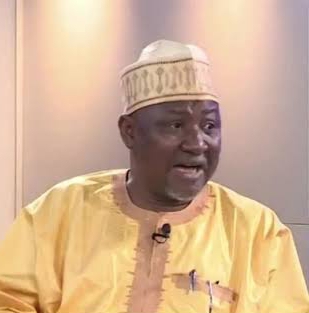
Senator Garba has raised serious concerns over the implementation of Nigeria’s federal budgets, arguing that the country is entering another fiscal year with substantial portions of previously approved capital projects yet to be executed.
According to the senator, the situation has become particularly troubling because projects contained in the 2024 and 2025 budgets remain outstanding, even as the Federal Government proceeds with the implementation of the 2026 budget. He argued that government cannot continue approving new projects while old commitments remain incomplete.
“2024, 2025 and now 2026; the budgets have not been implemented. Selective projects execution is not acceptable.” — Sen. Garba
The concern comes against the backdrop of Nigeria’s recurring budget implementation challenges. The Federal Government has repeatedly extended the implementation periods of capital budgets, allowing projects approved in one fiscal year to continue into subsequent years. The 2025 capital budget, for instance, was extended to June 30, 2026, to enable the completion of ongoing projects.
The scale of the rollover became even more significant when the Federal Ministry of Budget and Economic Planning announced that about 70 per cent of the 2025 capital budget would be rolled over into 2026, with Ministries, Departments and Agencies directed to concentrate on completing existing projects rather than embarking on new ones.
This development has intensified questions about the effectiveness of Nigeria’s annual budgeting process. If a substantial proportion of an approved capital budget remains unimplemented at the end of its fiscal year, the question becomes whether the problem lies with revenue availability, procurement procedures, bureaucratic delays, project planning, cash releases or the government’s prioritisation of expenditure.
The senator’s criticism also focuses on what he described as selective project execution. The argument is that once the National Assembly approves a budget, implementing agencies should operate within the priorities and appropriations authorised by law rather than selectively executing only projects that government considers convenient or immediately achievable.
Nigeria’s 2026 budget provides for approximately ₦58.18 trillion in total expenditure, including about ₦26.08 trillion for capital expenditure. The budget also makes provision for approximately ₦15.52 trillion for debt servicing, illustrating the enormous financial obligations competing for government resources.
The issue, therefore, is not simply the size of the budget but the extent to which the appropriated resources translate into tangible development. Nigerians ultimately expect budgetary allocations to produce completed roads, hospitals, schools, water projects, electricity infrastructure, security facilities and other public assets.
There is also an accountability dimension. Where a project is appropriated but not executed, citizens should be able to establish how much was appropriated, how much was released, whether a contractor was engaged, how much was paid, the stage of completion and why the project was delayed.
The National Assembly, as the institution responsible for approving appropriations and exercising oversight over their implementation, also has a critical role to play. Committees overseeing ministries and agencies can demand detailed explanations for unimplemented projects and investigate cases where funds were released but projects were not delivered.
The recurring rollover of capital projects also raises concerns about the credibility of annual budgeting. When projects move from 2024 to 2025, from 2025 to 2026 and potentially beyond, the distinction between an annual budget and a continuing project register becomes increasingly blurred.
For the Federal Government, the challenge in 2026 is therefore not merely to announce another large budget. It is to demonstrate that appropriated funds are being released and utilised efficiently and that projects listed in the budget are being executed according to approved priorities and timelines.
Senator Garba’s warning ultimately places the spotlight on a fundamental question of governance: If government continues to appropriate trillions of naira for development every year, why do Nigerians continue to wait for many of the projects contained in those budgets?
Until there is a transparent connection between appropriation, release, expenditure, project execution and completion, concerns over selective implementation and recurring budget rollovers are unlikely to disappear.


