

By Ogbuefi Ndigbo
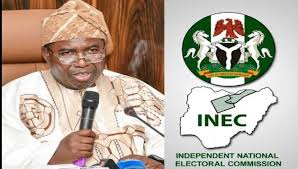
A troubling picture of voter apathy has emerged from the recent Abuja Municipal Area Council elections in the Federal Capital Territory, raising serious concerns about the health of Nigeria’s democracy. According to figures from the , out of 837,338 registered voters in the , only 65,676 votes were recorded for all candidates combined. In effect, barely eight percent of eligible voters participated in choosing the leadership of their local council.
This statistic paints a disturbing picture for a city that hosts Nigeria’s seat of power. More than nine out of every ten registered voters stayed away from the polls. The implication is clear: a tiny minority ended up deciding leadership for hundreds of thousands of residents. In a functioning democracy, elections are meant to reflect the will of the majority, but when participation drops to such levels, the legitimacy of that representation becomes increasingly questionable.
Political observers argue that voter apathy has gradually become one of the greatest threats to Nigeria’s democratic system. When the majority of citizens withdraw from the electoral process, the political space becomes dominated by small, organized groups that can easily determine outcomes. Instead of leaders emerging through broad public consensus, power begins to depend on narrow voting blocs and entrenched political structures.
The situation is further compounded by what many analysts describe as a growing culture of political docility among the electorate. Years of frustration with governance and election disputes have led many citizens to believe that participation does not change outcomes. As a result, many voters simply disengage from the political process altogether. This withdrawal, however, unintentionally strengthens the very system many people complain about.
Low voter turnout also creates an environment that favors electoral malpractice. When fewer citizens vote, the margin required to influence results becomes significantly smaller. In such conditions, politicians with access to political machinery, financial resources, or local networks can more easily manipulate outcomes or dominate the process. Critics argue that voter apathy effectively gives room for political actors to perfect methods of election manipulation with minimal resistance from the electorate.
Ironically, the elections Nigerians tend to ignore the most are those that have the most direct impact on their daily lives. Local government administrations are responsible for community infrastructure, sanitation, markets, primary healthcare services, and grassroots development initiatives. These are the institutions closest to the people, yet participation in such elections remains consistently low across the country.
Democracy, however, cannot function effectively without citizen participation. Voting is not merely a constitutional right; it is a civic responsibility that ensures leaders remain accountable to the people they govern. When citizens choose to stay away from the ballot box, they inadvertently surrender their political power to a smaller group that determines the direction of governance.
The AMAC election figures should therefore serve as a serious warning for Nigeria’s democratic future. If fewer than ten percent of voters are determining leadership even in the capital city, the implications for other parts of the country may be even more alarming. A democracy where the majority is silent risks becoming a system controlled by a politically active minority.
Ultimately, the strength of Nigeria’s democracy will depend on whether citizens reclaim their role in the political process. When people vote in large numbers, manipulation becomes difficult and leaders are forced to respond to the needs of the public. But when the electorate remains passive and disengaged, the political class faces little pressure to reform the system.
For Nigeria’s democracy to thrive, citizens must move beyond frustration and apathy and return to the polling units. Because in the end, the greatest danger to democratic governance is not only flawed leadership, but a disengaged electorate that allows a few voices to decide the fate of millions.


