
The unfolding case of the soldier recently assisted by Alex Otti has quickly evolved from a compelling story of courage and compassion into a troubling national controversy that raises deeper questions about integrity, public perception, and institutional accountability. What began as a moment of collective admiration for a wounded serviceman has now taken a dramatic turn, following his arrest by the Nigerian Army over allegations of fraud and misconduct.
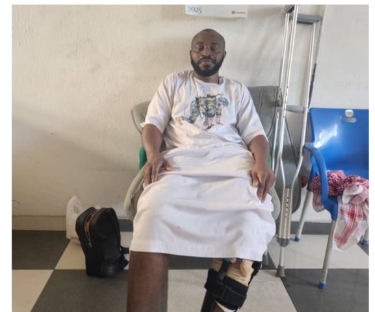
Staff Sergeant Amoke Simeon, popularly known as “Gunshot,” first captured public attention through widely circulated claims of bravery in the fight against insecurity. He was celebrated for allegedly playing a key role in neutralizing a notorious kidnapper and reportedly rejecting a ₦50 million bribe—an act that elevated him to near-heroic status in the eyes of many Nigerians. His physical injuries, said to have been sustained in the line of duty, further deepened public sympathy and drew the attention of Governor Otti, whose decision to sponsor his medical treatment abroad was widely applauded as a humane and patriotic intervention.
However, the narrative has since shifted under the weight of emerging allegations. The Nigerian Army’s decision to take the soldier into custody signals a serious institutional concern that goes beyond mere rumor or public speculation. At the heart of the investigation are claims of fraud, misrepresentation, and possible exploitation of a viral narrative for personal gain. Questions are now being asked about the authenticity of his celebrated exploits and whether elements of his story were exaggerated or entirely fabricated to attract sympathy and benefits.
The Abia State Government has been swift in drawing a clear line between its humanitarian gesture and the unfolding investigation. It maintains that Governor Otti’s involvement was purely driven by compassion for an injured soldier and not an endorsement of any claims now under scrutiny. By expressing support for due process, the state government has sought to protect both its credibility and the integrity of its intervention, while allowing the military to carry out its disciplinary responsibilities without interference.
Public reaction to the development has been sharply divided, reflecting a broader tension within society between trust and skepticism. While some Nigerians view the soldier as a potential victim of internal politics or institutional scapegoating, others see the situation as a cautionary tale about the dangers of unverified hero narratives in the age of viral information. The emotional investment that initially surrounded his story has now given way to a more measured, and in some quarters, cynical reassessment.
Ultimately, this case underscores the fragile line between heroism and accountability. It serves as a reminder that while acts of bravery deserve recognition, they must be grounded in truth and subjected to verification, especially when they influence public sentiment and attract state support. As the Nigerian Army continues its investigation, the outcome will not only determine the fate of one soldier but will also speak to the credibility of institutions tasked with upholding discipline and truth.
In the end, what remains is a sobering reflection on how quickly narratives can rise and unravel. Whether this story concludes as that of a decorated soldier undone by misconduct or a constructed persona exposed by scrutiny, it has already left an indelible mark on public discourse—one that calls for greater caution, responsibility, and commitment to truth in the telling and reception of national stories.
Viral Hero Under Fire: Soldier Aided by Alex Otti Arrested as Nigerian Army Probes Alleged Deception

- Advertisement -

